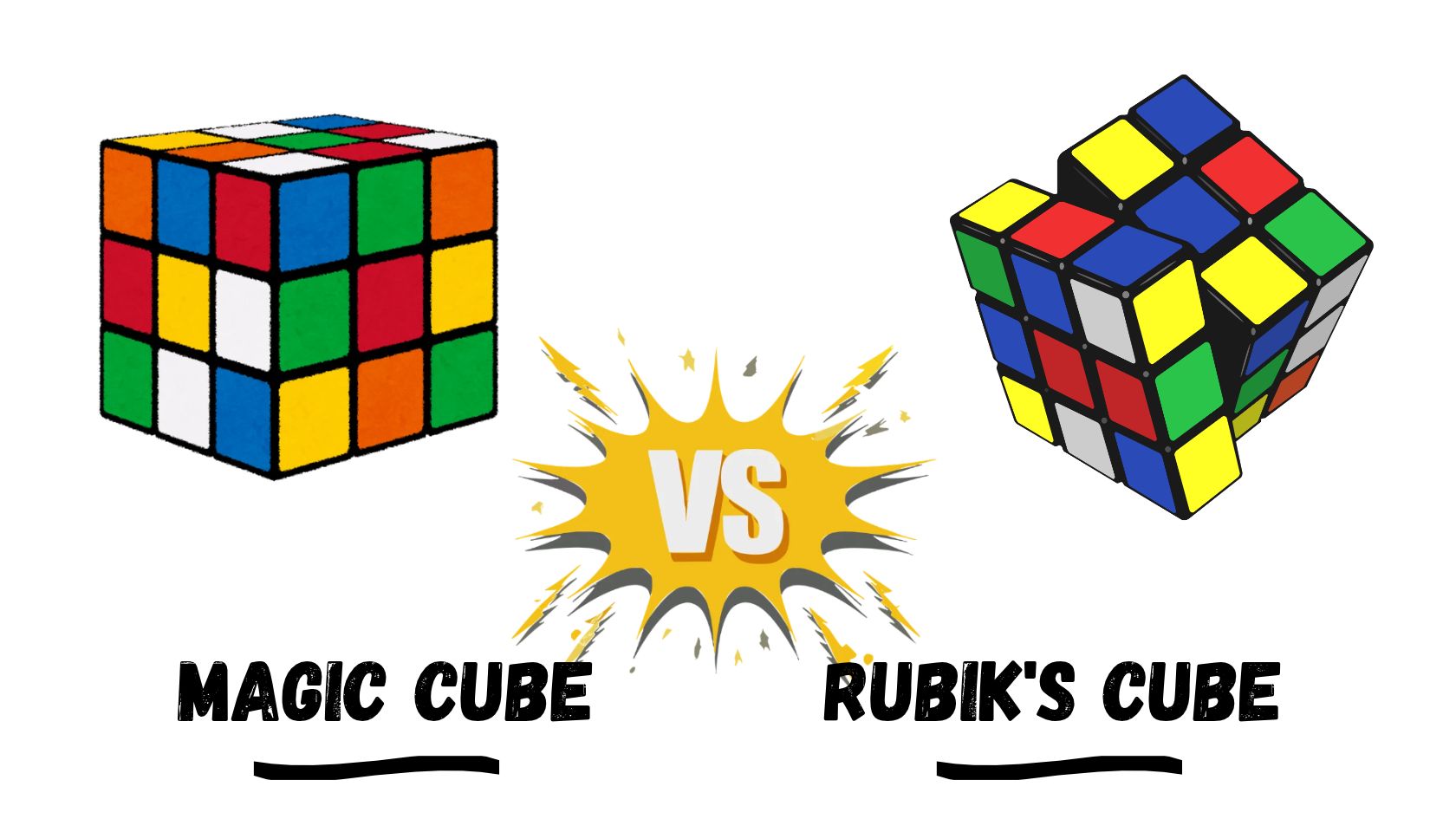
Magic Cube vs Rubik’s Cube: Which Name Can You Legally Sell Under?
Every cube buyer meets this problem early. Your supplier quotes a مكعب سحري, but your Amazon listing gets flagged the moment you write Rubik’s Cube. Same toy, two names, and very different legal treatment. In 2023, one US court case froze the funds of 110 Amazon stores over this single word.
This guide is the practical map. You will learn what the Rubik’s Cube trademark actually covers. You will see where the cube shape itself is free to sell. And you will learn which names you can print on listings and packaging — plus what happens if customs stop a shipment. No law degree needed — just the rules that decide whether your cargo moves or gets stuck.
Why the Magic Cube and the Rubik’s Cube Are the Same Toy
Here is the part that surprises many buyers: “magic cube” came first. Hungarian professor Ernő Rubik invented the puzzle in 1974 and called it the Magic Cube — in Hungarian, Bűvös kocka. He patented the internal mechanism in Hungary in 1975 but never filed internationally, so the patent later expired into the public domain. The official brand history page on rubiks.com states it plainly: in 1980, the Magic Cube was renamed the Rubik’s Cube for its global launch by the US toy company Ideal.
The brand name worked so well that it swallowed the category. The word “Rubik’s Cube” entered the Oxford English Dictionary in 1982. Since then, people have called every twisty puzzle a Rubik’s Cube — including the many types of Rubik’s cube that share nothing with the original 3×3. That habit is exactly where the legal trouble starts. The brand is protected; the category is not. Writing “Rubik’s Cube” on a generic cube claims a brand you do not own.
What the Rubik’s Cube Trademark Covers Today
The rights now sit with Rubik’s Brand Ltd. The Canadian toy group Spin Master acquired that company in January 2021 for about US$50 million (Spin Master press release, January 5, 2021). Protection has three layers, and they differ by region:
1. Word marks. “Rubik’s” and “Rubik’s Cube” are registered trademarks in the US (registered in 1983, registration no. 1,242,974, as disclosed in the 2023 US court filings), the UK (registered since 1980, live and renewed to 2031 per UKIPO records), and the EU. These remain fully valid everywhere — they never got touched by the court cases below.
2. A color design mark in the US. The classic cube itself — black body, nine colored tiles per face — is also registered as a design mark in the US (registration no. 1,265,094, per the same court filings). This means selling a classic-color cube in the US carries more risk than in the EU, because the six-color scheme is part of what got registered.
3. Copyright in the artwork. The 2020 US lawsuits also claimed copyright in packaging art and cube graphics. So even skipping the word “Rubik’s” does not make a copied design safe.
One thing is لا protected, and it matters most for importers: in the EU, the cube shape itself lost trademark status completely. That story deserves its own section.
The Cube Shape Itself Is Free to Sell in the EU
Between 2006 and 2025, the shape of the cube went through one of the longest trademark battles in the toy world. Here is the short version:
| Year | What happened |
|---|---|
| 1999 | The black-and-white cube shape was registered as a 3D EU trademark |
| 2006 | German toy maker Simba Toys filed to cancel it |
| 2016 | The EU Court of Justice ruled the shape must be judged on its real-world function |
| 2019 | The EU General Court confirmed the cancellation: the cube shape and grid lines are needed for the rotating function, so they cannot work as a trademark |
| 2020 | The Court of Justice refused the final appeal — the decision became final |
| 2023 | EUIPO also cancelled the colored 3D version after a challenge by V-Cube maker Verdes Innovations |
| July 2025 | The General Court confirmed that cancellation again (case T-1170/23, reported by Reuters on July 9, 2025) |
The logic is simple. The cube shape and the black grid lines exist to make the rows rotate, which is the whole point of the puzzle. A shape needed for a technical result belongs to everyone once the patent expires — a trademark would turn it into a permanent monopoly. Spin Master said in 2025 it still holds other protections for the brand, which is true: the shape is open, the name is not.
For you as a buyer, the practical meaning is this: stocking standard-function 3×3 cubes for the EU is legally normal business, and huge European retailers do it. Just keep the Rubik’s name off the product, the packaging, and the listing.
How Rubik’s Cube Trademark Cases Hit Amazon Sellers
The name is where the money gets frozen. Two waves show the pattern:
2020: Rubik’s Brand Ltd filed at least five federal lawsuits in Illinois through AM Sullivan Law (cases 1:20-cv-694, 1:20-cv-733, 1:20-cv-799, plus later filings in September and December 2020). The claims covered both trademark and copyright, and courts granted temporary restraining orders that froze seller payouts.
2023: Law firm GBC sued for Spin Master in case 23-cv-1501 and froze 110 Amazon stores in one action. The TRO was approved in May 2023. Chinese cross-border trade media covered both waves in detail.
What triggers these cases is almost always the same, and it is worth checking your own listings against:
- “Rubik’s”, “Rubik’s Cube”, or “鲁比克” in the title, description, or on packaging
- Near-miss spellings: Rubix, Rubiks, Rubic — courts treat these as confusingly similar
- Hybrid phrases like “Magic Cube Rubik Style” — the added words do not save you
- Cube graphics printed on T-shirts, stationery, keychains, and other merch
- The trademark used as an advertising keyword
Misspellings deserve a special warning. Many sellers believe changing one letter makes it safe. It does not. If a buyer searching for the brand could land on your listing, it is a risk.
Magic Cube, Puzzle Cube, Speed Cube: Names You Can Use
Once you know which words are taken, the safe list is long. These are the terms working wholesale sellers use every day:
| What you write | Legal status | ملحوظات |
|---|---|---|
| Rubik’s, Rubik’s Cube | Registered trademark | Never on listings, packaging, or ads |
| Rubix, Rubiks, Rubic | Confusingly similar | Treated the same as the real mark |
| “Rubik style”, “Rubik-like” | Risky hybrid | The brand word still leads the phrase |
| Magic cube | The original generic name | Generally safe on its own |
| Puzzle cube, twisty puzzle | Descriptive terms | Safe everywhere |
| Speed cube | Descriptive term | Standard for competition-grade cubes |
| 2×2, 3×3, 4×4, 5×5 | Descriptive numbers | Safer than Rubik’s Revenge or Pocket Cube, which are brand-line names |
| GAN, MoYu, QiYi, Shengshou | Other companies’ brands | Only for stock you actually sell — see our guide to China toys company brands |
Two habits make listings both safe and searchable. First, put the descriptive term in the title — “3×3 Speed Cube” tells the buyer and the algorithm everything. Second, never borrow brand words for traffic, because the traffic is not worth a frozen payout. The same logic applies across toy categories, from ماركات الألعاب التعليمية to building-block sets that borrow Lego-compatible wording.
What Happens When Customs Stop a Cube Shipment
Marketplaces are not the only checkpoint. Trademark owners can register their rights with customs authorities, and in the EU this costs the rights holder nothing. Under Regulation (EU) 608/2013, customs can suspend goods that look infringing — including goods that are only passing through the EU in transit.
If your container gets stopped, the sequence runs like this: customs notifies the rights holder and the consignee, the rights holder inspects the goods, and you get a short window — usually around ten working days — to object. If you object, the brand must take you to court within a set period or the goods are released. If you do nothing, customs destroys the shipment.
Note what decides the outcome: what is printed on the product and the box. A container of unmarked cubes says nothing incriminating. A container of cubes with “Rubik’s” on every box gives customs everything it needs. The fix happens at the factory, before the goods ship — which is why artwork approval matters more than most buyers treat it. Other toy shipments carry their own paperwork too; battery-operated toys, for example, need an MSDS before they ship. If you arrange your own freight, our guide on how to arrange toys international shipping covers the export side. For the loading stage, tracking a shipment from China shows what to monitor.
Custom Magic Cubes from China: MOQ, Price and Lead Time
Now the commercial side, because a safe name is only useful if the product behind it is worth buying. China makes the overwhelming majority of the world’s cubes — speedcube brands cluster in Shantou’s Chenghai district, and gift-grade custom cubes cluster in Yiwu. Here is what ordering actually looks like:
MOQ. Stock cubes start from a few hundred pieces. Custom logo printing typically starts around 1,000 pieces, and fully custom packaging around 1,000–2,000. If you need branded cubes without hitting those numbers, mixed models in one order are often possible.
Price band (rough guide, not a promise). Stock 3×3 cubes sit at the low end ($). Magnetic competition-grade cubes cost more ($$). Add logo printing and custom packaging and the unit price climbs ($$$). Licensed brand cubes sit at the top ($$$$). Licensed means the brand owner said yes — the only legitimate way to sell a cube with the Rubik’s name on it.
Lead time. Stock cubes: 3–7 days. Logo printing: about 15–20 days. Custom packaging: about 25–35 days. Add shipping time on top, and remember cubes are small and light, so air freight is realistic for samples and urgent top-ups.
Samples first. Always. Turn the cube for two minutes before you judge it — corner cutting, sticker or UV-coating quality, and logo print durability only show up in the hand. If this is your first order, the steps for finding wholesale suppliers and placing the first order follow the same pattern. Our overview of educational toys wholesale explains how we run sampling for the whole category.
Certificates. A cube is a toy, so it needs EN 71 for the EU and ASTM F963 plus a CPC for the US. Ask for the test reports with the sample, not after the deposit. The same paperwork logic applies to ألعاب تعليمية في مجالات العلوم والتكنولوجيا والهندسة والرياضيات and everything else aimed at children. Our broader guide to ألعاب تعليمية covers the full category.
Payment. The common pattern is a 30% deposit with the balance before shipment. For first orders, hold the balance until you have inspected the goods or received photos and a packing check.
One more angle buyers miss: the cube is also a strong عنصر ترويجي, because everyone knows how to use it and few people throw it away. Custom-printed cubes sit naturally alongside other منتجات ترويجية مخصصة, and our promotional gifts from China overview shows where a cube fits in a full gift program. For smaller desk-toy style items in the same family, see our NeeDoh Nice Cube wholesale guide.
Magic Cube vs Rubik’s Cube: FAQ
Is a magic cube the same as a Rubik’s Cube?
As a product, yes — same puzzle, same rotating mechanism. As a word, no. “Magic cube” is the toy’s original generic name; “Rubik’s Cube” is a registered brand. The types of Rubik’s cube guide covers how the whole family is named.
Can I write Rubik’s Cube on my listing or packaging?
No. It is a registered trademark in the US, UK, and EU, and owners run regular enforcement waves against marketplaces. Use “magic cube”, “puzzle cube”, or “3×3 speed cube” instead.
Can I legally sell Rubik’s-style cubes in the EU?
Yes, the shape itself — the cube with the black grid — cannot work as an EU trademark, confirmed by the EU General Court in 2019 and again in 2025. Selling same-shape cubes is normal trade. The brand name is the line you cannot cross.
Is the Rubik’s Cube shape trademarked in the United States?
The situation differs: US filings disclose a word mark from 1983 plus a registered design mark covering the classic colored cube. Enforcement in the US is active. Treat the US as the strictest of your markets and get advice before selling classic-color cubes there under any name close to the brand.
Why do Chinese suppliers call it a magic cube?
Because that is the generic product name, and in Chinese the puzzle is called 魔方 — literally “magic cube”. Suppliers writing “magic cube” are being correct, not careless.
Is “speed cube” a trademark?
No. It is a descriptive industry term for fast, competition-grade cubes, and no single company owns the category. The same goes for “puzzle cube” and “twisty puzzle”.
Can I put my company logo on a magic cube?
Yes, and it is one of the safer customizations — your logo goes on the cube instead of someone else’s brand. Logo printing usually starts around 1,000 pieces. Our منتجات ترويجية مخصصة page shows the printing options.
What should I do if customs seize my cubes?
Ask which right the seizure is based on, and act within the objection window — usually about ten working days. If the goods carry no infringing marks, object and demand the rights holder prove its case. If they do carry the marks, the practical outcome is rarely worth a court fight, which is why artwork approval before production matters. For the logistics side, our guide on arranging toy shipping from China covers the export flow.
Wrapping Up
The magic cube vs Rubik’s cube question comes down to one sentence: the shape belongs to everyone, the name belongs to Spin Master. In the EU you can sell standard cubes freely as long as the name stays off. In the US, add the color design mark to your risk list and keep every version of the brand word out of your listings. Use “magic cube”, “puzzle cube”, or “speed cube”, and get your artwork approved before production, not after a customs letter.
If you are building a puzzle or gift range, these guides pair well with this one:
| فئة | Best guides on this site |
|---|---|
| ألعاب الألغاز | Jigsaw puzzle manufacturers, ماركات ألغاز الصور المقطوعة للشركات, ماركات أحجيات الصور المقطوعة, how jigsaw puzzles are made |
| Cube & puzzle basics | What is a jigsaw puzzle, jigsaw puzzle types, jigsaw puzzles 101, نصائح للمبتدئين في حل ألغاز الصور المقطوعة |
| ألعاب تعليمية | ألعاب تعليمية بالجملة, مورد ألعاب تعليمية, أنواع الألعاب التعليمية |
| Building blocks & IP | Best Lego alternative brands, building brick toys brands, ألعاب بناء الطوب, cheap Lego alternative brands |
| التوريد من الصين | China toys brand guide, أفضل ماركات الألعاب, educational toys manufacturer, مورد المنتجات الترويجية |
Want a cube with your own logo instead of someone else’s trademark? اتصل بنا for custom magic cubes — MOQ, samples, and certificates handled the same way we run every category on this site.