

Guide to TCG and Sports Card Dimensions: A Sourcing Essential
For B2B brand owners and professional buyers in the gaming and collectibles industry, precision is everything. Whether you are developing a new Sammelkartenspiel (TCG) or sourcing high-end protective packaging for sports cards, understanding standard trading card dimensions is the first step toward a high-quality final product.
In this guide, we break down the industry standards for card sizes and why these measurements matter for your manufacturing and logistics chain.
What is the Standard Trading Card Size?
While cards may look similar to the naked eye, the industry is actually split into two primary “standard” sizes. Getting the trading card measurements right ensures compatibility with third-party accessories like sleeves, top-loaders, and deck boxes.
1. Standard TCG Card Size (The “Magic” Size)
Used by Magic: The Gathering (MTG), Pokémon, and most sports cards (baseball, football).
- Inches: 2.5″ x 3.5″
- Millimeters: 63.5 mm x 88.9 mm
2. Small/Japanese Size
Used primarily by Yu-Gi-Oh! and Cardfight!! Vanguard.
- Inches: 2.32″ x 3.38″
- Millimeters: 59 mm x 86 mm
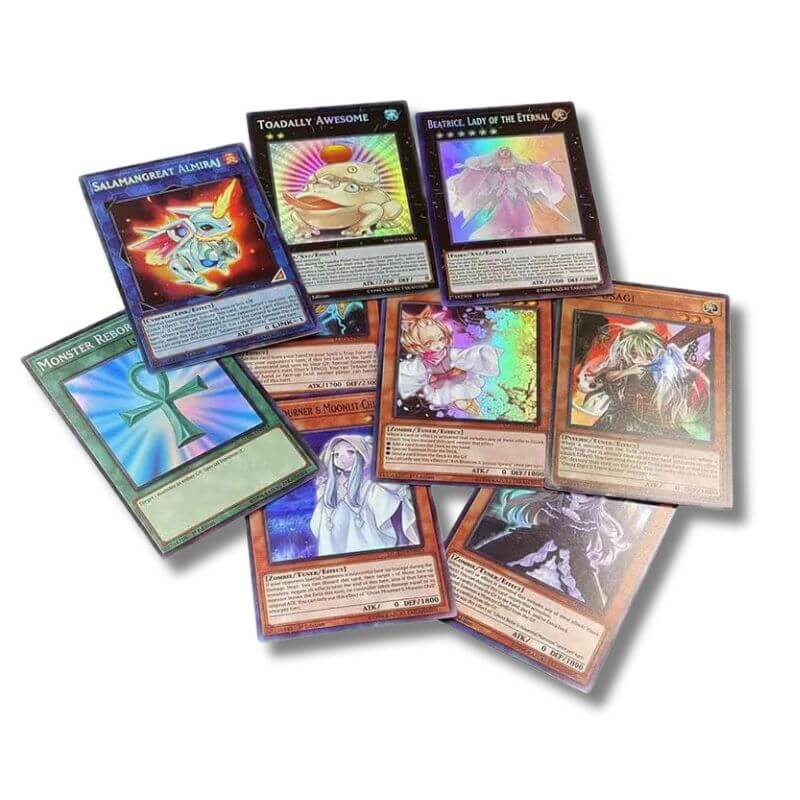
Pokémon and Sports Card Dimensions
If your brand focuses on specific niches, you need to be aware of the exact Pokémon card size in inches and how they compare to traditional sports cards.
Pokémon TCG Card Size
Der pokemon trading card dimensions follow the standard 2.5″ x 3.5″ format. However, for B2B procurement, pokemon card thickness is an equally vital metric. Most “standard” cards are roughly 300gsm to 350gsm (grams per square meter), resulting in a thickness of approximately 0.3mm to 0.35mm.
Baseball and Football Card Dimensions
Whether you are searching for baseball card dimensions oder football card size, the physical footprint remains the same as the Pokémon standard (2.5″ x 3.5″).
Pro Tip for Buyers: While the length and width are standard, high-end “patch” or “jersey” sports cards can be significantly thicker (up to 5mm). Always specify the point (pt) thickness when sourcing packaging.
Why “Standard” Matters for Your Brand
When you are sourcing from a platform like TonySourcing.com, consistency in standard tcg card size affects several stages of your business:
- Packaging Compatibility: If your trading card size dimensions are off by even 1mm, they will not fit into standard “Penny Sleeves” or graded slabs.
- Shipping Costs: Knowing the exact tcg card dimensions allows you to calculate precise volumetric weight for international shipping, optimizing your landed cost.
- Retail Presentation: Standardized sizes ensure your product looks professional on retail shelves and fits into existing display racks.
Final Thought
Understanding how big baseball cards oder pokemon card size mm is more than just trivia—it’s about manufacturing precision. For brands looking to scale, always ensure your factory uses the standard trading card size to maintain market compatibility.
FAQ: Professional Insights into TCG Sourcing
1. What are the standard trading card dimensions for most games?
The most common standard trading card dimensions Sind 2.5 inches by 3.5 inches (63.5 mm x 88.9 mm). This size is the industry benchmark for Pokémon, Magic: The Gathering, and various sports cards. For brands looking to enter the Japanese market or the Yu-Gi-Oh! niche, a smaller size of 59 mm x 86 mm is typically used.
2. How big are baseball cards compared to other sports cards?
When clients ask how big are baseball cards, the answer is almost always the “Standard Size” (2.5″ x 3.5″). Whether you are analyzing football card dimensions or general sports card sizes, they share this uniform footprint to ensure they fit into standard protective slabs and storage boxes.
3. What is the standard pokemon card size in mm and inches?
The official Pokémon card size inches is 2.5″ x 3.5″, which converts to 63.5 mm x 88.9 mm in metric units. Maintaining this exact pokemon tcg card size is critical for compatibility with the millions of existing sleeves and deck boxes on the market.
4. Why is pokemon card thickness important for brand owners?
Beyond the length and width, pokemon card thickness (usually around 0.3mm to 0.4mm) dictates the “premium feel” of the product. For high-end collectors, a card that feels too thin may be perceived as a counterfeit or low-quality. We recommend a minimum of 300-350 GSM cardstock for professional-grade TCG production.
5. How do I ensure my custom tcg card size meets international standards?
To ensure your standard tcg card size is accurate, you should request a die-line template from your manufacturer. Accuracy in trading card measurements is measured in microns; even a 0.5mm deviation can lead to cards being rejected by professional grading services like PSA or BGS.
6. Does the trading card size dimensions affect shipping and logistics?
Yes. Accurate trading card size dimensions allow for precise packaging design. By optimizing the inner and outer carton sizes based on the standard trading card dimensions, B2B buyers can significantly reduce “dead space” during shipping, lowering the overall landed cost per unit.





 DE
DE  EN
EN  ES
ES  AR
AR