Sacs isothermes de qualité supérieure : comment choisir les matériaux et les designs pour votre marque
Are you sourcing cooler bags for your business? The right material combination can significantly affect product cost, customization options, shipping risk, and profit margins. This guide compares the most common cooler bag materials to help you choose the best option for your target market.
#1 By Cooler Bag Shell Materials
The shell materials are so important that they determine the durability and the appearance of cooler bags. They also affect the cost, customization options, and product positioning.
Polyester (Oxford Fabric)
Polyester, often used to make Oxford fabric, is one of the most widely used materials for fabric lunch bags. Polyester offers low production costs, strong customization potential, and low shipping risk. It supports screen printing and private label branding, making it ideal for promotional products, retail brands, supermarkets, and e-commerce sellers. For most B2B buyers, polyester provides the best balance between cost, durability, and large-volume sourcing. The common denier options include 300D, 420D, 600D, 900D, and 1680D:
| Polyester Type | Grade | Avantages | Best for |
| 840D TPU Laminated Double-sided Fabric | ⭐⭐⭐⭐⭐ High-end Grade | Excellent durability and often used in waterproof lunch boxes and bags. Easy to maintain. Designed for demanding outdoor use. | High-end outdoor brands, luxury private labels |
| 900D / 1680D Oxford Fabric | ⭐⭐⭐⭐High-end Grade | Highly resistant to wear and tear.Built for long-term use.Offers a more premium appearance. | Outdoor retailers, mid-range private labels, durable cooler bags |
| 600D Oxford Fabric | ⭐⭐⭐⭐ Best Value | Cost-effective, lightweight, durable, and excellent for custom printed cooler bags. | Promotional cooler bags, supermarkets, corporate gifts, Amazon sellers |
| 300D / 420D Polyester Fabric | ⭐⭐⭐Entry-level Grade | Lightweight, affordable, and suitable for large-volume production. | Promotional products, lightweight cooler bags, and cost-effective retail products. |
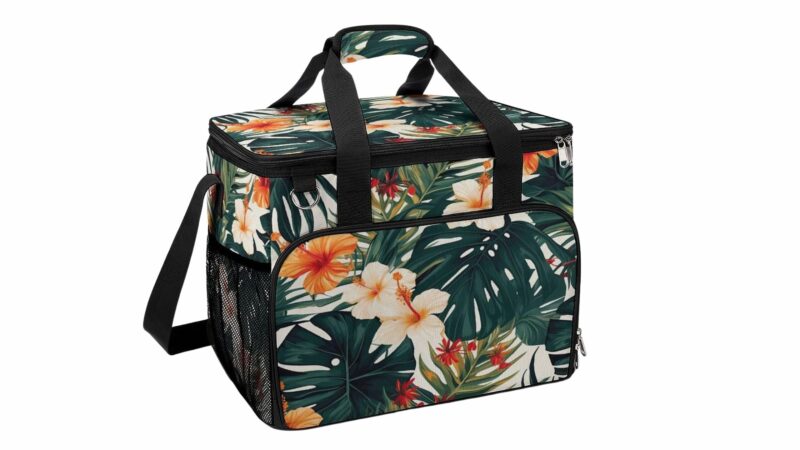
Nylon
Nylon is a high-strength fabric widely used in outdoor coolers. Nylon is stronger, more durable, and more flexible than other materials, making it a great option for buyers targeting retail, promotional, and e-commerce markets where cost control and customization are the main priorities.
Compared with polyester, nylon offers:
- Higher perceived value, supporting better retail margins
- Better durability and tear resistance
- A more premium market position
- Lightweight construction that helps control shipping costs
TPU Laminated Fabric (Thermoplastic Polyurethane)
TPU is a high-end shell material commonly used in high-end soft cooler bags. It provides stronger waterproof protection, better durability, and a more high-end look. So TPU is commonly used for premium outdoor brands and private label projects that target higher margins and stronger product differentiation.
This material is commonly used for:
- Products that require stronger waterproof performance
- Premium product positioning
- High-margin private label projects
- Outdoor and marine cooler bags
PVC Tarpaulin
PVC Tarpaulin is a heavy-duty shell material widely used in fishing, marine, and industrial cooler bags. It offers a practical balance between durability and cost, making it a strong option for commercial outdoor and marine product lines.
It is best suited for:
- Long-term commercial use with lower quality complaint risk
- Heavy-duty outdoor product lines
- Projects that require high durability at a lower cost than TPU
- Markets where waterproof performance is a key selling point
Buyer Tip:
For most cooler bag projects, the best option is usually the one that balances durability, appearance, cost, and intended use. Polyester works well for cost-sensitive products, while TPU and PVC tarpaulin are better choices when stronger waterproof protection and durability are needed.
#2 By Cooler Bag Insulation Materials
The best soft cooler bags use different cooler insulation materials to meet product needs, budgets, and markets. Understanding these materials helps you choose the right products instead of simply selecting the most expensive option.
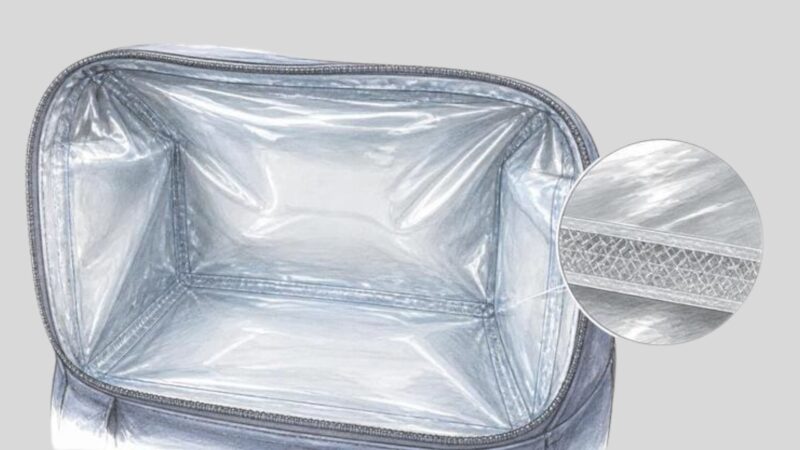
2.1 EPE Foam
EPE foam is the most widely used insulation material for commercial cooler bags because it offers the best balance between cost and performance. It is lightweight, easy to process, and suitable for large-scale production.
Its main commercial advantages include:
- Low material cost, ideal for large-volume orders
- Lightweight construction, reducing shipping costs
- Stable insulation performance for retail and promotional products
- Easy manufacturing, supporting competitive pricing
2.2 PE Foam
PE foam provides more stable insulation and better durability than EPE foam, making it suitable for mid-range retail cooler bags. It is commonly used for products that require better quality without a significant increase in production cost.
Compared with EPE foam, PE foam offers:
- Better insulation stability
- Improved durability
- Better moisture resistance
- A stronger mid-range retail position
2.3 EVA / PU Foam
EVA and PU foam are commonly used in premium cooler bags that require longer cooling time and stronger product differentiation. They increase production costs but also support higher retail prices and better profit margins.
These materials are best suited for:
- Premium outdoor brands
- High-end private label projects
- Camping and fishing product lines
- Products with longer insulation requirements
Buyer Tip:
Stronger insulation does not always mean the best cooler bag.EPE foam is usually the best choice for volume-driven projects, while EVA and PU foam are more suitable for premium products where insulation performance and brand positioning justify the higher cost. For most products, choosing the right foam insulation for coolers based on usage needs and cost requirements is more important than simply selecting the highest-grade option.
#3 By Cooler Bag Lining Construction
The lining plays an important role in the quality of a cooler bag because it affects leak protection, product quality, and after-sales risk. The right lining is not always the most advanced one. For most sourcing projects, the key is balancing cost, durability, and leakage performance.
3.1 Sewn Fabric & PEVA/Vinyl Lining
Sewn lining is the most common construction for entry-level cooler bags because it is affordable, lightweight, and easy to manufacture. It is widely used in promotional and everyday retail products.
Its main commercial advantages include:
- Low production cost
- Lightweight and foldable construction
- Fast manufacturing for large-volume orders
- Suitable for promotional and budget retail markets
3.2 Heat-sealed PEVA Lining
Heat-sealed PEVA lining provides better leak protection than sewn constructions while keeping costs under control. It is the most widely used option for mainstream retail cooler bags.
Compared with sewn lining, it offers:
- Better leak resistance
- Easier cleaning
- Improved product quality
- Lower customer complaint risk
3.3 Welded TPU Lining
TPU lining with RF welding creates a seamless waterproof inner layer, making it suitable for premium cooler bags that require reliable leak protection and long-term durability.
This construction is best suited for:
- Premium outdoor brands
- Fishing and marine cooler bags
- High-end waterproof products
- Projects that prioritize quality over cost
Buyer Tip: Heat-sealed PEVA lining is usually the best choice for mainstream retail projects, while welded TPU lining is better suited for premium products where leak protection and brand positioning justify the higher cost.
#4 By Cooler Bag Zipper Design
The zipper design affects a cooler bag’s waterproof protection, product positioning, and production cost. Different zipper options are suitable for different markets and product requirements.
4.1 Standard Nylon Zippers(best for
Standard nylon zippers are the most cost-effective option for commercial cooler bags. They are widely used in promotional and entry-level products where price competitiveness is the main priority.
Their main commercial advantages include:
- Low production cost
- Smooth operation
- Easy sourcing and replacement
- High production efficiency
4.2 Water-resistant Zippers with Rain Flaps
This is the most common zipper design for retail cooler bags because it balances waterproof protection, convenience, and cost. It is suitable for most everyday cooler bag projects.
Compared with standard zippers, it offers:
- Better water resistance
- Improved product quality
- Reasonable cost control
- Broader retail market acceptance
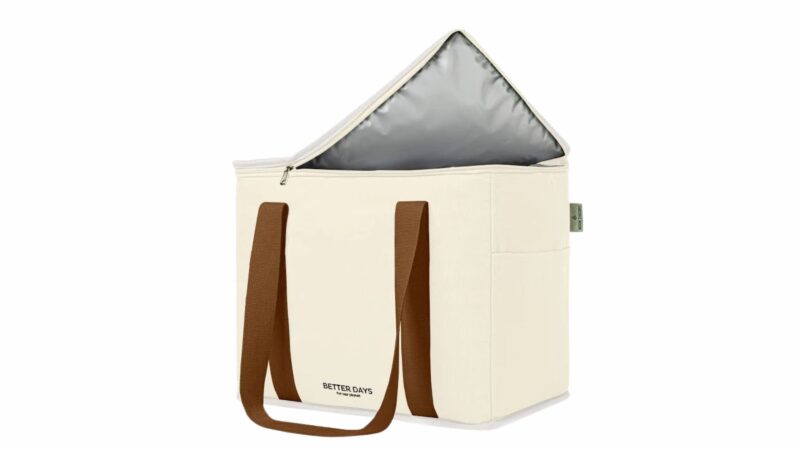
4.3 Waterproof / Airtight Zippers
Airtight zippers provide the highest level of waterproof protection and insulation performance. They are commonly used in premium soft coolers and professional outdoor products.
This zipper type is best suited for:
- Premium outdoor brands
- High-end waterproof cooler bags
- Fishing and marine products
- Projects that target higher profit margins
4.4 Heavy-duty Zippers
Heavy-duty zippers are designed for large-capacity cooler bags and products that require frequent opening and closing. They improve durability and reduce failure risk in demanding applications.
They are commonly used for:
- Large-capacity cooler bags
- Camping and outdoor equipment
- Commercial and heavy-duty products
- Products with high usage frequency
Buyer Tip: Water-resistant zippers with rain flaps provide the best balance between cost, performance, and market acceptance, making them the most practical choice for most commercial cooler bag projects.
Conclusion
Choosing the best cooler bag is not about selecting the most expensive materials or the most advanced features. The “best cooler” choice depends on the balance between durability, cooler insulation materials, waterproof protection, design, and cost.
By understanding the differences in shell materials, insulation options, lining constructions, and zipper designs, you can make a more informed decision and choose cooler bags that better fit your product requirements.
At Tonysourcing, we can help you evaluate different cooler bag options and provide custom soft coolers based on your needs, from material selection to final product design.
FAQ :
1. How can I choose the “best” cooler bag for my business?
Select materials based on your target price and market position. Cost-sensitive products need affordable materials, while premium markets require stronger performance and higher-value constructions.
2. What is the most cost-effective cooler bag material for large-volume orders?
Polyester shell with EPE insulation and PEVA lining is one of the most cost-effective combinations. It offers competitive pricing, stable quality, and good customization options for large orders.
3. Can cooler bags be customized for different business needs?
Yes. Cooler bags can be customized in terms of size, color, logo, printing methods, materials, and functional features. These options allow you to create products that meet different requirements, brand positioning, and usage scenarios.
4. How can I reduce quality issues when sourcing cooler bags?
Choosing reliable lining, insulation, and zipper structures can help reduce common problems such as leakage, poor insulation, and product returns.
5. Which materials are best for private label cooler bags?
600D Oxford polyester is widely used for private label products because it supports various printing methods and offers a good balance between cost and customization.