Importing Toys from China? Here’s How to Handle PPWR
When you buy toys from China, you probably check the price, samples and toy safety reports. Now you need to check the packaging too. PPWR brings packaging rules into your purchasing decisions—from the plastic tray inside the box to the shipping carton around it.
Here is what you need to know before your next order.
What Is PPWR?
PPWR stands for Packaging and Packaging Waste Regulation. It is the EU’s packaging law.
Its purpose is straightforward: reduce packaging waste, make packaging easier to recycle and limit harmful substances in packaging.
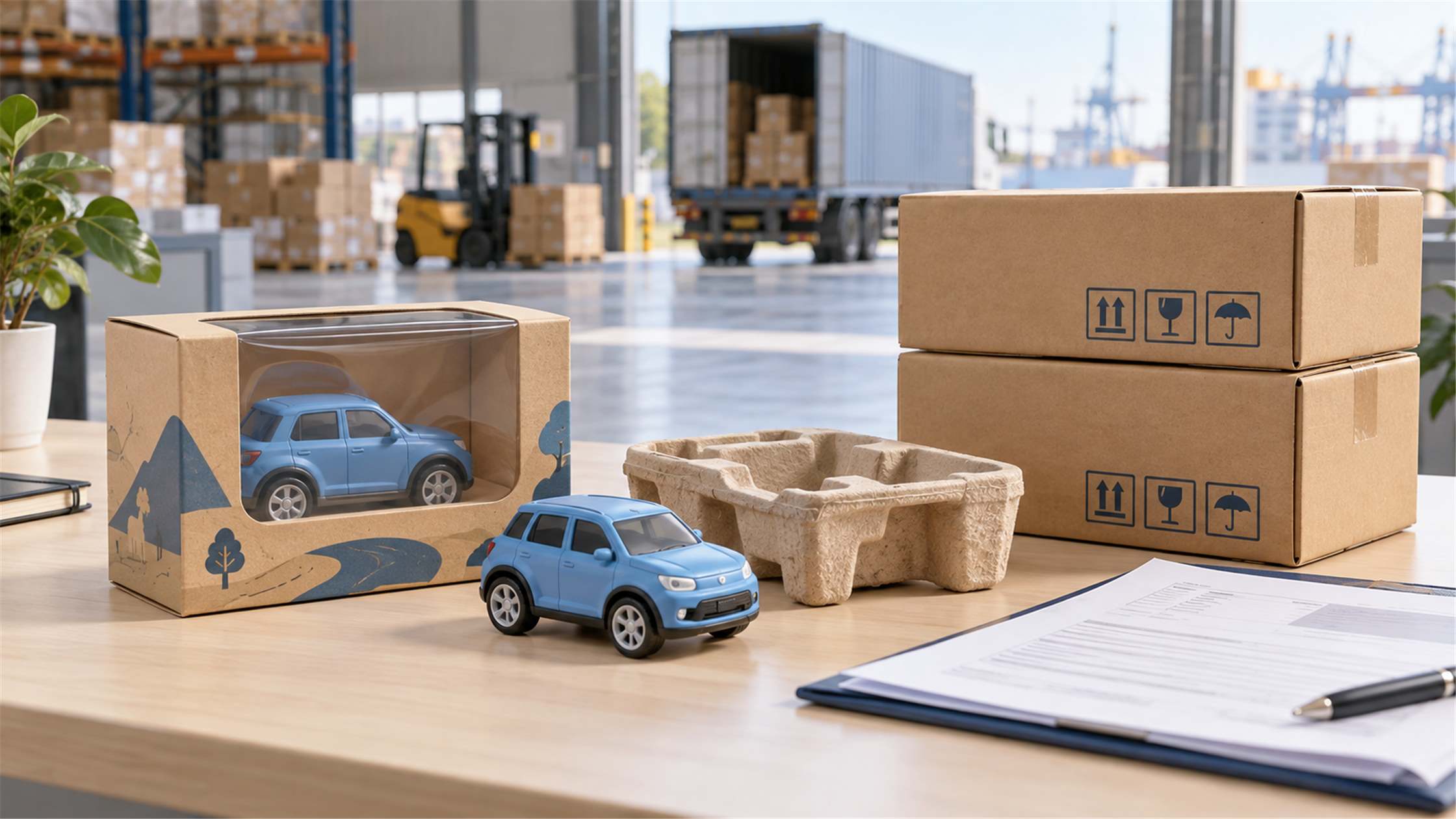
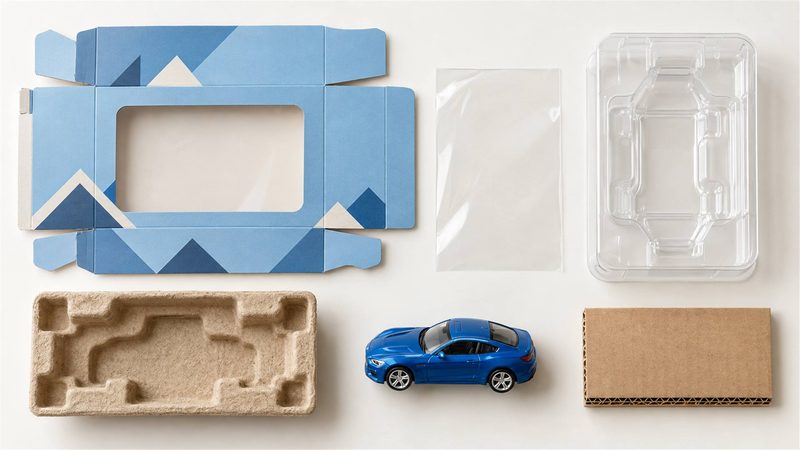
For toy importers, this can cover the printed box, plastic window, inner tray, bags, display cartons and shipping materials. Packaging added by your own warehouse also needs attention.
If you import toys into the EU, include packaging in your compliance checks. Buying from China alone does not trigger PPWR; the destination market matters. Your toys still need their own product-safety checks. EU packaging overview.
Do You Need to Deal with It Now?
Yes. PPWR generally started applying on August 12, 2026, although some requirements come later.
For your current orders, focus on packaging materials, relevant test reports, recyclability, required company details and compliance documents. Start reviewing oversized boxes and complicated material combinations when developing new packaging.
Here is a simple planning guide:
| متى | What it means for your toy orders |
|---|---|
| Now | Check the applicable packaging rules and have the supporting documents ready. |
| February 12, 2028 | Empty space in retail packaging must be reduced to what is needed for the packaging to do its job, including protecting the product. |
| 2028 onward | New EU sorting labels are scheduled to follow. The actual deadline depends on the related EU rules. |
| 2030 onward | Further requirements cover packaging size, recycling design, recycled plastic and empty space in certain outer packaging. Some start dates depend on later EU rules. |
You do not need to memorise every future deadline. Give your compliance adviser the packaging details and planned EU launch date, and ask which requirements apply to that order. EU application announcement; PPWR timing rules.
What Do You Need to Test for PPWR?
Start with one important point: one test report cannot cover everything in PPWR. You need a mix of material checks, packaging reviews and documents.
1. Heavy Metals in the Packaging
PPWR limits four heavy metals: lead, cadmium, mercury and hexavalent chromium.
Their combined amount must normally be no more than 100 ppm in the packaging or packaging component. That is the total of all four—not 100 ppm for each one. Specific legal exceptions exist. PPWR, Article 5.
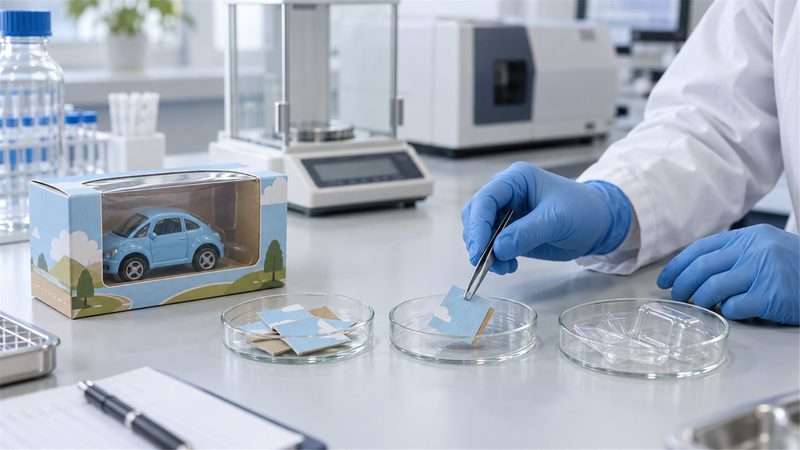
For a toy with a printed box and plastic tray, ask whether the available reports cover both. A report for plain paper does not automatically cover the finished printed box, its window and the tray.
Send the complete packaging sample to your laboratory and ask:
Which parts need testing, and do our existing reports cover these exact materials?
Let the laboratory decide how to separate the samples and which methods to use.
2. PFAS: Check Whether the Requirement Applies
You may hear that every package needs a PFAS test. PPWR’s specific PFAS limits apply to food-contact packaging.
An ordinary toy box does not automatically need that food-contact test. If you sell a toy together with sweets or other food, ask the laboratory to check the packaging touching the food.
Other chemical rules may still apply to your packaging materials. Ask the laboratory to explain why each proposed test is needed before accepting the quotation. PPWR, Article 5; ECHA chemical restrictions.
3. Can the Packaging Be Recycled?
A supplier saying “it is paper” does not answer the whole question.
Think about a toy box with a plastic window, a coated surface and a glued-in tray. You need to know what each part is made from and whether the parts can be separated for recycling.
Ask your supplier for the full material list, then have the packaging reviewed. For new orders, compare simpler designs—for example, a removable insert or fewer material types. The final design still needs to protect the toy and meet the applicable requirements. PPWR recyclability rules; EU guidance on the transition period.
4. Is the Box Bigger Than It Needs to Be?
Put the toy in its packaging and look at the space around it. Then check how the retail boxes fit inside the shipping carton.
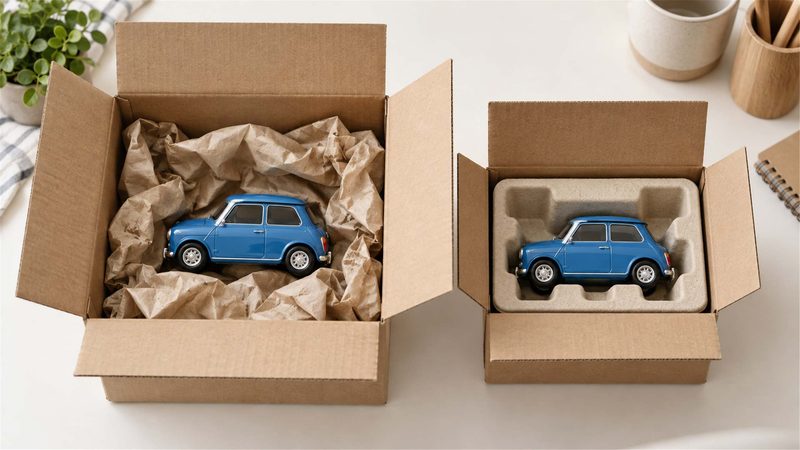
Could you reduce the size without damaging the toy? Could a better-fitting insert replace extra padding? These are useful questions to ask at the sample stage.
You may have heard about a 50% empty-space limit. This future rule covers certain grouped, transport and e-commerce packaging. It is not a blanket rule for every retail toy box. It starts in 2030 or later, depending on the related EU rules. Filling a large carton with bubble wrap does not solve the problem: filling materials count as empty space under the rule. PPWR, Article 24.
If you make the packaging smaller or lighter, check that the toy still survives handling and shipping. A cheaper box is no saving if more products arrive damaged.
5. Does the Plastic Contain Recycled Material?
“Recyclable” means the material can be recycled. “Recycled content” means recycled material was used to make it.
For ordinary plastic toy packaging outside special categories, PPWR sets a future 35% recycled-content requirement, with exceptions. It starts in 2030 or three years after the relevant implementing rule takes effect, whichever is later.
The calculation follows rules based on packaging type, format, factory and year. This is not simply a requirement to test every tray for 35%. PPWR, Article 7.
Ask your supplier where the recycled plastic comes from and what records prove the amount used. An ordinary chemical test report cannot prove that history.
What Should You Ask Your Chinese Supplier to Send?
Instead of asking only, “Are you PPWR compliant?”, ask for something you can check.
| اطلب | What you want to see |
|---|---|
| Packaging material list | Every part, its material, weight and size |
| Packaging photos or drawings | A clear match to the packaging you are ordering |
| Relevant test reports | Reports that identify the actual materials and samples |
| Recycling information | A supported assessment of the packaging design |
| Recycled-material records | Evidence behind any recycled-content claim |
| Final packaging artwork | Correct required labels and company details |
| EU Declaration of Conformity and supporting file | The responsible manufacturer’s formal statement that the packaging meets the applicable rules, backed by evidence |
ال EU Declaration of Conformity is a document you should know by name. Ask who will prepare it and who keeps the supporting records. A laboratory report alone does not replace it.
Importers must keep the declaration and be able to obtain the supporting technical documents for five years for single-use packaging, or ten years for reusable packaging, from when it enters the market. PPWR documentation requirements.
Who Handles This: You or the Factory?
The factory can supply material details, samples and reports. As the EU importer, you have your own responsibility to check the packaging before selling it.
If you sell under your own brand, you may also take on the legal manufacturer’s duties. Confirm this for your business arrangement rather than assuming the Chinese factory handles everything. PPWR importer and private-label duties.
For each order, agree on three things: who gathers the packaging information, who arranges missing checks, and who prepares the declaration.
Put those responsibilities into the order discussion before paying for mass production.
A Simple Process for Your Next Order
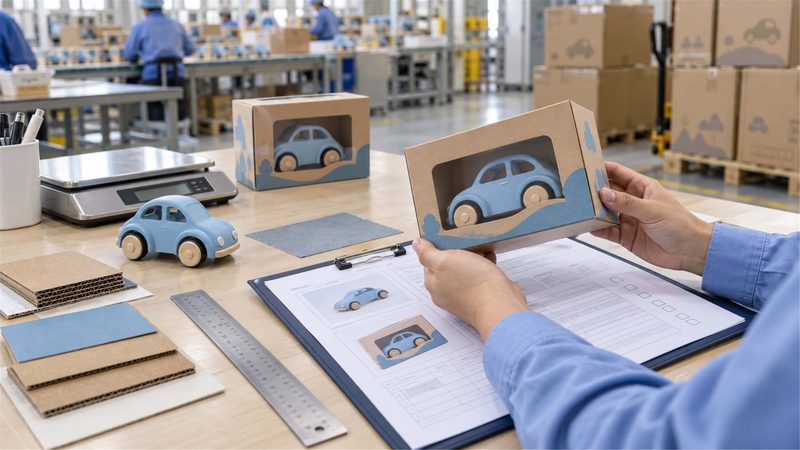
Imagine you are buying a toy car with a printed box, clear window and plastic tray. Here is how to handle the packaging work.
When asking for a quotation: tell the supplier which EU countries you will sell in, whether it is your own brand and whether you sell through shops or online. Request packaging details with the toy quotation.
When checking the sample: review the complete packaging. Send the material list and available reports to your laboratory or adviser. Find out what is missing before approving it.
Before mass production: confirm the final materials, box size and artwork. Require the supplier to tell you before changing any material, coating or packaging supplier.
Before shipment: check that the finished packaging matches the approved sample and the documents. Include any extra cartons or wrapping added during consolidation.
For repeat orders, ask whether anything has changed before reusing the old paperwork. For orders from several factories, keep one list showing which packaging files are complete.
What About Packaging Registration and Recycling Fees?
This is another part of the job. It is usually called EPR—Extended Producer Responsibility.
In practical terms, the responsible business may need to register, report how much packaging it supplies and contribute to the cost of dealing with that waste.
Check this for each EU country where you sell. The responsible company depends on the sales arrangement; one registration does not automatically cover every country. Some cross-border sellers also need a local authorised representative. Your adviser or packaging compliance provider can confirm the setup. PPWR registration and EPR rules.
Keep packaging weights from your supplier. They are useful for both your packaging file and reporting where required.
Make Packaging Part of the Buying Decision
Before approving your next toy order, make sure you can answer three questions:
- What is every packaging part made from?
- Do the reports and documents cover the packaging we are actually buying?
- Who handles the remaining checks and destination-country requirements?
Sorting this out while you can still change the sample is easier than doing it after the goods are packed.
If you need help coordinating toys and packaging in China, send TonySourcing your product details, packaging photos, quantity and target markets. Its services include supplier comparison, samples, private-label packaging and inspection coordination. Discuss your sourcing requirements.
Requirements depend on your packaging, business role and sales market. Confirm the details for your order with your compliance adviser.