Import Toys From China to the USA: You Pay 12.5%, Not 20%
Open any online duty calculator. Type “toy” and “China”.
Most of them will tell you 20%.
That number is wrong. It is wrong by 7.5 percentage points. On a $28,000 order, that is $2,100 you do not owe.
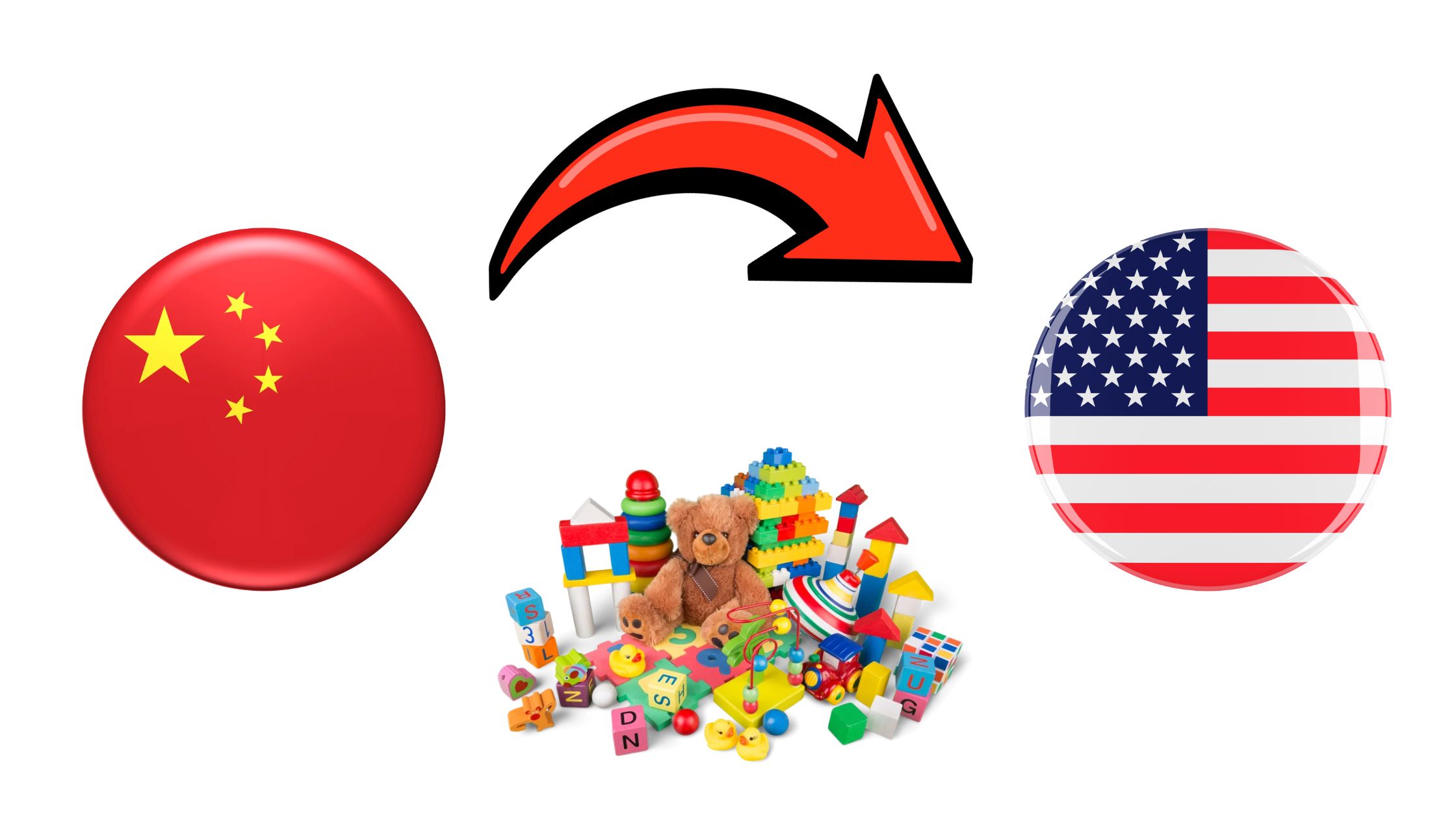
The mistake gets copied because it looks tidy. Chapter 95, Section 301, 7.5%. The trouble is that one line of that chain does not hold. This page walks the real paper trail for anyone who wants to import toys from China to the USA in 2026, and shows what the bill actually says.
The toy duty is 12.5%, and the paper trail is short
US customs charges duty in layers. For toys, only one layer is switched on.
Layer one is the base rate. The US tariff schedule lists 9503.00.00 as Free. Not 3%. Not 7.5%. Free. The 70% figure you may see is the Column 2 rate. That only applies to Cuba, North Korea, Belarus and Russia.
Layer two is the 2019 Section 301 action. Toys were placed on List 4B on 20 August 2019. That list was set to begin on 15 December 2019. It never did. USTR cancelled it on 18 December 2019, before one container was ever charged.
Layer three is the new forced-labour tariff. USTR published it on 23 July 2026. It took effect at 00:01 on 24 July 2026. Chinese-origin goods pay 12.5% under Chapter 99 line 9903.05.31.
Add the three layers. 0 + 0 + 12.5 = 12.5%.
You do not have to trust a blog for this. A federal court filing says it in plain words.
In 3BTech v. United States, the complaint records that subheading 9503.00.0090 is classified on List 4B. It then adds that the line was “not subject to additional China Section 301 duties at the time of entry.”
| Duty layer | Status for Chinese toys | Rate |
|---|---|---|
| HTS 9503.00.00, Column 1 General | In force | Free |
| Section 301, List 4B (2019) | Cancelled 18 Dec 2019, never collected | 0% |
| IEEPA reciprocal and fentanyl duties | Ended 24 Feb 2026 after the Supreme Court ruling | — |
| Section 122 temporary 10% | Expired 24 Jul 2026 | — |
| Section 301 forced-labour tariff (9903.05.31) | In force since 24 Jul 2026 | 12.5% |
| Total on a typical Chinese toy | 12.5% |
Why every calculator says 20%
They group all of Chapter 95 together.
Chapter 95 holds toys, games, festive goods and sports gear. Only a few lines from that chapter reached List 4A, the 7.5% list. Those lines are 9504.20, 9504.30, 9504.90.90 and glass Christmas ornaments at 9505.10.10. Sports equipment sits there too.
9503.00.00 is not on that list. That is the whole story.
The error spreads because a calculator needs one answer per keyword. “Toy” points to Chapter 95. Chapter 95 points to List 4A. So the tool prints 7.5% on top of 12.5%. Nobody opens the ten-digit line.
Search the same question today and you get four answers from four sites: 12.5%, 17.5%, 20%, and one that says 37.5%. Only one survives a look at the tariff schedule.
There is a real trap buried in this. CBP rulings sometimes pair a 9503 toy with a List 3 or List 4A number. Nearly always, that number attaches to a non-toy part of the set. A tin carry case gets classified on its own. The toy inside stays at 12.5%. Classify every part, then check every line. Before you accept a quote, see what to check on a toy quotation list. A price that assumes the wrong code is not a price.
What if you import toys from China to the USA with the wrong code?
Then the gap is no longer 7.5 points. It can be 36.
The tariff follows the product, not the shelf it sits on. A ride-on bike and a plush bear both look like toys to a buyer. To CBP they are two different products with two different bills.
| What buyers call it | Real HTS line | How the duty stacks | Total |
|---|---|---|---|
| Dolls, plush, building sets, puzzles, RC cars | 9503.00.00 | Free + 12.5% | 12.5% |
| Video game consoles, handhelds, controllers | 9504.50.00 | Free + 12.5% | 12.5% |
| Playing cards, board games | 9504.40.00 | Free + 12.5% | 12.5% |
| Arcade and other game machines | 9504.30 / 9504.90.90 | Free + 7.5% + 12.5% | 20% |
| Glass Christmas ornaments | 9505.10.10 | Free + 7.5% + 12.5% | 20% |
| Children’s bicycle | 8712.00 | 11% + 25% + 12.5% | 48.5% |
| Camera drone sold as a toy | 8806.24 | Free + 25% + 12.5% | 37.5% |
| Fitness gear listed as a toy | 9506.91 | 4.6% + 7.5% + 12.5% | 24.6% |
| Dress-up costume | Ch. 61 or 62 | Garment base rate + 12.5% | Well above 12.5% |
| Kids’ backpack | 4202 | Not a toy | Separate line |
Two of those rows hurt. A 48.5% bike is not a rounding error. If your factory quotes a “kids ride-on” and you assume 12.5%, your margin is gone before the container leaves.
Age grading is the other quiet trap. CPSC judges the age from the product itself, not the label. A rattle printed “3+” is still an under-3 toy. That pulls in small-parts rules you may not have tested for.
Two fees that never appear in a factory quote
Duty is only part of the bill. Two federal fees land on almost every formal entry, and neither shows up in an FOB price. They sit alongside the freight, insurance and broker charges in any step-by-step import plan.
MPF, the merchandise processing fee. It runs at 0.3464% of customs value, with a floor and a ceiling. For fiscal 2026 the band is roughly $33.58 to $651.50 per entry. CBP’s own user-fee table lists a slightly higher pair, because the numbers reset with inflation each October. Check the current table before you model the year.
HMF, the harbour maintenance fee. It runs at 0.125% of customs value. It applies to ocean cargo only. Air, truck and rail do not pay it.
There is one more line that catches first-time importers. ISF, the “10+2” filing, is due 24 hours before the vessel loads at the Chinese port. Miss it and CBP can issue liquidated damages of $5,000 per violation. Each missing or wrong data element can count on its own. That is a five-figure mistake from a one-day delay.
Here is the part that connects this page to the European route. US duty is assessed on the price you actually paid the factory. Ocean freight and insurance normally sit outside that base. Most EU entries work on a CIF base, so freight is inside it. Moving the same order from Rotterdam to Los Angeles changes the tax base and the rate at the same time.
A $30,000 toy order, line by line
Numbers beat adjectives. Here is one mid-sized order, shipped by sea to Los Angeles.
Assume 2,000 units at $14 FOB. Goods value $28,000. Ocean freight $1,600. Insurance $120.
| Line | Amount | ملحوظة |
|---|---|---|
| Goods, FOB | $28,000.00 | This is the duty base |
| Ocean freight | $1,600.00 | Not in the duty base |
| Insurance | $120.00 | Not in the duty base |
| Duty at 12.5% | $3,500.00 | 12.5% × $28,000 |
| MPF | $96.99 | 0.3464% × $28,000 |
| HMF | $35.00 | 0.125% × $28,000 |
| ISF filing | $35.00 | Broker charge |
| Customs broker | $150.00 | Per entry |
| Terminal and drayage | $450.00 | Port to warehouse |
| Landed total | $33,986.99 | 21.4% over FOB |
Call it $17.00 a unit landed, against $14.00 FOB.
Now run the same order through a 20% calculator. Duty becomes $5,600 and the total jumps to $36,087. You would budget $2,100 that you never pay. On a 2,000-piece run that is $1.05 a unit of phantom cost. It shows up in your price, your margin target, or both.
The reverse also matters. Do not spend that 7.5 points twice. Book the duty you actually owe, then keep the difference as buffer for freight swings.
Before you import toys from China to the USA, check three things
Most first shipments fail on paperwork, not on product. Three items decide whether your container clears.
One: the CPC must be in your name. Under section 14 of the Consumer Product Safety Act, the importer issues the certificate. Your factory’s test report supports it. It does not replace it. If the CPC names the factory, you have no certificate. A supplier’s old report also has to match your exact product and still be current. The CPC rules for Amazon sellers cover what each field must say.
Two: the certificate must be filed electronically. CPSC’s eFiling rule sits at 16 CFR 1110 and took effect on 8 July 2026. From that date, certificate data goes into CBP’s ACE system at entry. Products entering from a foreign trade zone get until 8 January 2027.
This catches small sellers hardest. CPSC states that any product requiring certification must have an eFiled certificate, whatever the shipment value. There is no Section 321 or de minimis exemption. Cheap air parcels and sample boxes are not a loophole. If you also sell into Europe, the CE EN71 side is a separate test file.
One caution: eFiling is not approval. It moves data. CPSC can still stop the goods.
Three: the test standard is now F963-23. 16 CFR 1250 makes ASTM F963-23 mandatory, effective 20 April 2024. A newer rule added water bead requirements at 16 CFR 1250.4, effective 12 March 2026. If your range includes water beads, slime, magnets, long cords or projectiles, each has its own test line. Here are labs that issue CE and ASTM toy reports.
Battery and RC toys carry extra work. Radio-controlled units need FCC equipment authorisation. Battery compartments must meet the F963 battery rules. Button cells pull in Reese’s Law, though toys that meet F963 and are meant for children under 14 get relief on the product standard. Spare button cells packed in the box may still need their own warnings. This is also why a forwarder will ask for an MSDS on a battery toy.
How long does it take to import toys from China to the USA?
Longer than the sailing time, and shorter than most new buyers fear.
Sea transit to Los Angeles or Long Beach runs about 12 to 18 days. Door to door, add export clearance, customs release and trucking: figure 18 to 25 days. East Coast ports, via Panama, run 30 to 40 days. Express services such as Matson CLX cut the ocean leg to 10 to 12 days. Air freight is 2 to 3 days in the air, 5 to 8 days door to door.
Then stack the rest of the chain on top. Production time depends on the factory you pick, so choosing the manufacturer starts the clock before freight does.
| Stage | Typical time |
|---|---|
| Factory production, stock designs | 15–30 days |
| Factory production, custom tooling | 30–60 days |
| Testing and CPC issue | 7-15 يومًا |
| Booking and vessel cut-off | 3-7 أيام |
| Ocean transit, US West Coast | 12–18 days |
| Customs release and drayage | 3-7 أيام |
| Order to warehouse, stocked item | roughly 55–80 days |
Peak season runs August to December. Add 3 to 7 days for congestion, and another 3 to 7 if Los Angeles and Long Beach are backed up. If you need goods on a shelf for a dated promotion, work backwards from the shelf date, not forwards from the PO.
The number that may disappear before you book
Here is the part that makes this a moving target.
على 26 September 2026, the White House named toys among the non-sensitive goods eligible for preferential treatment under the new US–China Board of Trade framework. Toys are the single largest category on the relief list, at roughly $9.8 billion of $30 billion in covered imports. Chinese officials have said more than 90% of covered products could return to MFN rates.
Final rates are not confirmed. As of late October 2026, the 12.5% still applies at the border.
So how do you plan? Model 12.5% as the cost you will pay, and treat 0% as upside. Do not sign a large seasonal PO on the assumption that relief lands before your vessel sails. If it does land, the saving is a bonus. If it slips, you are still solvent.
The same logic runs the other way. This tariff has moved four times in eighteen months. It went from 145% in spring 2025, to a 10% Section 122 surcharge, to 12.5% in July 2026, with a possible cut now on the table. Anyone who quotes you a fixed duty rate for next year is guessing.
Why the 12.5% still leaves China as the default
Price is only one reason buyers stay.
The US imported about $13.9 billion of toys in 2025. China supplied 65.9% of that value, at roughly $9.2 billion. Vietnam came second at 13.3%, Mexico third at 9.0%. Measured by toys sold rather than imported, The Toy Association puts China at about 76%, down from roughly 87% in 2017.
That is a slow drift, not an exit. Tooling, moulds and the trained workforce did not move. Sourcing still concentrates in a handful of cities. The eight wholesale markets و ال wider toy wholesale market show where the volume sits. For a buyer starting out, that density is an advantage. Sample rounds are faster, MOQ is more flexible, and replacement parts exist. Most of that capacity sits in one place, which is why a Shantou sourcing trip still beats a week of emails.
The market underneath is also growing again. US retail toy sales reached $30.3 billion in 2025, up 6% after two flat years, per the 2025 global toy market analysis. Games and puzzles led at $4.9 billion, up 37%. Building sets hit $4.3 billion, up 15%. Those three fast categories drove 92% of all growth.
The soft spots matter just as much. Dolls fell 7%. Plush fell 8%. Outdoor and sports toys fell 6%. If your range is heavy in those three, a duty cut will not rescue the sell-through.
Which toy categories should you import first?
Duty is the same across most of the aisle. Margin is not. These pages cover what each line actually costs to make.
| What you plan to sell | Where to start |
|---|---|
| Plush, stuffed animals | Custom plush toys from China |
| Building blocks, brick sets | Building blocks wholesale |
| Preschool and learning | Educational toys manufacturer |
| STEM and science kits | بيع ألعاب STEM بالجملة |
| Remote control, battery toys | RC toys, MOQ from 80 pcs |
| Die-cast and car models | Car toys wholesale |
| Squishy and novelty | Squishy toys wholesale |
| ألعاب خشبية | Wooden toys wholesale |
| Sensory and fidget lines | Sensory toys for B2B buyers |
| Baby and infant ranges | Baby toy wholesale price guide |
| Retail packaging | Custom toy packaging |
| Ten categories side by side | Types of toys and what each costs |
Two of those lines carry extra duty. Battery-powered RC toys need MSDS paperwork before an airline will take them. Anything with a ride-on wheel may fall out of 9503 entirely.
Where you buy matters as much as what you buy. A marketplace listing and a factory quote are two different products, and the gap is not only price. This comparison of Alibaba versus buying direct from toy factories shows the difference in tooling control, test reports and reorder speed.
التعليمات
How much does it cost to import toys from China to the USA?
Plan for landed cost to sit 20% to 35% above FOB on a sea shipment. Duty is a fixed 12.5% today. Freight, fees and trucking move around more than the tariff does. Small air parcels run far higher per unit. These are rough ranges, not quotes.
Do I need an agent to import toys from China to the USA?
Not legally. You can buy direct and hire a broker for the entry. An agent earns its fee when you are comparing several factories, checking test reports, or consolidating goods from more than one supplier into one container. The full case for a China sourcing agent sets out where the fee pays back and where it does not.
How do toy factories take payment?
Most ask for a deposit with the order and the balance before shipping. Thirty percent up front is common on a first order, then terms loosen as you build history. Never pay a factory account that does not match the company name on the proforma invoice.
Do I need a US company to import toys from China to the USA?
Yes, effectively. You need an importer of record with a US tax number, registered with CBP on Form 5106. Most overseas sellers use a resident company, a licensed broker, or a foreign trade zone entity.
What is the minimum order to import toys from China to the USA?
It depends on the factory, not the border. Stock designs often start at 500 to 1,000 pieces. Custom tooling usually pushes past 1,000 to 3,000. Below 500, air or LCL makes more sense than a container. The six-step buying route explains why tooling moves the number.
Can the factory handle duty and delivery?
A DDP quote puts the duty in the supplier’s price. It feels simple. The risk is that you never see the entry paperwork, so you cannot prove classification or origin if CBP asks later. For repeat business, keep yourself as importer of record.
Do I pay duty on freight?
No. US duty is assessed on the price paid for the goods. Ocean freight and insurance normally sit outside that base. MPF and HMF are also calculated on goods value, not on duty.
What happens if my shipment fails inspection?
It gets held, not automatically rejected. You can rework, re-test or export it. The cost is time and storage. This is why pre-shipment inspection beats a cheaper FOB price.
Is the 12.5% here to stay?
No one can say. It is in force today. Toys sit on the Board of Trade relief list as of 26 September 2026, with final rates unconfirmed.
Start with the right number
Most importers lose money on toys in one of two places. They classify the product wrong, or they budget a duty rate they read on a calculator.
Both are fixable before you place a PO. Send us your product list and target price. We will check the ten-digit line for each item, flag anything sitting outside 9503, and price the landed cost on the base that CBP actually uses.
If you are still choosing where to buy, start with كيفية استيراد الألعاب من الصين for the four-stage process. If you want the tax mechanics, import tax and duty from China to the US goes deeper. For certification, see what a CPC needs for Amazon.
For a factory shortlist, wholesale toys suppliers from China و toy sourcing for Amazon both cover the first call. If you have never placed an order at all, read what to know before you import first. It is the shortest list of things that go wrong.