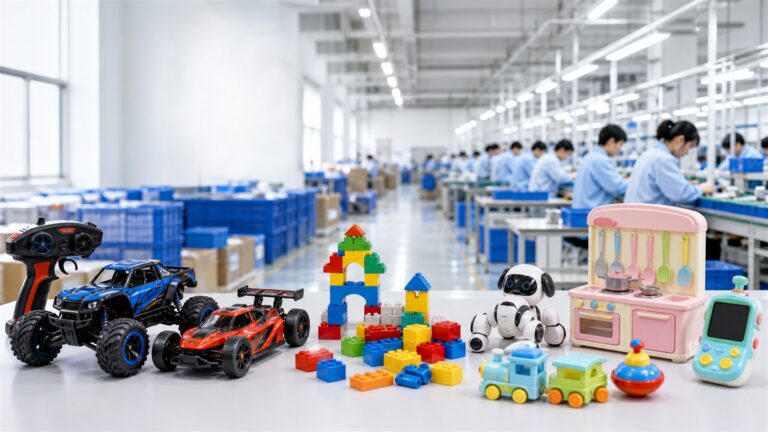
Einkaufsführer für den Großhandel mit Neuheitsspielzeug: Kategorien, Gewinnspannen und Mindestbestellmengen
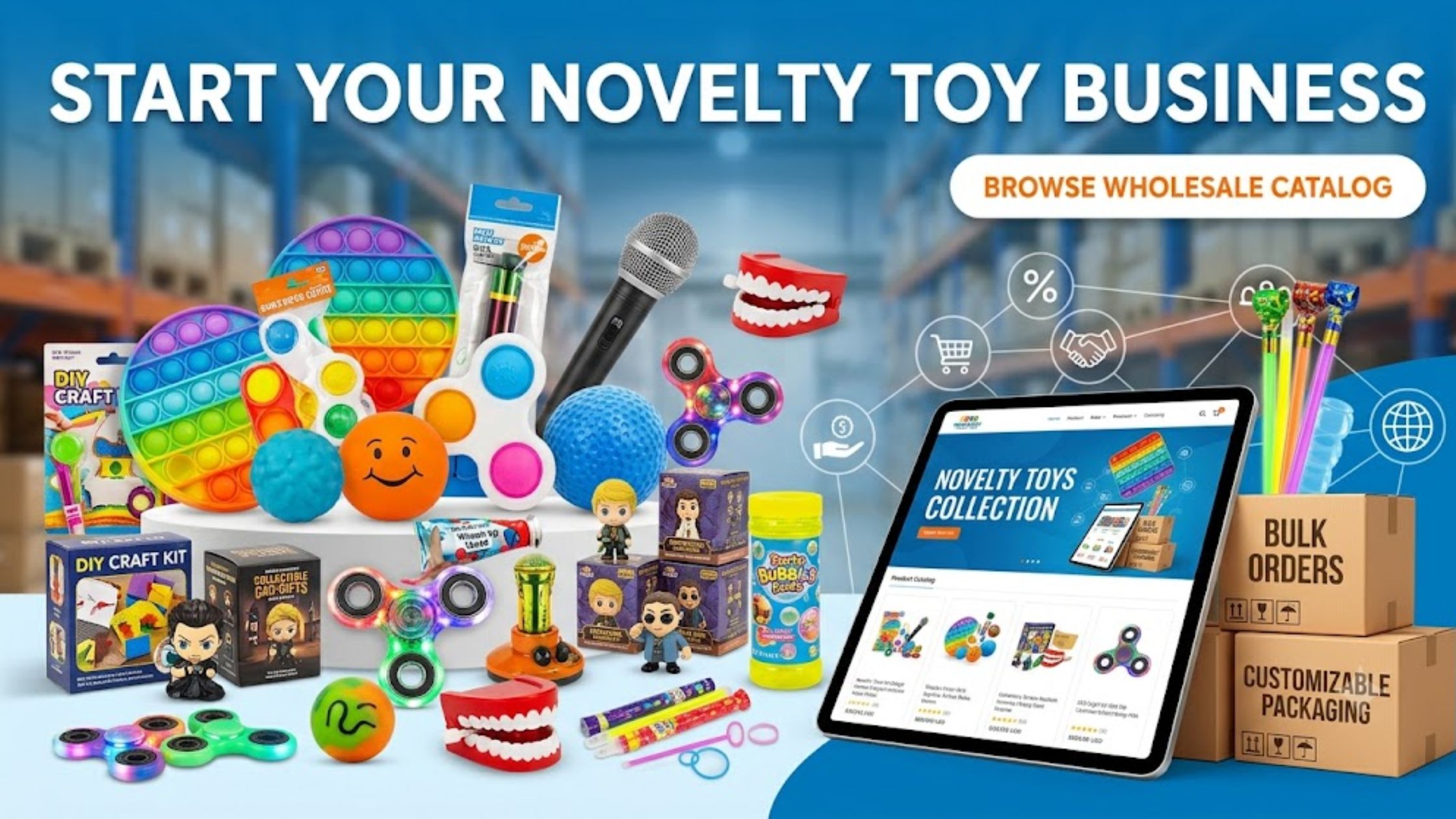
Are you looking for novelty toy products for your business? Novelty toys are creative products that attract customers through unique designs, fun features, and entertaining experiences. Understanding different novelty toy categories helps you compare production costs, shipping requirements, customization possibilities, and the best sales channels before placing an order.
#1 What Are Novelty Toys?
Novelty toys are one of the most popular categories of novelty items in today’s gift and toy market. Unlike traditional toys that focus on educational value or long-term gameplay, novelty toys attract customers with funny designs, special features, sensory experiences, or collectible value.
Common types of novelty toys include:
- Funny & Gag Toys
- Fidget & Sensory Toys
- Mini & Collectible Toys
- Light-Up & Electronic Toys
- DIY & Creative Toys
- Party & Promotional Toys
- Outdoor & Seasonal Toys
From a sourcing perspective, buyers usually compare novelty toys based on production costs, packaging, shipping efficiency, customization flexibility, and target sales channels rather than entertainment value alone.
#2 Why Are Novelty Toys Popular?
Novelty toys have become a popular category for businesses because they combine creative designs, affordable production, and flexible market applications.
For B2B buyers, novelty toys offer several clear advantages:
- Lower Production Cost and Higher Profit Potential
Simple structures, affordable materials, and lightweight designs help reduce manufacturing and shipping costs, creating more room for profit margins.
- Strong Market Appeal
Creative designs and interesting features make novelty toys ideal for novelty stores, toy retailers, promotional events, and online marketplaces, giving buyers more opportunities to reach different customer groups.
- Flexible Customization Options
Colors, packaging, logos, themes, and product combinations can often be customized, helping brands create unique products for different markets.
- Wide Product Range for Different Markets
From low-cost gag toys to collectible and electronic toys, different categories of novelty toys cover various price ranges and sales scenarios, allowing buyers to build product portfolios for both budget and premium markets.
#3 Types of Novelty Toys
Novelty toys can be classified into different categories based on their designs, materials, structures, and sales applications. For buyers, understanding the differences between each type helps evaluate production costs, customization requirements, and market opportunities.
3.1 Funny & Gag Novelty Toys
Funny and gag novelty toys include joke toys, fake insects, magic tricks, prank toys, and classic sound makers that create humorous experiences through simple mechanical designs.
Most products do not require batteries and use mechanisms such as movement, air pressure, or gravity, which helps reduce production costs and component complexity. Their small size, lightweight structure, and reusable features also make them easy to package and transport, making them suitable for wholesale novelty toy businesses, promotional products, and high-volume sales.
3.2 Fidget & Sensory Novelty Toys
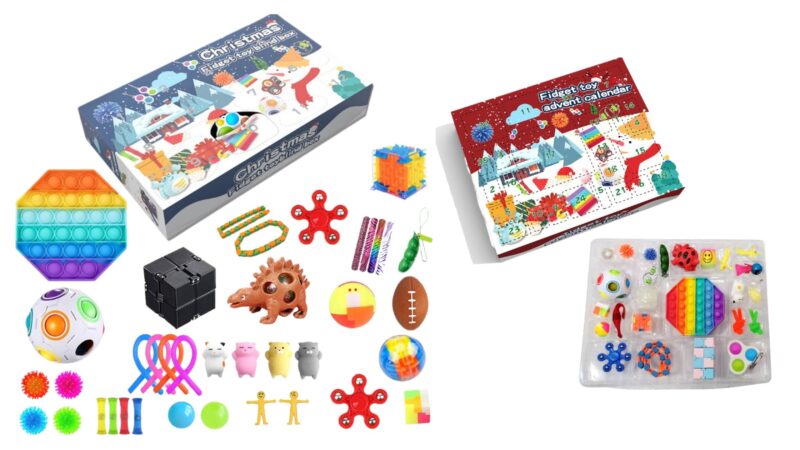
Fidget and sensory novelty toys include pop-it toys, stress balls, squishy toys, fidget spinners, and other products that provide sensory experiences through touch, pressure, and repetitive movements.
Their production costs mainly depend on material quality, mold design, and surface finishing, with silicone and TPR commonly used for durability and safety. Their compact size and simple structures help reduce packaging and shipping costs, while different colors, themes, and display packaging allow buyers to expand product lines more easily.
3.3 Mini & Collectible Novelty Toys
Mini and collectible novelty toys include mini figures, capsule toys, blind box toys, and small animal figures that attract customers through detailed designs, surprise experiences, and collectible value.
Compared with simple novelty toys, mini and collectible novelty toys usually require higher production costs because of more detailed molds, painting, and packaging. Many products use rarity systems, such as common, rare, and special editions, to create surprise during unboxing and encourage repeat purchases.
3.4 Light-Up & Electronic Novelty Toys
Light-up and electronic novelty toys include LED toys, sound toys, dancing toys, and battery-operated gadgets with features such as colorful lights, sound effects, and movement.
Compared with non-electronic novelty toys, they usually require higher production costs due to components such as LEDs, batteries, sensors, and control systems. Although their lightweight structure helps reduce shipping costs, buyers should also confirm battery compliance, product testing, and quality consistency before placing bulk orders.
3.5 DIY & Creative Novelty Toys
DIY and creative novelty toys include craft kits, magic kits, science toys, and building toys that encourage children to assemble, create, and explore by themselves.
Their production costs are mainly influenced by the number of parts, material types, instructions, and packaging requirements. Since these products usually contain multiple components, buyers need to consider part management and packaging accuracy to reduce missing parts and after-sales complaints.
3.6 Party & Promotional Novelty Toys
Party and promotional novelty toys include party favors, custom logo toys, giveaway toys, and glow sticks designed for events, promotions, and large-volume distribution.
Their simple structures, small sizes, and affordable materials help reduce production and shipping costs, making them suitable for bulk purchasing. Many products support customization through logos, colors, and packaging, which makes them popular among promotional campaigns, corporate event giveaways, brand promotion, and seasonal events.
3.7 Outdoor & Seasonal Novelty Toys
Outdoor and seasonal novelty toys include bubble toys, water toys, flying toys, and holiday toys designed for outdoor activities and seasonal sales.
Their costs are mainly affected by material requirements, product size, and durability features, with some products requiring UV-resistant plastics, high-strength PVC, or waterproof coatings. Compared with smaller novelty toys, these products require more attention to packaging, storage space, and transportation costs. Käufer sollten außerdem plan purchasing schedules carefully to reduce inventory risks after seasonal demand declines.
#4 How to Choose the Right Novelty Toys for Your Business?
Choosing the right novelty toys requires more than selecting products with attractive designs. For B2B buyers, profitability, inventory turnover, and product competitiveness are key factors affecting business performance.
First is product cost and pricing potential.
Buyers should evaluate material costs, product structure, packaging requirements, and shipping costs to choose products that match their target price range and profit expectations.
Second is product appeal and sales potential.
Novelty toys rely heavily on creative designs, visual effects, collectible value, and entertainment experiences. Products that can attract attention quickly are more suitable for impulse purchases, retail displays, and online sales.
Third is customization and market fit.
Colors, packaging, themes, and product combinations allow buyers to create products that match different customer groups, promotional campaigns, and seasonal markets.
#5 How to Start a Novelty Toy Business?
Starting a novelty toy business begins with selecting products that match your target customers, sales channels, and price range.
A successful sourcing strategy should balance product costs, MOQ, shipping efficiency, customization capability, and inventory risks. Since novelty toys often depend on design and fast-changing consumer preferences, working with experienced wholesale novelty suppliers who can provide flexible customization and stable production is important.
Before placing large orders, buyers should test product demand, evaluate packaging and shipping requirements, and adjust product selections based on market feedback.
Häufig gestellte Fragen
Q: Are novelty toys profitable for businesses?
Yes. Novelty toys usually have good profit potential because many products have simple structures, low production costs, and low shipping expenses. Their creative designs also support flexible pricing for different sales channels.
Q: Which novelty toy categories are best for first-time buyers?
Funny & gag toys and fidget toys are often good choices for first-time buyers because they usually have lower production costs, simple structures, and lower shipping expenses. They are also ideal for testing market demand with lower sourcing risks.
Q: Can novelty toys be customized for private label brands?
Yes. Many novelty toys support customization in colors, packaging, logos, themes, and product combinations. More complex changes, such as new molds or original designs, usually require higher costs.
Q: What is the MOQ for custom novelty toys?
The MOQ for novelty toys depends on the product type, customization requirements, materials, and production process. Simple packaging or color changes usually require lower quantities, while new molds or customized designs may require higher MOQs.
Q: Do novelty toys require special packaging for shipping?
Packaging requirements depend on the product type. Small toys usually have simple packaging needs, while collectible toys, products with multiple parts, or electronic toys may require more protective packaging.
Schlussgedanken
Novelty toys combine creativity, entertainment, and market opportunities, making them suitable for various retail and promotional applications. For buyers, selecting the right products requires balancing factors such as cost, customization potential, product quality, and market demand.
If you’re looking for a reliable novelty toy manufacturer or a sourcing partner, TonySourcing can help simplify the sourcing process. With experience in toy sourcing and supplier management, TonySourcing helps businesses find suitable novelty toy products, meet customization needs, and build reliable supply chains for different markets.