
Custom Toys: Five Ways to Make Them and What Each One Costs
Got a character, a logo, or just a sketch? You want it made into a toy. Here’s the thing: custom toys don’t come out of one kind of factory. They come out of five. Pick the wrong one and you’ll burn money before you’ve even asked for a price. A plush factory might say 200 pieces and no mold. An injection factory will say 1,000 pieces, plus a bill for the mold. This page gives you the whole picture: which route fits your idea, what it costs, how your logo goes on, what happens after you pay, and which safety tests you’ll need.
Who Makes Custom Toys at TonySourcing
TonySourcing is a sourcing company in China, with offices in Shantou and Yiwu. We’ve shipped toys since 2012 and worked with more than 500 Amazon sellers and distributors. Here’s what that actually means for your order:
- We know both toy hubs. Shantou Chenghai does plastic, vinyl and electronic toys. Yiwu and Yangzhou do plush and small runs.
- All five routes, one quote. You compare them side by side instead of chasing five factories.
- Samples in 7–15 days on most routes, and we take the sample fee off your bulk order.
- We sort the paperwork. CPC, ASTM F963-23 and EN71 test reports, done at CPSC-accepted labs before we ship.

Which Custom Toy Route Fits Your Idea
| Route | Typical products | MOQ (per design, per colour) | Probe | Tooling | Main safety test | Am besten geeignet für |
|---|---|---|---|---|---|---|
| Injection moulding | Plastic figures, car models, block parts, blind-box toys | 1,000–5,000; simple ABS trial runs as low as 36–48 | 7–15 days, not counting mold time | The big cost item; steel molds from ~$5,000 | ASTM F963-23 + CPSIA + CPC | Licensed IP, big runs, ready to pay for a mold |
| Plush sampling | Mascots, plush dolls, keychains, hangtags | 200–500; long-pile fabric up to 3,000 | 7–15 days; high-detail 10–20 | No hard mold; you pay mainly for sampling | EN71-1/2/3 + REACH | Brand mascots, low-MOQ test orders |
| Vinyl / rotocasting | Designer figures, art toys, limited editions | 500–3,000 | 10–20 days | Medium–high; copper molds | EN71-3 migratable elements | Designer brands, small editions |
| Holz | Wooden puzzles, educational toys, toddler toys | 500–1,000; logo-only runs from 100 sets | 7–15 Tage | Niedrig | EN71 + FSC for Europe | Eco positioning, mother-and-baby channels |
| Electronic / sound | Battery, light-up and sound toys | 1,000+ | 15–25 days | PCB plus mold | The trickiest — more on that below | Toys with extra features |
How to Read the MOQ Column
MOQ isn’t a factory being difficult. It’s the machine setup cost, split across the units. Three things move it: does the mold already exist, how many colours and versions do you want, and do you need your own retail box? Printed boxes often have their own 500–1,000 minimum, even when the toy doesn’t.
Custom work breaks into three kinds, and buyers mix them up all the time:
- OEM — your logo on an existing toy. Quick, low MOQ, but anyone else can sell the same thing.
- ODM — a brand-new toy built to your spec. You call the shots, but you pay for tooling.
- No-mold / light customization — change the face, outfit or print on an existing shape. As few as 50–100 pieces for a test run.
Work out which one you’re buying before you ask for a price. Otherwise three factories will send you three numbers you can’t compare.
ETIKETT
How Your Logo Goes Onto Custom Toys
Every route has its own way of putting a logo on, and it changes both the price and how long the print lasts. Ask for the method by name when you request a quote.
Stickerei
— for plush. Tough, and great for a logo on the chest or the face. More stitches, more cost. See our custom plush toys manufacturer page for the plush route.
Silk screen
— for plastic, wood and vinyl. Cheap when you only need a few colours. It sits on the surface.
Lasergravur
— for wood and some plastics. Permanent, one colour, no ink. Our wooden toys wholesale supplier page covers wood finishing.
Heat transfer and UV printing
— full-colour art on flat surfaces. Faster for short runs.
Tampondruck
— the usual choice for small curved bits, like a figure's eyes.
Watch the colour count. Every extra colour means another setup and more waiting for it to dry. That’s how a “30-day” quote quietly turns into 45.
The Eight Steps From Design to Delivery
- 1. Design brief — your art, size, quantity, age range, target market.
- 2. Route selection — we match your idea to one of the five lines above.
- 3. Quote pack — unit price at two volumes, tooling, sample fee, box details, Incoterm.
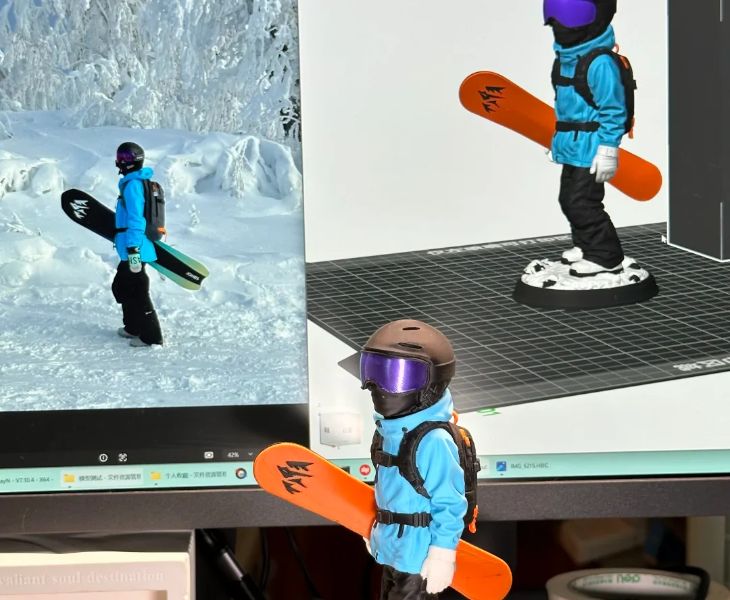
- 4. Artwork and 3D mock-up — signed off in writing before anyone cuts a mold.
- 5. Probenahme — 7–15 days; a detailed plush may need 10–20.
- 6. Sample approval — sign and seal a real sample. That ends the colour arguments.
- 7. Bulk production — 25–45 days; we check the first 10% while it runs.
- 8. Inspection and shipment — a final check, then sea or air.
Most first orders go wrong at step 6, not step 7. Never sign off on a photo if you can sign off on a real sample. For more on each stage, our guide to how toys are made goes deeper.
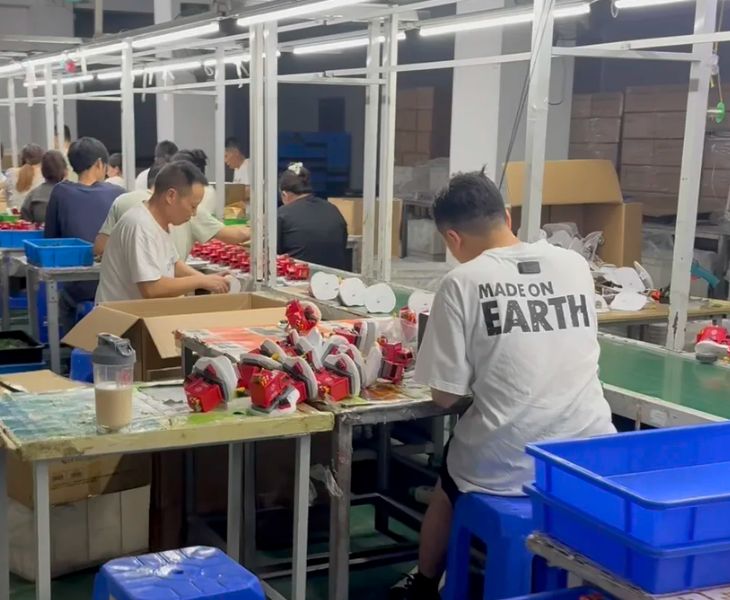
Which Safety Tests Custom Toys Need
Safety isn’t a box you tick at the end. You lock it in when you pick the material, the paint and the function. Change any one of those and you’re back at the lab.
| Markt | What you need to arrange | What people miss |
|---|---|---|
| United States | Get the toy tested at a CPSC-accepted lab, then issue a Children’s Product Certificate (CPC) | ASTM F963-23 became mandatory on 20 April 2024 under 16 CFR part 1250; tracking labels on the toy and the pack |
| European Union | EN71 test report and CE mark; REACH chemical papers | EN71-3 migratable elements; FSC if you claim the wood is eco-friendly |
| Beide | Age grading, warning labels, and a report that covers your exact SKU and material | Not every rule applies to every toy — a toy that makes no sound isn’t tested for sound level |
That last row is the one to remember. The US regulator says it plainly: there’s no single checklist for every toy. You decide which parts of the standard apply to your product. Ask the lab to write down which sections they’ll test, and why. Then check the report date and the factory name match your goods. We walk through it in our toys certification guide und die list of CPSC-accepted testing labs.
Battery and sound toys need the most paperwork. On top of the usual toy test, they pick up extra rules, and shipping a battery brings its own stack of documents. We keep those details on their own pages instead of repeating them here: electronic toys: a B2B sourcing guide covers the product rules, and why carriers ask for MSDS on battery-operated toys covers shipping. One thing to watch: the word “microphone” on a quote can mean three different products, and only one of them drags in privacy and radio rules. Get it spelled out in writing.
TonySourcing
Custom Toys Tips
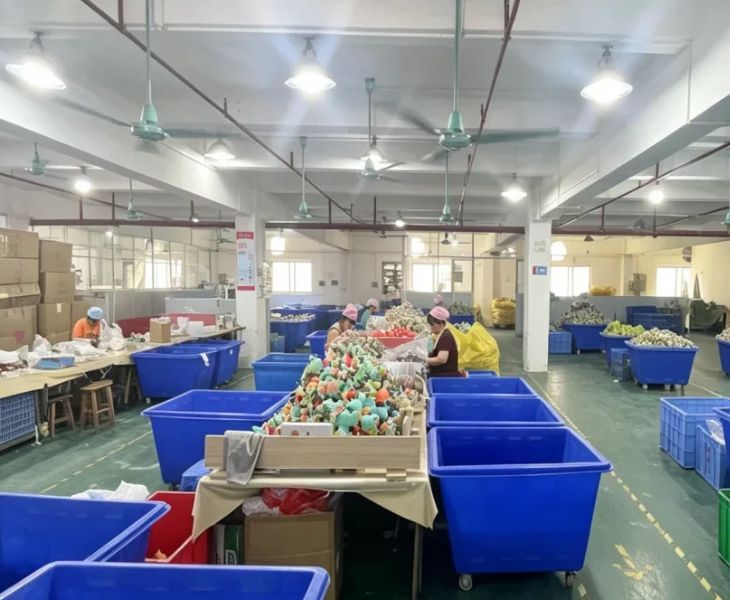
Which Route to Try First
For custom toys, demand in 2026 is heading toward plush and designer toys, not away. Pop Mart said its Monsters series (the one with Labubu) brought in about $670 million in the first half of 2025. The Toy Association’s Toy Fair 2026 briefings called out cozy, screen-free play and recycled materials as the themes of the year. What that means for you: test with a low-MOQ route, then move the winner into moulding.
- Cheapest way in — plush or vinyl blanks with no new mold, 50–500 pieces. Good for trying out your art.
- Best cost per piece at scale — injection moulding. The tooling hurts up front, but the unit cost drops fastest after 5,000.
- Best for gifts and collectibles — limited plush and vinyl runs, where scarcity holds the price up.
- Easiest to clear — plain wood or plastic with no sound. Fewer features, fewer test rules.
If your toy needs a circuit, price the testing and the battery paperwork before you price the toy itself. Selling into schools? See what educational toys need; there’s usually another layer of review.
Why Buyers Choose TonySourcing for Custom Toys
When buyers order custom toys, these are the four things that change how the job turns out — not a list of company adjectives:
1. We price the route, not just the unit. Your quote spells out who owns the mold, whether the sample fee comes off the bulk order, and the box minimum, all on the same line. 2. The mold is yours on paper. We write your right to collect the physical mold into the contract before you pay the tooling deposit. 3. One quote pack, every factory. The same request goes to each shortlisted line, so you’re comparing like with like. 4. We handle the bundling. If the toy, the insert and the display box come from different shops, one named party takes charge of the final packing.
To build the shortlist, start with our toy manufacturers directory.
Start Your Custom Toy Project
Send us your art, how many you want, and where you’ll sell them. We’ll tell you which of the five routes fits, what the MOQ and tooling will cost, and which tests your design needs — all in one quote pack you can compare. Kontakt TonySourcing to get started.
Custom Toys FAQ
What’s the minimum order for custom toys? There’s no one number. Existing shapes with your logo can start around 50 pieces; new molds usually start at 1,000. Plush often sits at 300–500 per design. Your own printed box can set a 500-piece floor of its own. Always ask about the MOQ for your exact design, colours and market.
How much do custom toys cost to make? A plastic toy usually needs $5,000–15,000 to get going, once 3D work, the steel mold, lab tests and the first batch are counted. Plush and no-mold routes cost a lot less. Treat those as rough guides, not a promise — your art and your volume set the real number.
How long does sampling take? 7–15 days on most routes, 10–20 for detailed plush, 15–25 if there’s a circuit. Tooling time comes on top for molded toys.
Can I use a third-party character? Only if you have a licence for the market you’re selling in. A factory can’t give you that right. A good one will ask to see your licence before it cuts a mold.
Do I need a certificate to sell online? Yes. In the US, children’s toys need a CPC backed by tests at a CPSC-accepted lab. Amazon and other marketplaces want that file before they’ll let you list. See our guide to toy certificates for Amazon FBA.
What about packaging? It’s a separate cost with its own minimum. Our individuelle Spielzeugverpackung page covers box materials and prices. This page sticks to the toy.
Jetzt Angebot einholen