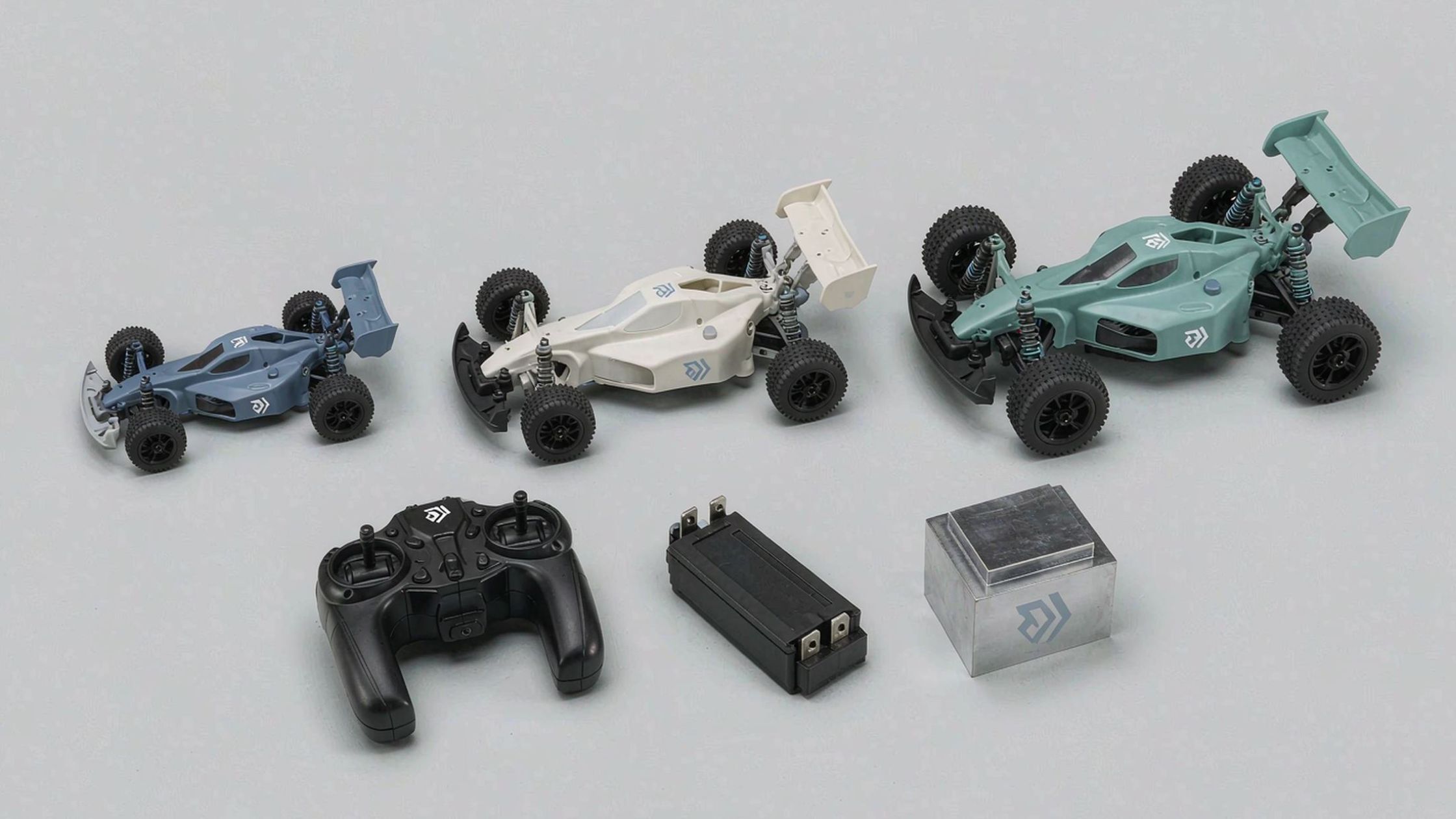
OEM RC Cars: Real Cost, Tooling and Timeline
An OEM RC car is built to your design and sold under your brand. But the price and the calendar depend on one choice you make early. Do you rebrand a stock car, pay for a new shell, or cut a full new tool?
Those are three different projects. A stock rebrand can ship in weeks. A new shell needs months. A full tool needs a bigger budget and a longer plan.
This page sets out what an OEM RC car really costs. It covers who owns the tool and the firmware, which papers you need, and where projects slip. It also answers a question most supplier pages skip. In an OEM RC car, the radio protocol is usually not yours.
If you are new to the product, what an RC car is explains the parts first.
What Does OEM RC Car Manufacturing Actually Mean?
OEM means you set the design and the brand, and a factory builds to your spec. ODM means the factory brings the design and you put your name on it.
In RC cars, the split is not only the tool. It is also the electronics. The motor, ESC, receiver and transmitter usually arrive as one platform from the factory. You can change the colour and the box without touching them. You cannot change how the radio behaves without the supplier’s firmware.
| Route | What you change | Tool owner | Realistic first MOQ |
|---|---|---|---|
| Rebrand a stock car | Colour, logo, box, manual | Fabrik | 80–500 units |
| New shell on a stock platform | Body shape, livery, packaging | You, if the contract says so | 1,000–3,000 |
| Full new tool | Shell, chassis, electronics layout | You, if the contract says so | 3,000–10,000 |
The first route is where most buyers should start. It tests the channel before you spend money on steel. Der RC car wholesale page shows which stock platforms are already proven.
One warning about words. Some factories call a printed logo “OEM”. Ask a custom rc car manufacturer which of the three routes a quote actually covers before you compare prices.
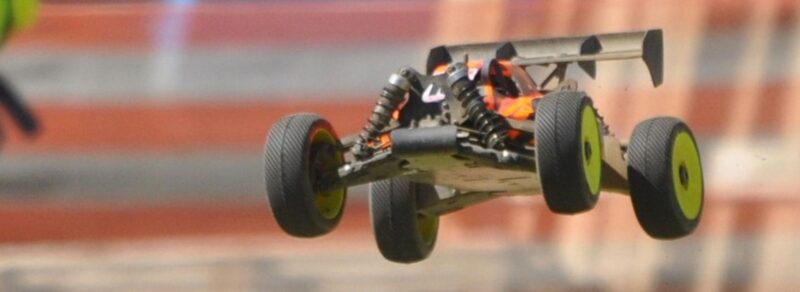
Stock Body or Your Own Tooling — When the Mould Pays Back
A stock body costs you nothing in tooling. A new shell is a real tool with a real price. The full route adds a chassis tool on top.
Every RC car also needs a transmitter, a receiver, an ESC and a motor. These are shared across the factory’s range. That is why a new shell is the usual first step, not a full new car.
These figures are a rough guide, not a promise. They show the order of magnitude so you can read a quote.
| Tool route | Typical cost | Lieferzeit | Good for |
|---|---|---|---|
| Change an existing shell | USD 300–1,500 | 3–15 days | Logo, spoiler, small face lift |
| Simple single-cavity tool | USD 700–2,800 | 18–25 days | Small body, low detail |
| Fine steel tool, small RC shell | USD 2,800–7,000 | 30–45 days | First own-brand model |
| Aluminium vacuum-form tool | USD 700–2,100 | 7–10 days | Polycarbonate hobby shell |
| Full multi-part car tool set | USD 36,000–79,000 | 45–65 days | A range built on one platform |
The number that decides the route is cost per unit. One factory example puts a CNY 20,000 tool at CNY 0.40 a car over 50,000 units, and CNY 4.00 at 5,000. Same tool, ten times the share.
Tooling is a volume bet, not a fee. If you expect to sell 1,000 cars, keep the stock shell. If you have a three-year range planned on one platform, the tool is an asset.
Ask for the rated shot life in writing. A steel injection tool is commonly quoted well above 100,000 shots. A 3,000-unit first order uses a tiny share of that life. The rest is yours only if the contract says so. The Shantou toy factory guide breaks down mould cost, MOQ and the cluster around it.
Who Owns the Mould, the Body and the Radio Firmware?
Three assets, three answers. Most contracts mention only the first.
The tool. You own it if you paid for it and the contract says so. Both conditions matter. Ask for four lines: ownership on full payment, a discreet buyer mark on the tool, return or destruction on request, and no use for a third party.
The body. If the shell copies a real car, the car maker owns the design. Your own livery artwork should stay yours. Put that split in writing, because licensors often supply the artwork and then control how it is used.
The firmware. This is the one that surprises buyers. The 2.4GHz protocol usually belongs to the electronics supplier, not the factory and not you. You can often buy a dedicated firmware build or exclusivity on a radio code. You rarely get the source.
| Asset | Who usually holds it | What to ask for |
|---|---|---|
| Shell and chassis tool | Factory, unless stated | Ownership, mark, return, no third-party use |
| Body artwork | Licensor or factory | Written licence to your brand and market |
| Radio protocol and firmware | Electronics supplier | Exclusivity, pairing rights, update support |
| FCC ID and EU declaration | Certificate holder | Name matches your legal entity or a named agent |
| Spare-part moulds | Fabrik | List, price and supply term in the contract |
Here is a quick test for a real “exclusive” model. Ask whether the same transmitter can pair with other brands’ cars. If it can, your shell is exclusive and your radio is not. That matters when a competitor sells the same driving behaviour for less.
Firmware also has an end-of-life risk. If the radio chip is discontinued, the factory may move your next batch to a new protocol. Your old stock of spare remotes then stops working. Ask what happens to pairing when the chip changes.
Putting your own FCC ID on the transmitter is harder than it sounds. FCC rule 47 CFR 2.933 and KDB 249634 require a new responsible party to hold its own grantee code and written permission from the original grantee. The filing must state that the design and circuit are unchanged. This is why most OEM RC cars ship under the factory’s ID. Public FCC filings for RC cars are usually held by the factory, not by the name printed on the box.
For factory questions before you pay a deposit, the toy manufacturer vetting guide has a usable checklist.
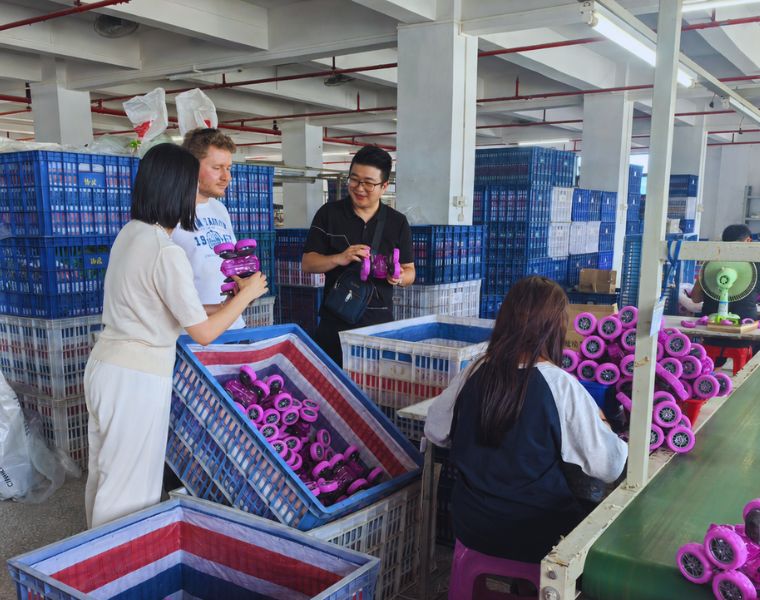
The Battery File You Cannot Ship Without: UN38.3, SDS and EN62115
An RC car is a toy, a battery device and a radio device at the same time. Each one brings its own paper. A factory that hands you only an EN 71 report has not covered the shipment.
| Paper | What it proves | Who issues it | When you need it |
|---|---|---|---|
| UN 38.3 test summary | The cell or pack passed the transport test series | Battery maker or accredited lab | Booking air or sea freight |
| SDS, still often called MSDS | Chemical and handling data for the pack | Battery maker | Carrier and warehouse intake |
| EN IEC 62115 report | The electric toy is safe | Accredited toy lab | EU sale |
| EN 71-1/2/3 report | Mechanical, flammability and chemical safety | Accredited toy lab | EU sale |
| ASTM F963-23 report | US toy safety, mandatory since 20 April 2024 | CPSC-accepted lab | US sale |
UN 38.3 and the SDS do two different jobs. UN 38.3 is a pass or fail test result for transport. The SDS tells a carrier how to handle and store the pack. The test summary has to be available from the maker; keep it on file and expect a carrier to ask for it at booking.
The UN number changes with the pack. A LiPo inside the car travels as UN3481. A spare pack shipped on its own is UN3480. A 2S or 3S pack is a lithium-ion battery in the transport rules. Print the right number on the carton, because the paperwork follows the number.
In the United States, 16 CFR part 1505 covers toys meant to run on nominal 120 V branch circuits. It explicitly leaves out parts powered by 30 V r.m.s. or less, so a 4.5 V or 7.4 V car is outside it. That does not make the toy unregulated. Reese’s Law and 16 CFR part 1263 cover button and coin cells. Part 1263.1(c) exempts a children’s toy that meets the battery access and labelling rules in part 1250. Ask your lab to confirm the current wording before you ship.
Europe adds a date you need to plan around. The EU battery rule on removable and replaceable batteries applies from 18 February 2027. A design locked to a glued-in pack today may need a change for that market.
Carriers also cap the charge state of lithium packs shipped with the product they power. Ask your forwarder for the current limit before you book. Unser battery shipping and MSDS page covers what the carrier asks to see, and the toy certification guide covers the report set.
A generic report on a similar car is not a report on your SKU. Ask the lab to write down which sections it tested and why.
Radio Approvals by Market: RED / FCC Part 15 and What Else Is Needed
The toy report is only half the file. Every RC car has a radio, and radio approval is a separate track.
In the United States, the transmitter and the receiver are not treated the same. The handheld transmitter is an intentional radiator. Under 47 CFR 15.201(b), it needs Certification through a Telecommunication Certification Body and an FCC ID. The receiver in the car sits in a different part of the rules. Section 15.101 offers SDoC or Certification, and receivers above 960 MHz are exempt from most technical provisions. The FCC ID and the two-condition statement still have to be right on the transmitter.
In the EU, the Radio Equipment Directive 2014/53/EU applies. At 2.4 GHz, the usual test standards are EN 300 328 for spectrum access and EN 301 489-1 with part 17 for electromagnetic compatibility. Toy safety is a separate legal file under Directive 2009/48/EC. You end up with a CE mark backed by both, not one report covering everything.
| Markt | Radio approval | Who holds it |
|---|---|---|
| United States | FCC Part 15, FCC ID on transmitter, SDoC for receiver | Certificate holder or US agent |
| European Union | RED 2014/53/EU, CE mark, declaration of conformity | Manufacturer or EU authorised representative |
| Vereinigtes Königreich | UKCA under the Radio Equipment Regulations 2017 | UK manufacturer or importer |
| Canada | ISED approval, RSS-247 at 2.4 GHz, IC ID | Certificate holder |
| Japan | MIC equipment approval and Giteki mark | Japanese importer or agent |
| Australien | ACMA registration and RCM mark | Local supplier |
Check the number yourself. A printed FCC ID that does not match the public database is common. Der toy certification page lists what we collect before a shipment leaves, and the lab comparison shows who issues reports.
One rule is often missed. The radio module certificate is not a certificate for your finished car. The final SKU needs its own assessment, because the shell, antenna and motor all change the result.
If your car connects to a phone or the internet, a newer set of RED rules applies on top. Delegated Regulation (EU) 2022/30 added software and cybersecurity requirements for connected radio equipment. A plain 2.4 GHz car with no data link normally stays outside that scope. Say clearly which one you are building before you ask for a quote.
For Amazon sellers, the CPC page und die eFiling guide cover the US filing steps.
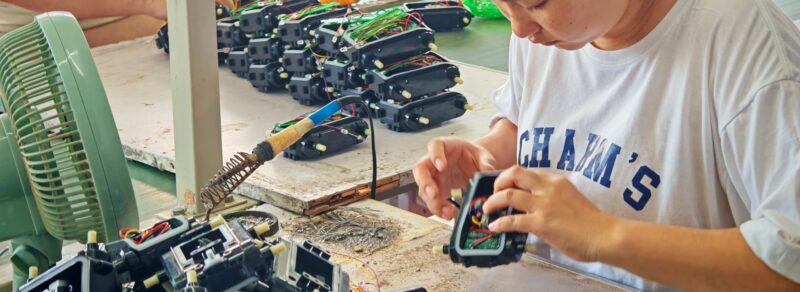
What Happens When the Body Looks Like a Real Car or Truck
A recognisable grille, badge or model name turns a toy into a licensed product. Car makers treat it that way and they enforce it.
The only royalty rate I can verify comes from the diecast side. Xinghui Model told investors in 2013 that it generally pays car makers 4% to 12% of model sales revenue. Its filings put the amount actually paid near 6% to 7% of model revenue. That is a listed company disclosure, but it is not an RC quote. Use it as an order of magnitude and negotiate your own rate.
Two facts pull in opposite directions, and you need both.
In court, an accurate model can hold up. In May 2025 the Hamburg Higher Court dismissed Volkswagen’s case against a model maker (5 U 61/21). It held that scale models form their own market. What a maker cannot do is suggest official approval.
At the border, the position is harder. China’s National Intellectual Property Administration published a case in 2011 where US Customs held over 100 cartons of RC cars bearing a Jeep mark. The declared domestic value was about USD 11,000. Estimated retail value passed USD 100,000. The same rules cover a replica body on an RC chassis as well as a diecast model.
Put together, the practical rule is short:
- An accurate shape is defensible in court.
- Shipping it without a licence is still a customs risk.
- Claiming approval you do not have is the part that gets you sued.
A racing livery can need several licences. The car maker, the team, the sponsor and sometimes the tyre brand all have a mark. Each may ask for a fee. Budget for an advance as well as the percentage.
Allow two to four weeks for licensor artwork review, and at least one round of comments. If they ask for a shape change after the tool is cut, that change is real money. The full licensing analysis sits on the OEM diecast car page, and the RC truck brand guide shows which brands already hold a licence.
If you want to avoid the fee, use a generic body and your own livery. That route keeps the tooling low and the legal file simple.
What Does the Whole Project Cost?
Costs move with the route, the scale and the battery. The shares below are stable enough to check a quote against. They are a rough guide, not a promise.
| Cost line | Share of FOB | What moves it |
|---|---|---|
| Electronics: motor, ESC, radio, battery | 30–45% | Brushed or brushless, 2S or 3S pack |
| Shell and chassis plastic | 10–20% | New tool or shared tool |
| Assembly and labour | 10–18% | Hobby cars take more hand work |
| Packaging and manual | 5–10% | Gift box, foam insert, multi-language |
| Tooling share | 5–15% | Falls as volume rises |
| Toy and radio testing | 2–6% | Fixed per SKU, not per unit |
| Licence | 0–12% | Only for a recognised real vehicle |
Electronics are the biggest line in an RC car. In a diecast model, metal and paint lead the bill. That difference is why a diecast cost table cannot be copied into an RC project.
Two points save money.
Testing is a fixed cost per SKU. At 500 cars it is a real share of the price. At 20,000 it is noise. This is one reason a first order costs more per unit.
The battery choice moves more than the shell colour. A brushless ESC and a 3S LiPo change the electronics line, the carton and the transport paper at the same time.
For a first own-brand project, a rebrand at 500 units is the low-risk start. A new shell at 2,000 units is the next step. A full tool only makes sense when a range is already planned.
How Long Does an OEM RC Car Really Take?
Longer than most quotes say, and the answer changes with the route. These are planning bands, not a factory promise.
| Stage | Rebrand stock car | New shell | Full new tool |
|---|---|---|---|
| Hand sample from stock | 5–7 days | — | — |
| Tool cutting, after drawing sign-off | None | 30–60 days | 45–65 days |
| T1 sample and fix list | — | 3–5 Tage | 3–5 Tage |
| Design change rounds | — | 1–3 rounds | 1–3 rounds |
| Toy and radio approval | 10–15 Tage | 20–30 Tage | 25–40 Tage |
| Produktion | 15–25 days | 15–45 days | 15–45 days |
| Vorversandinspektion | 1–3 days | 1–3 days | 1–3 days |
| To shipment | 35–50 days | 95–155 days | 120–180 days |
Add 26 to 32 days of ocean freight, plus 7 to 15 days for customs clearance. A new shell is a three to five month project before the goods reach your warehouse.
The “60 days” figure you see online describes a stock car with a new colour and a printed logo. There is no new tool, no licensor review and no radio retest in that route. It is a real number for the wrong project.
One variable moves the timeline more than any other: the month. One factory quoted 20 days in June and 45 days in September for the same job. August to October is peak production for Christmas stock. Ask for a lead time tied to a named production slot, not a generic number.
T1 is not the final sample. Most tools need one to three rounds of changes after the first shot. Budget for the rounds rather than treating the first sample as the end of development.
Start artwork and approvals in parallel with the tool, not after it. Packaging alone can add two to four weeks if you leave it to the end. If a supplier quotes 60 days for a new shell, ask which stage they have left out. It is usually the radio test or the licensor review, and it comes back as a delay later.
Der types of remote control cars guide helps you fix the car type before the brief, which removes one round of samples.
What Goes Wrong Most Often
Eight failures, in the order they tend to happen.
1. Signal range is not specified. Buyers test in a shop and complain at home. Traxxas says it plainly in its own manual: a radio-controlled model faces interference from sources beyond your control. Agree a range test, antenna design and interference check before the sample is signed.
2. The battery is changed without notice. A factory swaps a cell to save USD 0.20. The carton, the charger and the transport paper all change with it. In November 2026 the US CPSC recalled about 294 four-wheel-drive RC cars because children could reach the coin cell and the pack inside the transmitter. Name the exact pack and part number in the purchase order.
3. The firmware is locked to the factory. You cannot pair a spare remote bought a year later. Ask for pairing rights and a spare remote price at the start.
4. Certificates do not match the SKU. A report for a similar car, or an FCC ID that fails a database check. Ask for the test section list and the certificate holder name.
5. The licence is discovered late. Two to four weeks of review, sometimes a second round. If the shape changes after the tool is cut, you pay twice.
6. Spare parts were never priced. Body shells, gears and motors wear out. Agree a parts list, prices and a supply term. Our own RC wholesale page notes that key parts are kept in stable supply.
7. Cartons fail the drop test. A LiPo in the box makes the pack heavy at one end. The ISTA 3A parcel standard calls for nine drops on different faces and edges. Ask your lab to run it on the packed carton, not on one bare sample car.
8. The decorated sample was never approved. A plain shell looks close. Colour and print drift appear on the first decorated shot. Approve that shot, not the raw plastic.
What Should Be in the Contract?
Ten clauses. None are unusual, and all are cheap to add before you sign.
| Clause | What it protects |
|---|---|
| Tool ownership, marking and return | Your asset |
| No third-party use of the tool or shell | Your range |
| Radio firmware rights and pairing | Your spares and updates |
| Certificate holder named for each market | Your legal file |
| Licence responsibility for each side | Liability |
| AQL level and acceptance numbers | Qualität |
| Approval gates and who signs each one | Zeitleiste |
| Artwork and packaging deadline | Schedule |
| Spare-part list, price and supply years | After-sales |
| Late delivery credit and IP indemnity | Recourse |
The IP indemnity is the clause buyers skip and then need. If the factory supplies artwork or a shell that infringes, the responsibility should sit with them, in writing.
Häufig gestellte Fragen
What is the minimum order for an OEM RC car?
80 to 500 units for a rebranded stock car. A new shell usually starts at 1,000 to 3,000. A full new tool needs 3,000 or more to make the mould share workable.
How much does a custom RC car cost to make?
A 500-unit rebrand is the cheapest way in. A new shell at 2,000 units lands in the mid five figures all in. A full tool is a six-figure budget. Treat every range as a rough guide, not a promise.
How long does a custom remote control car factory take?
35 to 50 days for a rebrand, 95 to 155 days for a new shell, and up to nine months for a full tool. Add ocean freight on top. A 60-day quote for a new shell is describing a stock car.
Do I own the mould and the radio firmware?
You own the mould if you paid for it and the contract says so. The radio firmware usually stays with the electronics supplier. You can buy exclusivity on a radio code, but you rarely get the source.
How do I make a custom RC car step by step?
To make a custom RC car, pick the type and scale first. Choose one of the three routes, lock the battery and radio spec, then sign off a decorated sample. Run artwork and testing in parallel with tooling.
Can I make an RC car that looks like a real car?
Yes, but plan a licence if the badge, grille or name is recognisable. Budget two to four weeks for artwork review. A generic body with your own livery avoids the fee.
What certificates does an OEM RC car need?
Toy safety and radio approval are separate. The EU needs EN 71 and EN IEC 62115 plus RED. The US needs ASTM F963-23 and FCC Part 15. Shipping needs a UN 38.3 test summary and an SDS for the pack.
Can I use my own battery?
Often yes, but it changes the test file, the carton and the charge-state rule for freight. Name the exact cell and part number, and get the lab to confirm the new SKU.
What is the difference between OEM and ODM for RC cars?
In OEM you own the design and pay for the tool. In ODM the factory owns both and can sell the same driving platform to another buyer with a different shell.
Can I get spare parts after the first order?
Ask before you order, not after. Get the shell, gears, motor, battery and remote into a parts list with prices and a supply term.
Get Your RC Project Costed
Send us the car type, scale, quantity and the route you want. We will come back with three things. A tooling quote, a unit price at two or three volumes, and a stage-by-stage schedule that names the radio test and the licensor review as separate lines.
Those two lines are where an OEM RC car project usually slips. Start on the contact page or email info@tonysourcing.com.
If you are still choosing between stock and custom, the RC toys overview shows what a proven platform looks like. For duty and landed cost, the import tax guide covers the numbers, and the freight guide covers battery booking.