What Are Sensory Toys? A Practical Guide for Toy Buyers
Sensorisches Spielzeug sind Spielprodukte, die durch Berührung, Sehen, Hören, Bewegung, Körperhaltung oder den Mund spürbare Reize vermitteln. Die Kategorie umfasst alles von strukturierten Bällen und Pop-Tubes bis hin zu Balanceboards. Für Käufer ist es entscheidend, die Spielfunktion genau zu definieren – und sich nicht allein auf den Begriff “sensorisch” zu verlassen – und anschließend die Eignung für das Alter, die Sicherheit, die Qualität und die Einhaltung der Vorschriften zu überprüfen.
Was macht ein Spielzeug zu einem sensorischen Spielzeug?
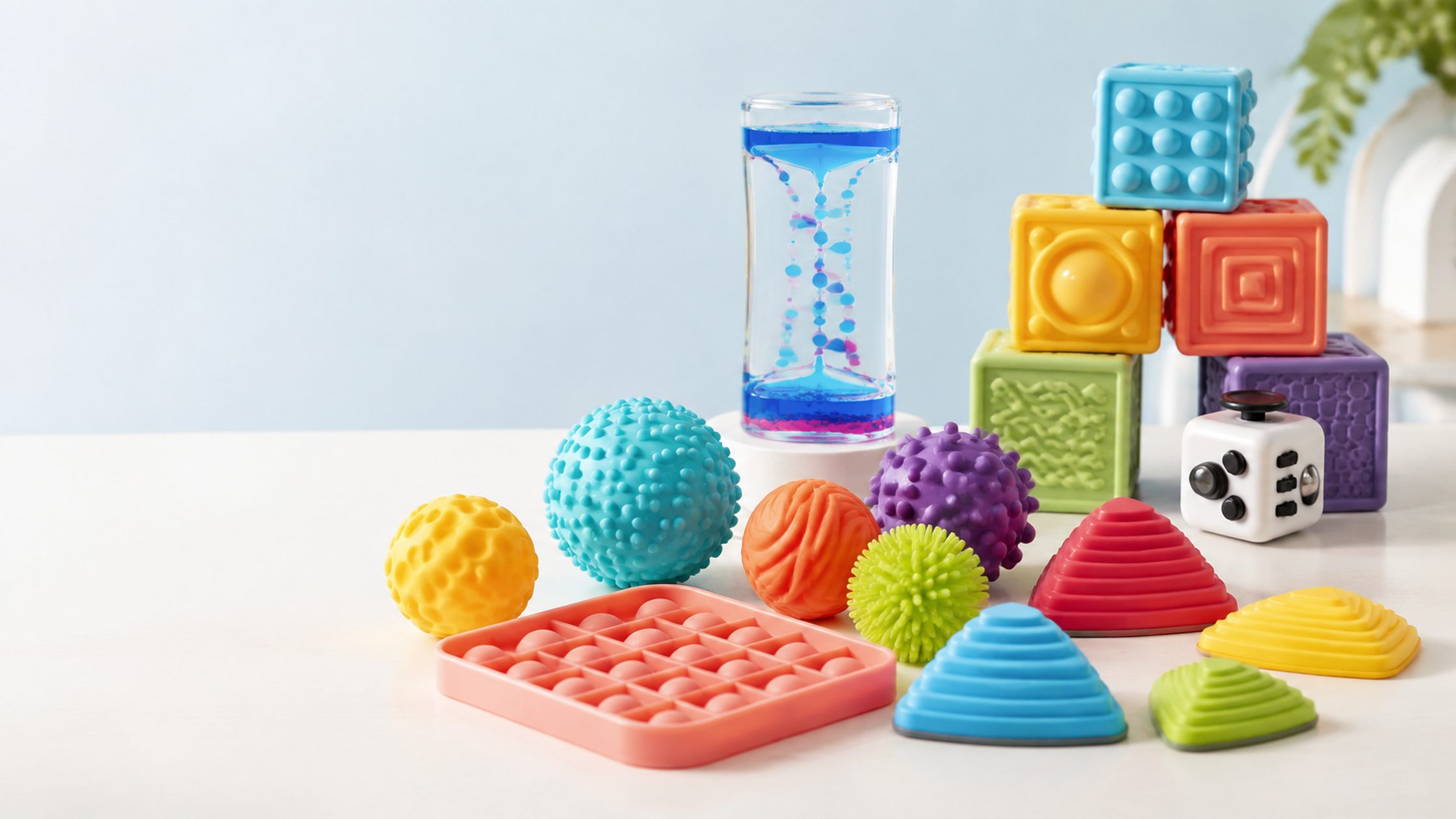
Ein sensorisches Spielzeug bietet dem Benutzer durch ein oder mehrere Sinnesorgane ein klares, wiederholbares Erlebnis. Ein Kind kann beispielsweise einen strukturierten Ball drücken, beobachten, wie eine Flüssigkeit durch einen Timer fließt, das Geräusch von Perlen in einem Regenmacher hören oder sein Gewicht auf einem Wackelbrett verlagern. Das Spielzeug definiert sich durch die Reize, die es vermittelt, und die Handlungen, zu denen es anregt.
Es handelt sich hierbei um eine breite Produktkategorie im Einzelhandel und nicht um einen standardisierten Produkttyp. Viele gewöhnliche Spielzeuge weisen sensorische Eigenschaften auf: Bauklötze vermitteln taktiles und körperliches Feedback, Rasseln kombinieren Geräusche und Bewegung, und Knete bietet Textur und Widerstand. Die Bezeichnung “sensorisch” für ein Produkt ist nur dann sinnvoll, wenn man vier Fragen beantworten kann:
- Was macht das Kind damit?
- Welche Art von Eingabe liefert es?
- Wie intensiv und kontrollierbar ist dieser Input?
- Für welches Alter, welche Umgebung und welchen Grad an Aufsicht eignet sich das Produkt?
Sensorisches Spielzeug ist nicht automatisch ein Therapieprodukt. Ergotherapeuten wenden individuelle Ansätze an, wenn sensorische Verarbeitungsstörungen die Teilnahme an alltäglichen Aktivitäten beeinträchtigen. Massenmarktspielzeug sollte nicht als Mittel zur Behandlung von Autismus, ADHS, Angstzuständen oder sensorischen Verarbeitungsstörungen beworben werden, es sei denn, die Aussage ist rechtlich zulässig und durch entsprechende Belege gestützt. Beschreiben Sie stattdessen beobachtbare Merkmale und das Spielverhalten: “weiche Oberfläche”, “leise Klickgeräusche” oder “schaukelnde Bewegung”.”
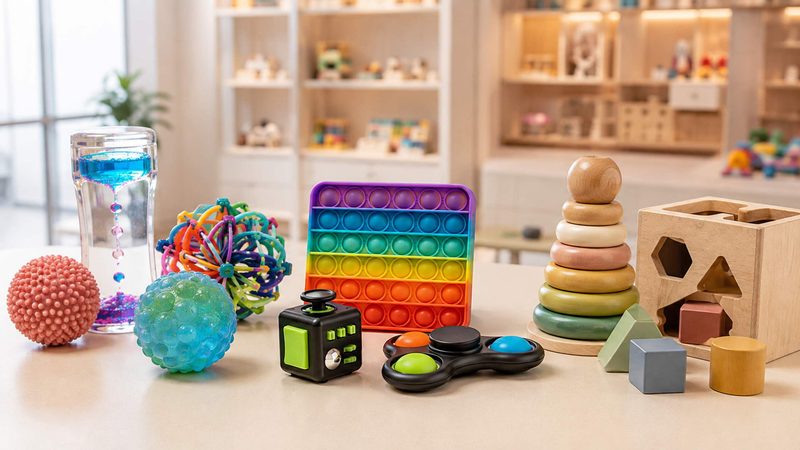
Die wichtigsten Arten von sensorischen Spielzeugen
Die Klassifizierung von sensorischem Spielzeug nach seinen Eingabekriterien ist sinnvoller als die Gruppierung nach Trends oder Aussehen. Ein Produkt kann mehreren Gruppen angehören, die primäre Spielfunktion sollte jedoch klar erkennbar bleiben.
| Sensorische Eingabe | Gängige Produktbeispiele | Was der Benutzer tut | Käuferprioritäten |
|---|---|---|---|
| Taktil | Strukturkugeln, Knete, Sinnesfliesen, Stoffbücher | Berührt, drückt, quetscht, reibt | Oberflächenbeschaffenheit, Reißfestigkeit, Reinigungsfähigkeit, Dichtigkeit |
| Visuell | Flüssigkeitstimer, Leuchttafeln, Kaleidoskope, sich drehendes Spielzeug | Beobachtet Farbe, Licht oder wiederholte Bewegung | Optische Klarheit, Helligkeit, Batteriezugang, Flüssigkeitsdichtung |
| Auditiv | Rasseln, Regenmacher, Musikspielzeug, Pop-Tubes | Schütteln, Klopfen, Dehnen oder Drücken | Schallpegel, Klangkonsistenz, lose Teile, Lautsprecherqualität |
| Propriozeptiv | Widerstandsbänder, Bodysocken, Quetschspielzeug, Gewichtsprodukte | Schiebt, zieht, trägt oder komprimiert | Belastungsgrenzen, Nahtfestigkeit, Rückprallverhalten, Fachprüfung für beschwerte Gegenstände |
| Vestibuläre | Wackelbretter, Schaukeltiere, Trittpfade, Schaukeln | Balanciert, schaukelt, dreht sich oder bewegt sich | Stabilität, Rutschfestigkeit, Fallzone, Tragfähigkeit, Installation |
| Oral | Strukturierte Beißringe und speziell entwickelte Kauprodukte | Bisse, Mäuler oder Kauer | Zielalter, Materialdokumentation, Beißfestigkeit, Hygiene, Form |
| Multisensorisch | Aktivitätswürfel, Beschäftigungstafeln, Sinnessets | Verwendet mehrere Aktionen und Eingaben | Komponentenanzahl, Überstimulation, Alterskonsistenz, fehlende Teile |
Geruch und Geschmack können zwar auch sensorische Reize sein, doch absichtlich parfümierte, aromatisierte, kosmetikähnliche oder mit Lebensmitteln in Berührung kommende Produkte können zusätzliche Fragen hinsichtlich Chemikalien, Allergenen, Hygiene, Kennzeichnung und regulatorischen Vorgaben aufwerfen. Sofern Ihr Markt- und Compliance-Plan nicht eindeutig ist, eignen sich diese Produkte nicht ideal als Einstieg in ein neues sensorisches Sortiment.
Tast- und Quetschspielzeuge
Taktile Produkte sind für Kunden am einfachsten zu verstehen: Die Oberfläche oder Verformung bestimmt das Erlebnis. Stressbälle, Squishies, Knete, Strukturblöcke, Druckknöpfe und dehnbares Spielzeug eignen sich als Impulskäufe, kleine Geschenke, Unterrichtsmaterialien oder Bestandteile eines größeren Sets.
Die scheinbare Einfachheit birgt diverse Risiken bei der Materialbeschaffung. Ein Stofftier kann an einer Naht reißen, Gel oder Schaum abgeben, Schmutz anziehen, klebrig werden, Gerüche entwickeln oder Staub anziehen. Knete und Schleim erfordern die Kontrolle von Rezeptur, Behälterverschluss, Nettoinhalt, mikrobieller Reinheit und Haltbarkeit. Fragen Sie Lieferanten nach dem genauen Material oder der Rezeptur, anstatt sich mit der Angabe “ungiftig” zufriedenzugeben.
Vergleichen Sie bei der Probenahme Geruch nach dem Öffnen, Oberflächenhaftung, Farbabfärbung, Formstabilität, Nahtfestigkeit und Dichtigkeit nach wiederholter Kompression. Testen Sie außerdem das Verhalten des Produkts nach Einwirkung von Hitze und Kälte, entsprechend Ihrem Transport- und Lagerweg.
Visuelle und leuchtende Spielzeuge
Visuelle Sinnesspielzeuge nutzen Farben, Spiegelungen, Seifenblasen, herabfallende Flüssigkeiten, projizierte Muster oder Lichtsequenzen. Ihre Bewegungen lassen sich leicht in kurzen Videos demonstrieren, wodurch sie sich ideal für E-Commerce und Geschenkartikel eignen. Ein visuell ansprechendes Produkt kann zudem als Hauptbestandteil eines Sinnessets dienen.
Der Käufer muss mehr als nur das Aussehen prüfen. Achten Sie auf Risse im Gehäuse, lockere Verschlüsse, austretende Flüssigkeit, flackernde LEDs und dicht schließende Batteriefächer. Verlangen Sie genaue Produktabmessungen und ein Video des exakten Musters bei normaler Beleuchtung; bearbeitetes Material des Lieferanten kann schwache Effekte heller oder gleichmäßiger erscheinen lassen, als sie tatsächlich sind.
Vermeiden Sie Versprechen, dass ein visuelles Muster jedes Kind beruhigt. Manche Nutzer mögen helle oder sich wiederholende Effekte, andere empfinden sie als ablenkend oder unangenehm. Eine steuerbare Ein-/Ausschaltfunktion und eine einfache Produktbeschreibung sind überzeugender als die pauschale Aussage, es wirke “beruhigend”.
Hörspielzeug
Auditive Sinnesspielzeuge erzeugen Geräusche durch Schütteln, Klopfen, Drücken, Dehnen oder elektronische Wiedergabe. Regenmacher, Rasseln, Musikpaneele, Knisterstoffe und Pop-Tubes gehören zu dieser Gruppe.
Der Klangcharakter ist genauso wichtig wie die Lautstärke. Ein schrilles Quietschen, unregelmäßiges Klappern oder ein verzerrter Lautsprecher können ein vielversprechendes Gerät in ein Rückgaberisiko verwandeln. Vergleichen Sie die Geräte hinsichtlich Lautstärke und Klangfarbe, testen Sie die wiederholte Aktivierung und prüfen Sie, ob sich nach absehbarem Gebrauch interne Kügelchen oder Klangkomponenten lösen können.
Für Klassenzimmer oder Bereiche mit leisen Spielgeräten sollte ein geräuscharmer Betrieb eine messbare Produktanforderung sein – und nicht nur ein Marketing-Label. Auf dem US-Markt gehören geräuscherzeugende Spielzeuge zu den produktspezifischen Bereichen, die in ASTM F963 geregelt sind. Daher müssen das genaue Design und die vorgesehene Altersgruppe in die Konformitätsprüfung einbezogen werden.
Propriozeptive und Widerstandsprodukte
Propriozeption bezeichnet die Information von Muskeln und Gelenken über Kraft und Körperposition. Spielzeuge, die Drücken, Ziehen, Schieben, Dehnen, Klettern oder Tragen ermöglichen, können diese Art von Reizen liefern. Zu den kleinen Handspielzeugen gehören Widerstandsknete und Quetschspielzeuge; größere Beispiele sind Körpersocken, Tunnel, Fallmatten und einige beschwerte Gegenstände.
Diese Produkte sollten in zwei Beschaffungskategorien unterteilt werden. Handliche Widerstandsspielzeuge können oft wie herkömmliches Spielzeug behandelt werden. Bei Produkten, die Gewicht tragen, tragbar sind, geschlossen oder beschwert sind, ist besondere Sorgfalt hinsichtlich Größe, Nähten, Belüftung, Einklemmgefahr, Gebrauchsanweisung, Kontraindikationen und Aufsicht durch Erwachsene geboten. Ein generisches Fabrikmuster reicht für ein Produkt, das Körpergewicht trägt oder Druck ausübt, nicht aus.
Bei gewichteten Produkten ist besondere Vorsicht geboten. Ein willkürliches Produktgewicht darf nicht in eine therapeutische Empfehlung umgewandelt werden. Vor der Produktion müssen Anwender, Anwendungsort, Anwendungsdauer, Überwachung, Konstruktion und Anforderungen des Zielmarktes mit einem entsprechenden Fachmann und einem Prüflabor abgestimmt werden.
Vestibuläre und Bewegungsspielzeuge
Vestibuläre Produkte beinhalten Gleichgewichtsübungen, Beschleunigung, Schaukeln, Drehen oder Veränderungen der Kopfposition. Balanceboards, Trittsteine, Schaukeltiere, Scooterboards und Indoor-Schaukeln können ein höherwertiges Marktsegment bilden, bergen aber auch größere mechanische Risiken und Sturzgefahren als kleine Tischspielzeuge.
Für Käufer sollten Leistungsangaben in überprüfbare Spezifikationen umgewandelt werden: maximale Benutzermasse, Produktabmessungen, Geometrie des Untergrunds, rutschfestes Material, zulässige Durchbiegung, Befestigungselemente und vorgesehene Oberfläche. Prüfen Sie die Stabilität an den Kanten, die Griffigkeit auf verschiedenen Bodenbelägen, Quetschstellen, scharfe Kanten und Beschädigungen nach wiederholter Belastung.
Die Installation verändert das Risikoprofil. Benötigt eine Schaukel Deckenbefestigungsmaterial, muss für das gesamte System – nicht nur für den Stoffsitz – eine eindeutige Kompatibilitäts- und Installationsanleitung vorliegen. Die Verkaufsverpackung darf keine Nutzungsbedingungen suggerieren, die durch das mitgelieferte Befestigungsmaterial oder die Anleitung nicht abgedeckt werden.
Produkte für die orale Sensorik und das Mundgefühl
Produkte, die zum Kauen oder in den Mund genommen werden, unterliegen anderen Anforderungen an Material, Haltbarkeit, Hygiene und Kennzeichnung als Handspielzeuge. Beißringe, Kauanhänger und strukturierte Mundprodukte sollten niemals allein nach Form und Farbe ausgewählt werden.
Geben Sie die vorgesehene Altersgruppe an, ob es sich um ein Spielzeug oder ein anderes in Ihrem Markt reguliertes Produkt handelt, das genaue Material und die Farbstoffe, das Beißverhalten, die Reinigungsmethode, die Abmessungen, Schnüre oder Sollbruchstellen sowie die zu erwartenden Austauschbedingungen. Testen Sie das Produkt auf lösbare Teile, Oberflächenbeschädigungen, Risse und unzugängliche Stellen, an denen sich Feuchtigkeit ansammeln kann.
Die Angabe eines Lieferanten “lebensmittelechtes Silikon” ersetzt keinen entsprechenden Prüfbericht. Der Bericht muss das genaue Material, die Farben, die Konstruktion, den Verwendungszweck und die aktuellen Anforderungen des Zielmarktes abdecken.
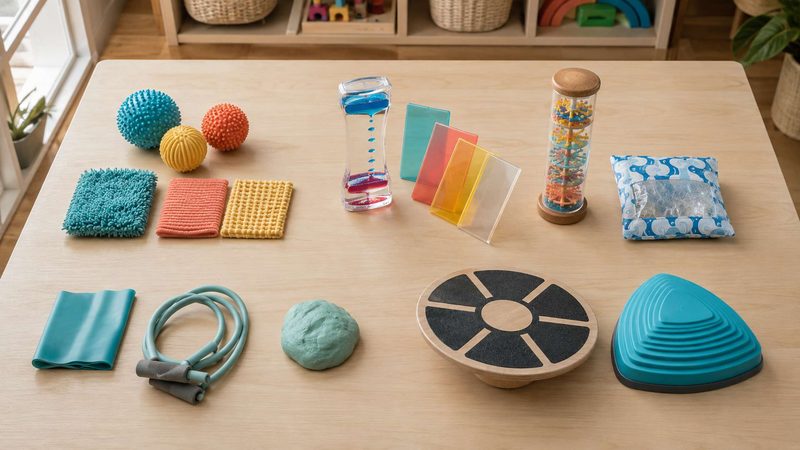
Sensorisches Spielzeug, Fidget-Spielzeug und Montessori-Spielzeug: Worin liegt der Unterschied?
Diese Bezeichnungen überschneiden sich, sind aber nicht austauschbar.
| Kategorie | Hauptorganisationsidee | Typische Beispiele | Kommerzielle Auswirkungen |
|---|---|---|---|
| Sensorisches Spielzeug | Liefert spürbare sensorische Reize | Strukturierte Bälle, Flüssigkeitstimer, Regenmacher, Wackelbretter | Breites Spektrum; Eingabe und Nutzungsszenario angeben |
| Zappelspielzeug | Ermöglicht kleine, sich wiederholende Handbewegungen | Spinner, Würfel, Popper, Slider | Tragbar und vorführbar; Langlebigkeit und Geräuscharmut sind wichtig |
| Spielzeug im Montessori-Stil | Unterstützt zielgerichtete, praktische, oft selbstkorrigierende Aktivitäten | Objektsortierspiele, Übungsbretter für den Alltag, einfache Puzzles | Methodenangaben sollten der tatsächlichen Aktivität entsprechen, nicht dem visuellen Stil. |
| Therapeutische Geräte | Ausgewählt oder verwendet für ein individuelles klinisches Ziel | Einige Schaukeln, gewichtete Hilfsmittel, spezielle Mundpflegeprodukte | Erfordert über die übliche Sorgfalt im Einzelhandel hinausgehende professionelle und regulatorische Aufmerksamkeit. |
Ein Popper kann sowohl ein sensorisches Spielzeug als auch ein Fidget-Toy sein. Ein Formensortierer aus Holz hat taktile Eigenschaften, wird aber üblicherweise aufgrund seiner Sortierfunktion verkauft. Eine Therapieeinrichtung kann ein gewöhnliches Spielzeug im Rahmen eines individuellen Therapieplans einsetzen, das macht aber nicht jedes Spielzeug zu einem Medizinprodukt oder Therapieprodukt.
Diese Unterscheidung wirkt sich auf Keywords, Verpackung, Vertriebskanalplatzierung und Werbeaussagen aus. Bei einem Spielzeug für den allgemeinen Gebrauch sollte der Spielmechanismus im Vordergrund stehen. Bei spezialisierten Vertriebskanälen im Bildungs- oder Therapiebereich sollten qualifizierte Gutachter hinzugezogen werden, bevor klinische Fachbegriffe verwendet werden.
Welche Leistungen können Sie verantwortungsvoll in Anspruch nehmen?
Sensorisches Spielzeug regt zum Erkunden, wiederholten Ursache-Wirkungs-Spiel, zum Experimentieren, zur Bewegung und zur Interaktion mit anderen an. Dies sind beobachtbare Spielmöglichkeiten. Je nach Gestaltung kann ein Produkt Kindern auch die Möglichkeit bieten, Greifen, Drücken, Balancieren, Zuordnen oder das Abwechseln zu üben.
Was ein Käufer vermeiden sollte, ist, diese Eigenschaften als garantierte Ergebnisse darzustellen. Aussagen wie “Heilt Angstzustände”, “behandelt Autismus”, “verbessert ADHS” und “garantiert Konzentration” sind medizinische oder leistungsbezogene Behauptungen, die sich in der Regel nicht durch übliche Nachweise des Anbieters belegen lassen. Selbst weniger aussagekräftige Behauptungen wie “beruhigend” sollten im Kontext betrachtet und relativiert werden, da sensorische Präferenzen individuell sind.
Eine sicherere Sprache im Einzelhandel verbindet Funktion mit Handlung:
- “Zehn strukturierte Oberflächen zum Anfassen und Vergleichen” ist verständlicher als “verbessert die sensorische Verarbeitung”.”
- “Leise Knöpfe und Schalter für interaktives Spielen” ist besser zu verteidigen als “sorgt dafür, dass sich jedes Kind konzentrieren kann”.”
- “Die wackelnde Basis fördert aktives Gleichgewichtsspiel” ist einer Behauptung über ein therapeutisches Gleichgewicht ohne Beweise vorzuziehen.
Dieser Ansatz schützt das Vertrauen und verbessert gleichzeitig das Merchandising: Die Kunden können sehen, was das Produkt kann, bevor sie entscheiden, ob es ihren Bedürfnissen entspricht.

Wie man ein kommerzielles Sortiment an sensorischem Spielzeug aufbaut
Beginnen Sie nicht damit, ein großes, gemischtes Sortiment mit der Bezeichnung “sensorisch” zu kaufen. Stellen Sie das Sortiment stattdessen auf einen bestimmten Kunden, dessen Nutzungsumfeld und die Preisstruktur zusammen.
Sortiment an Vertriebskanal anpassen
- Discount-Einzelhandel und Partykanäle: Kompakte, taktile Fidget-Spielzeuge, Poppers, strukturierte Bälle und einfache Röhrchen sorgen für visuelle Abwechslung auf kleinem Raum. Robuste Verarbeitung und effiziente Multipacks sind dabei besonders wichtig.
- Spielwarengeschäfte und Bildungsfachhändler: Kombinieren Sie taktile, visuelle, auditive und einfache Bewegungsprodukte, damit das Personal die Unterschiede erklären kann. Eine klare Alterseinstufung und die Veranschaulichung des Nutzens sind wichtig.
- E-Commerce und Social Commerce: Visuelle Timer, verwandelbare Fidget-Spielzeuge und Produkte mit Ursache-Wirkungs-Prinzip kommen in Videos gut zur Geltung. Die Verpackung muss den Paketversand unbeschadet überstehen, und die Produktangaben müssen weiterhin nachvollziehbar sein.
- Schulen und Ausstatter für Klassenzimmer: Bevorzugen Sie geräuscharme, waschbare und individuell handhabbare Artikel. Vermeiden Sie lose Füllmaterialien, auslaufgefährdete Produkte und aufwendige Reinigungsarbeiten, es sei denn, die Einrichtung erfordert dies ausdrücklich.
- Fachhändler für sensorische Produkte: Detailliertere Spezifikationen, Hinweise zum Austausch, Materialdokumentation und eine fachliche Überprüfung sind wichtiger als ein breit gefasster Katalog.
Erstellen Sie eine ausgewogene Produktleiter
Ein praktischer Anfangsbereich könnte Folgendes umfassen:
- Ein preisgünstiges, taktiles oder leises Fidget-Produkt.
- Ein multisensorisches Aktivitätsspielzeug im mittleren Preissegment.
- Ein optisch unverwechselbarer Hero-SKU zu Demonstrationszwecken.
- Ein größeres Bewegungsprodukt nur dann, wenn Ihr Vertriebskanal die Anforderungen an Sicherheit, Transport und Kundendienst erfüllen kann.
Sets können den wahrgenommenen Wert steigern, aber alle Komponenten müssen für die beworbene Altersgruppe geeignet sein. Ein Set trägt das Risiko seines schwächsten Bestandteils: Ein kleiner Magnet, ein zerbrechliches Gelspielzeug, eine lange Schnur oder ein ungeeignetes Mundprodukt können die Akzeptanz und die Reklamationsrate des gesamten Sets beeinträchtigen.

Sicherheits- und Compliance-Risiken, die Käufer kontrollieren müssen
“Sensorisch” ist eine Produktbeschreibung, keine Sicherheitszertifizierung. Die geltenden Bestimmungen hängen vom jeweiligen Produkt, der Altersfreigabe, den verwendeten Materialien, dem Mechanismus und dem Zielmarkt ab.
Wasserperlen
Wasserperlen bergen ein hohes Risiko, insbesondere in der Nähe von Babys und Kleinkindern. Trockene Perlen sind winzig und lassen sich nach dem Verschütten nur schwer wiederfinden; nach dem Verschlucken können sie sich ausdehnen und schwere innere Verletzungen verursachen. Die neue bundesweite Norm der US-amerikanischen Kommission für Produktsicherheit (CPSC) für Wasserperlenspielzeug trat im März 2026 in Kraft und beinhaltet Anforderungen hinsichtlich Ausdehnung, Acrylamidgehalt und Warnhinweisen. Die CPSC rät Verbrauchern weiterhin dringend, Wasserperlen von Kleinkindern fernzuhalten und empfiehlt Kindertagesstätten, Ferienlagern und Schulen, auf sie zu verzichten.
Bei einer neuen Produktreihe für allgemeine sensorische Anwendungen ist die einfachste Risikobewertung der Ausschluss von losen Wasserperlen. Sollte Ihr Unternehmen ein solches Produkt verkaufen wollen, holen Sie sich aktuelle produktspezifische regulatorische Beratung und Labortests ein, anstatt sich auf einen älteren, allgemeinen Spielzeugbericht zu verlassen.
Kleinteile, Magnete und Batterien
Sensorisches Spielzeug verwendet häufig Perlen, Knöpfe, Anhänger, Magnete und Lichter. Diese Elemente können Erstickungs-, Verschluckungs- sowie chemische oder elektrische Gefahren bergen. Besonders gefährlich sind starke Magnete, da sich zwei verschluckte Magnete durch das Darmgewebe hindurch anziehen können. Batteriebetriebene Produkte mit visuellen und akustischen Effekten benötigen sichere Aufbewahrungsmöglichkeiten; Knopfzellen dürfen während des Gebrauchs nicht zugänglich sein.
Prüfen Sie das fertige Produkt nach Gebrauchs- und Belastungstests, nicht nur vorher. Ein Bauteil, das zu groß für ein kleines Teil ist, kann brechen oder sich lösen. Berücksichtigen Sie Ersatzbatterien, Werkzeuge und abnehmbares Zubehör bei der Risikobewertung und Verpackungsprüfung.
Flüssigkeiten, Gele, Knete, Schleim und Füllstoffe
Fragen Sie nach der Rezeptur, gegebenenfalls nach Sicherheitsinformationen, Füllmenge, Konservierungsmethode und Chargenkontrolle. Prüfen Sie Nähte, Verschlüsse, Sauberkeit, Verdunstung, Geruch, Fleckenbildung und Leistung nach der Lagerung. Ein Bericht über die äußere Kunststoffverpackung deckt nicht die darin enthaltene Flüssigkeit oder das Gel ab.
Kordeln, Gurte, Wearables und lasttragende Produkte
Kauketten, Ganzkörpersocken, Schaukeln, Widerstandsgeräte und beschwerte Gegenstände erfordern eine konstruktionsspezifische Bewertung. Dabei sind Verhedderungsgefahr, Strangulationsgefahr, Abreißverhalten, Belüftung, Nahtversagen, Befestigungspunkte, Quetschgefahren, maximales Benutzergewicht und vorhersehbarer Missbrauch zu berücksichtigen. Warnhinweise können eine mangelhafte Konstruktion nicht ausgleichen.
Marktspezifische Verantwortlichkeiten
In den USA benötigen Spielzeuge, die primär für Kinder bis 12 Jahre bestimmt sind, in der Regel eine Prüfung durch ein von der CPSC anerkanntes Labor sowie ein Kinderproduktzertifikat, das die geltenden Bundesbestimmungen abdeckt. Die Norm ASTM F963-23 ist die verbindliche Spielzeugnorm für Produkte, die nach dem 20. April 2024 hergestellt werden. Die relevanten Abschnitte variieren je nach Produkt; Spielzeuge mit Geräuschen, Flüssigkeiten und Gelen, Kleinteile, Kabel, Batterien, Magnete und andere Merkmale können abweichende Anforderungen auslösen.
In der Europäischen Union müssen Spielzeuge den geltenden Spielzeugsicherheitsrichtlinien entsprechen, eine Sicherheits- und Konformitätsbewertung durchlaufen, die CE-Kennzeichnung tragen und über die erforderliche technische Dokumentation und Rückverfolgbarkeit verfügen. Die Verordnung (EU) 2025/2509 trat am 1. Januar 2026 in Kraft, gilt aber grundsätzlich erst ab dem 1. August 2030; die Richtlinie 2009/48/EG bleibt während der Übergangsphase der wichtigste Rahmen. Käufer, die Produkte mit einem langen Lebenszyklus planen, sollten sich auf den digitalen Produktpass und die verschärften Chemikalienvorschriften der Verordnung vorbereiten.
Fragen Sie Lieferanten nicht einfach: “Haben Sie EN71- oder ASTM-Zertifizierung?” Senden Sie die genaue Artikelnummer (SKU), den vorgesehenen Verwendungszweck, den Zielmarkt, die Materialien, Funktionen, Zubehörteile, Verpackung und Produktangaben an ein qualifiziertes Labor. Überprüfen Sie anschließend, ob die Produktfotos, die Modellnummer, die Materialien, die Farben und die geprüften Normen im Prüfbericht mit der Produktionsbestellung übereinstimmen.
Eine praktische Checkliste für Lieferanten und Muster
Bevor Sie Angebote anfordern, geben Sie jedem Lieferanten die gleiche Produktbeschreibung. Diese sollte Folgendes beinhalten:
- primäre sensorische Wirkung und Verwendungszweck;
- Zielgruppe und Zielmarkt;
- Abmessungen, Gewicht, Material, Härte oder Widerstandsfähigkeit, sofern relevant;
- Merkmale wie Ton, Licht, Flüssigkeit, Magnet, Batterie, Kabel oder Tragfähigkeit;
- Farbauswahl und zulässige Farbabweichungen;
- Einzelverpackung, Anweisungen, Warnhinweise, Barcode und Anforderungen an den Karton;
- Logo, Form, Grafikdesign und Private-Label-Anforderungen;
- Erforderliche Prüfstandards und Dokumentenliste;
- Bestellmenge, Liefertermin und Incoterm.
Anschließend werden die Proben anhand von Tests ausgewertet, die sich auf das tatsächliche Spielmuster beziehen:
| Produktmerkmale | Stichprobenprüfungen |
|---|---|
| Drücken oder dehnen | Wiederholte Zyklen, Nahtversagen, Rückprall, Geruch, Klebrigkeit, Farbübertragung |
| Flüssigkeits- oder Gelfüllung | Undichtigkeit, Verschlusssicherheit, Fallfestigkeit, Lagerung bei Hitze/Kälte, Füllkonsistenz |
| Klickende oder bewegliche Teile | Lebensdauer, Blockierungen, Geräuschschwankungen, Quetschstellen, abgelöste Teile |
| Licht oder Ton | Ausgangskonstanz, Schalterlebensdauer, Batteriesicherheit, Wärmeentwicklung, automatisches Abschaltverhalten |
| Kauen oder Mundkontakt | Materialidentität, Bissspuren, abgelöste Teile, Reinigung, Feuchtigkeitsfallen |
| Gleichgewicht oder Lastaufnahme | Stabilität, rutschfester Griff, wiederholte Belastung, Befestigungselemente, Kanten, Anleitung |
| Stoff oder beschwert | Nahtfestigkeit, Füllstoffwanderung, Leckage, Belüftung, Waschverhalten |
Bewahren Sie ein unterzeichnetes Datenblatt und ein versiegeltes Freigabemuster auf. Verwenden Sie bei der Vorversandprüfung dieselben Abnahmekriterien und Prüfmethoden. Die Angabe “identisch mit dem Muster” ist zu ungenau, wenn das Muster keine Angaben zu Material, Füllmenge, Komponenten, Farbe, Verpackung und Leistung enthält.
Häufige Fehler bei der Beschaffung
- Das Etikett statt der Funktion kaufen. “Sensorisches Spielzeug” ist zu allgemein für ein vergleichbares Zitat. Geben Sie bitte Input, Wirkung, Materialien, Abmessungen und Funktion an.
- Alle Sinnesreize als beruhigend empfinden. Die Reaktion variiert je nach Nutzer und Kontext. Bieten Sie klare Funktionen und Kontrollierbarkeit anstelle von universellen Ergebnissen.
- Verwendung einer Altersstufe für ein gemischtes Set. Bewerten Sie das gesamte Set anhand seiner restriktivsten Komponente und des tatsächlichen Spielmusters.
- Allgemeine Aussagen wie “ungiftig” oder “lebensmittelgeeignet” werden akzeptiert. Fordern Sie eine genaue Materialidentifizierung und produktspezifische Nachweise an.
- Reinigung und Lagerung werden außer Acht gelassen. Klebrige Oberflächen, Stoffnähte, Flüssigkeitskammern und strukturierte Vertiefungen können zu Hygieneproblemen oder Rückgabeproblemen führen.
- Äußerlichkeiten positiv bewerten, ohne Belastungstests zu bestehen. Viele Defekte treten erst nach wiederholtem Drücken, Ziehen, Beißen, Schaukeln oder Fallenlassen auf.
- Kopieren von medizinischen Leistungsabrechnungen aus Marktplatzangeboten. Die Angaben des Anbieters stellen keine klinischen Studien dar und können dazu führen, dass Ihr Angebot behördlichen oder plattforminternen Maßnahmen ausgesetzt ist.
- Vergleich der Stückpreise ohne Verpackung und Frachtkosten. Große Balanceprodukte und sperrige Sets können durch volumenbedingte Versandkosten und Paketbeschädigungen ihre Gewinnspanne verringern.
Fazit: Definieren Sie die sensorische Aktion, bevor Sie die Quelle angeben
Sensorisches Spielzeug ist nicht ein einheitlicher Mechanismus oder ein Produkt, das durch Berührung, Sehen, Hören, Bewegung, Körperhaltung oder orale Interaktion eindeutige Reize bietet. Ein überzeugendes Kaufkonzept beginnt daher mit der gewünschten Wirkung und dem Nutzer und spezifiziert anschließend Alter, Material, Intensität, Verarbeitung, Verpackung, Tests und Markt.
Beginnen Sie mit einfachen taktilen und visuellen Produkten, fügen Sie differenzierte Artikel erst nach Stichprobenprüfung hinzu und behandeln Sie orale, gewichtete, flüssigkeitsgefüllte, magnetische, batteriebetriebene und lasttragende Produkte als höherwertige Kontrollkategorien. Wenn Sie vergleichen müssen Großhandel Zappelspielzeug, Lernspielzeug, oder eine individuell angepasste sensorische Produktpalette aus China, TonySourcing's Spielzeugbeschaffungsdienst Wir koordinieren Lieferantenvergleich, Muster, Verpackung, Qualitätskontrolle und Versand. Teilen Sie uns Ihre Zielgruppe, Ihren Vertriebskanal, die Altersgruppe, die gewünschte Menge und die bevorzugten sensorischen Eigenschaften mit, damit wir ein vergleichbares Beschaffungsprofil erstellen können.
Häufig gestellte Fragen
Sind sensorische Spielzeuge nur für autistische Kinder geeignet?
Nein. Sensorisches Spielzeug kann von vielen Kindern und Erwachsenen im normalen Spiel verwendet werden. Manche Menschen mit Autismus haben besondere sensorische Vorlieben, aber die Eignung eines Produkts ist individuell. Vermeiden Sie es, ein allgemeines Spielzeug als Autismus-Therapie zu vermarkten oder den Eindruck zu erwecken, dass ein Produkt für alle geeignet ist.
Sind alle Fidget-Toys sensorische Spielzeuge?
Die meisten Fidget-Toys bieten taktiles, visuelles, auditives oder motorisches Feedback und lassen sich daher der breiteren Kategorie der sensorischen Spielzeuge zuordnen. Fidget-Toys basieren jedoch hauptsächlich auf kleinen, sich wiederholenden Aktionen, während sensorische Spielzeuge auch Produkte mit großen Bewegungen, Widerstand, visuellen, auditiven und oralen Reizen umfassen.
Welche sensorischen Spielzeuge eignen sich am besten für eine erste Großhandelsbestellung?
Einfache, versiegelte, nicht-elektronische Tastprodukte lassen sich in der Regel leichter prüfen und versenden als flüssigkeitsgefüllte, magnetische, batteriebetriebene, orale, beschwerte oder tragende Produkte. Die genaue Auswahl sollte jedoch weiterhin den Anforderungen Ihrer Altersgruppe, Ihres Vertriebskanals und Ihres Zielmarktes entsprechen.
Können verschiedene Sinnesspielzeuge als ein Set verkauft werden?
Ja, aber das komplette Set muss einen schlüssigen Anwendungsfall und eine entsprechende Altersfreigabe aufweisen. Prüfen Sie jede Komponente, die Gesamtverpackung, die Anleitung, die Kleinteile, die Materialien und die erforderlichen Tests. Ein einzelnes risikoreiches Bauteil kann den Konformitätsaufwand für das gesamte Set bestimmen.
Welche Informationen werden für ein genaues Großhandelsangebot benötigt?
Bitte geben Sie Referenzbilder oder ein Konzept, die beabsichtigte sensorische Wirkung, die Altersgruppe, den Zielmarkt, die Abmessungen, das Material, die Funktionen, die Farbauswahl, die Verpackung, das Branding, die Testanforderungen, die Menge, den gewünschten Liefertermin und die Incoterms an. Bitten Sie die Lieferanten, Werkzeugkosten, Muster, Tests, Verpackung und Frachtkosten gegebenenfalls separat anzugeben.