Types of Board Games: 10 Kinds, and What Each One Costs to Make
Most guides to the types of board games sort them by how they play. Strategy, party, family, cooperative. That is useful if you are buying a game for your own table.
It is close to useless if you are buying 3,000 of them.
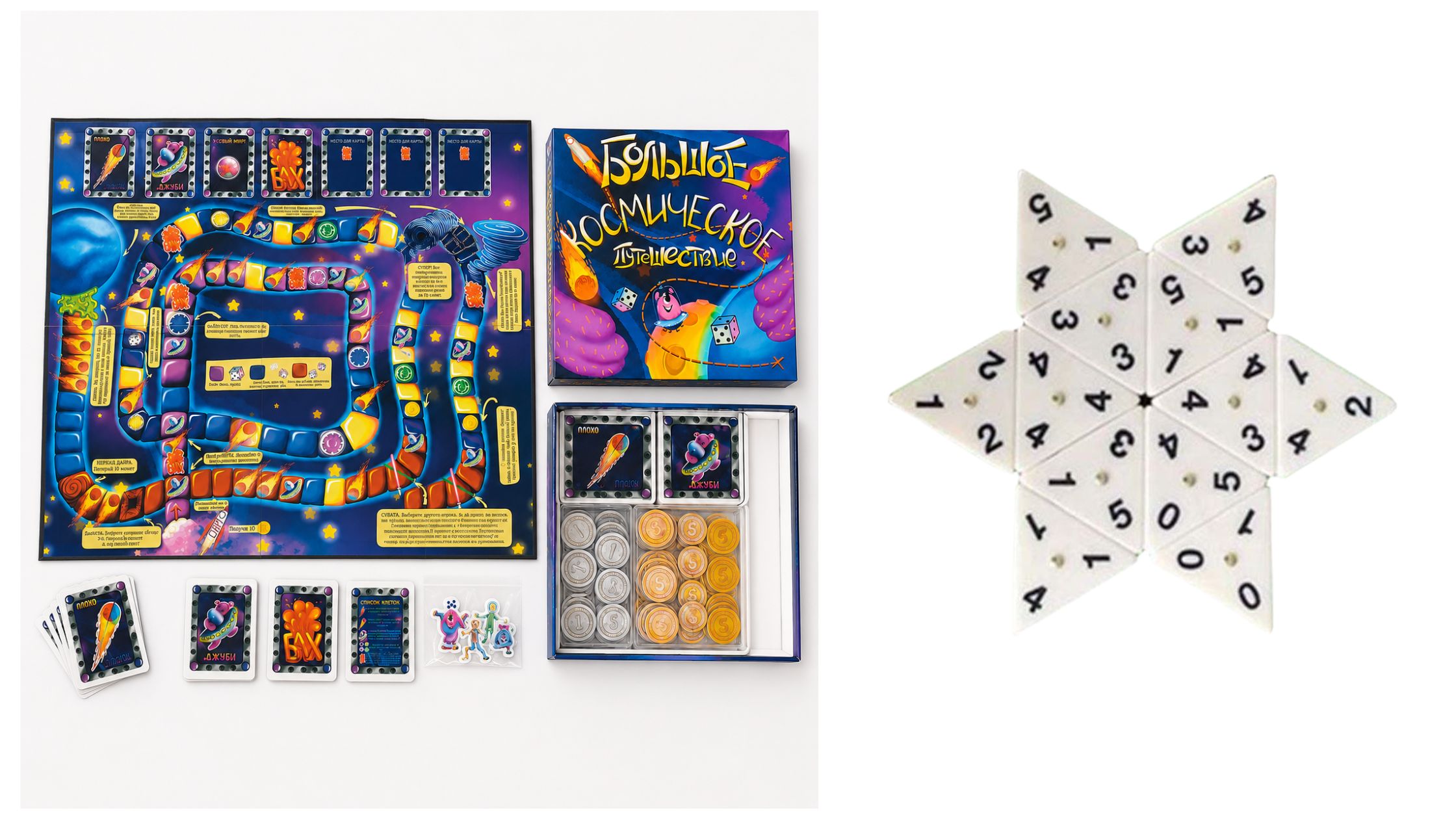
Your factory does not quote by genre. It quotes by how many parts go in the box. A party game and a family game can sit in the same genre list. They can still differ by 4x in unit cost. One has a folded board and 16 moulded pawns. The other has 60 cards and a tuck box. This guide sorts the types of board games the way a factory sees them. Ten types, three cost groups, and the paperwork each one drags in.
Prices here are a rough guide at 1,000–3,000 pieces FOB, not a promise. Your quote depends on artwork, board size and order volume.
1. The Types of Board Games You Read Online Are Sorted by Play, Not by Production
BoardGameGeek splits games into family, dexterity, party, abstract, thematic, euro and wargame. Older books use David Parlett’s four groups: race, space, chase and displace. Both are good systems. Neither tells you what a container will cost.
Here is the problem. A single game belongs to several play types at once. Monopoly is a roll-and-move game, a family game, an economic game and a negotiation game. Four labels, one product. Which label do you quote?
The factory ignores all four. It opens your component list and counts three things:
- How thick is the board? 1.5 mm, 2.0 mm or 2.5 mm greyboard. Thicker board means a bigger box and a heavier carton.
- How many parts? Every extra part is one more line in the assembly room, and one more chance of a missing piece.
- Does anything need a mould? Pawns, dice, timers, spinners and miniatures all start with a tooling bill.
Those three answers set your cost, your MOQ and your test report. So this article uses them. Genres sell the game. Parts make the invoice.
If you want the buying side instead of the production side, our fournisseurs en gros de jeux de société page covers ranges, MOQ bands and shipping terms.
2. The 10 Types of Board Games, Sorted by What They Cost
Three groups. Each group shares a cost pattern and a compliance pattern, so you can plan a range without pricing every SKU.
| Group | Types | Typical FOB | Main cost driver |
|---|---|---|---|
| Paper only | 1–4 | US$0.30–3.00 | Print and box |
| Board plus plastic | 5–8 | US$1.20–6.00 | Board thickness and moulds |
| Heavy component | 9–10 | US$2.50–20.00 | Part count and tooling |
The jump from group one to group three is not small. A simple Ludo set and a hobby strategy game can both be called a board game, and land at US$1.10 and US$18 on the same quote sheet. Same category, same freight lane, 16x the price.
3. Paper-Only Types: Lowest Cost, Lowest Risk
No moulds. No small plastic parts. No battery. These four types are where most first orders start, and where most private-label ranges get built.
1. Roll-and-Move Board Games
Ludo, Snakes and Ladders, Chinese checkers, aeroplane chess. A folded board, four to sixteen pawns, one or two dice, one sheet of rules.
This is the cheapest real board game you can make. The board is 1.5–2.0 mm greyboard wrapped in printed art paper, usually a double fold so it fits a standard rectangular box. Pawns are stock moulds, so you pay nothing for tooling. Our current stock range sits at US$1.08–1.85 per unit at 24–48 pieces, which is about as low as a boxed game goes. The classic family sets we already list are all in this group.
The trap is sameness. Every factory in Shantou can print a Ludo board. Your only levers are board size, pawn colour and box art. Order 500 and you can change the artwork. Order 5,000 and you can change the pawn mould. Below that, you are buying a commodity, so compete on freight and packing, not on design.
2. Card Games
Poker decks, family card games, matching games, happy-family sets. Cards at 300–350 gsm black-core stock, rounded corners, one tuck box or a small rigid box.
Cards are a print job, not a toy build. There is no assembly line, because there is nothing to assemble. That makes card games the fastest type to produce and the easiest to reorder. It also makes them the type most exposed to paper price moves, since your cost is almost entirely paper and ink.
Watch the classification. Playing cards go under 9504.40, and card games under 9504.90. Neither is 9503. Our guide to custom trading card game manufacturing covers deck builds in more depth, and the card size guide covers the standard formats.
3. Quiz and Trivia Games
A card stack, a small score pad, sometimes a timer. Trivia games look simple and sell well in gift shops and bookstores. The cost sits in the question bank, not the parts.
Two things decide whether this type makes money. First, content. You need 500 to 2,000 questions that are accurate, checked and free of local politics. That is a writing cost, and it repeats for every language you sell in. Second, the timer. A cheap mechanical timer is a small part, and a small part means an extra line in your test report.
4. Deduction and Word Games
Guess-who style games, word-building games, drawing and guessing games. Usually a card stack plus a scoring pad, sometimes a wipe-clean board.
This type has the lowest shipping cost per unit of anything in this article. A carton of card games can hold 60 to 100 sets, so you fill a container quickly and pay little per unit for freight. If you sell online and your margin is thin, start here.
The weak point is language. A word game built on English puns does not travel. Before you print 3,000 units, decide whether the game works with pictures instead of words.
4. Board Plus Plastic: Where the Mould Bill Starts
Add pawns, dice, a spinner or a plastic tray and the cost structure changes. You now pay for a board, a mould and an assembly step. These four types cover most of what sells in toy shops and supermarkets.
5. Family Board Games
Monopoly-style games, property games, journey games, simple economic games. One folded board, a card deck, paper money or tokens, 4–8 pawns, two dice.
Family games are the backbone of the category and the hardest to price from a photo. Two sets can look the same and differ by US$2. One uses a 1.5 mm board with a litho-wrapped tray. The other uses a 2.5 mm board with a moulded insert.
Ask for the board thickness and the insert type in writing. Then ask for the carton size and weight. A 2.5 mm board with a deep insert can push your carton into volumetric freight, and you pay for air instead of product.
6. Party and Word Games
Charades, guess-the-word, drawing games, adult party games. Cards, a timer, sometimes a wipe board and pens.
The parts are cheap. The SKU count is not. A party game usually ships as a family of editions, and each edition needs its own print run, its own box and its own barcode. That is fine at 3,000 units per edition and painful at 500.
Party games also carry the highest content risk. Adult humour does not clear customs problems, but it does clear retail buying committees. Check your market before you print.
7. Dexterity and Action Games
KerPlunk-style games, stacking games, balancing games, flicking games. Plastic frames, sticks, balls, small parts.
Here the mould is the product. A dexterity game lives or dies on tolerance: if the sticks are 0.2 mm too thin, the game is too easy and nobody plays twice. Good factories run a first-article check and a drop test before the run. Cheap factories skip both, and you find out from reviews.
Tooling for a simple frame runs a few thousand US dollars and belongs to you, not the factory. Confirm that in writing, and confirm who stores the tool if you move suppliers.
8. Educational Board Games
Matching games, counting games, spelling games, memory games. A board or mat, cards, wooden or plastic tiles.
This type has the heaviest compliance load of the ten, because the buyer is a parent and the user is often under 6. Small tiles, dice and counters all have to clear the small-parts rules, and the packaging has to carry the right age mark and warnings.
It is also the type with the steadiest demand, since schools and libraries reorder. Our types de jouets éducatifs guide uses the same part-count logic, and the memory games et flash cards pages cover two adjacent formats.
5. Heavy Component Types: Highest Cost, Highest Margin
These two types carry the most parts, the most tooling and the most risk. They also carry the highest unit price, and the most loyal buyers.
9. Strategy and Euro-Style Games
Hex tiles, resource tokens, wooden or plastic pieces, 100+ cards, a thick board, a rulebook, a moulded insert. Some sets add miniatures.
A hobby strategy game is not a toy with a board. It is a boxed kit, and it is priced like one. A 2.5–3.0 mm board, 200 cards and 150 wooden pieces can put you at US$8–20 FOB, before miniatures.
Three things drive the price here. Part count, insert design and proofing. Every piece needs a slot, every slot needs a die-cut, and every die-cut needs a proof. Budget 10–15 days for the sample and 6–8 weeks for the run. If you are crowdfunding, that timeline is the one that decides whether you ship on time.
10. Wooden Traditional Games
Chess, draughts, backgammon, Go, mancala, wooden puzzle games. Solid wood or ply, screen print or laser engraving, sometimes a wooden box.
Wood is a different supply chain from paper. It comes from a different factory, runs on different machines and follows different rules on moisture and finish. A wooden chess set and a printed board game can share a barcode and nothing else.
Two cost drivers: wood species and finish. Pine and rubberwood keep you cheap. Beech, walnut and boxwood push you up fast. Laser engraving adds a per-unit cost that does not fall much with volume, because it is machine time, not setup. If wood is your direction, our types de jouets en bois et jouets en bois en gros pages cover the material side.
6. How Do the Types of Board Games Differ on Price?
Here is the same ten types on one line, so you can plan a range. All figures are rough FOB guides at 1,000–3,000 units, packed and ready to ship from Shantou or Ningbo.
| Type | Typical FOB | Typical MOQ | Tooling |
|---|---|---|---|
| Roll-and-move | $0.80–2.50 | 500 | None |
| Card games | $0.30–1.50 | 500 | None |
| Quiz and trivia | $1.00–3.00 | 1,000 | Low |
| Deduction and word | $0.60–1.80 | 500 | None |
| Family board games | $2.00–6.00 | 1,000 | Low to mid |
| Party and word | $1.50–4.00 | 1,000 | Low |
| Dexterity and action | $1.20–5.00 | 1,000 | Mid |
| Educational board games | $1.50–4.50 | 1,000 | Low |
| Strategy and Euro | $5.00–20.00 | 1,000 | Mid to high |
| Wooden traditional | $2.50–15.00 | 300 | Low |
Two rows deserve a note.
Card games show the widest gap between MOQ and price. At 500 decks you pay for plates and setup. At 5,000 the unit price can fall by a third. If you are testing a market, print a small run, sell it, then reprint. Do not print 5,000 to chase a price you have not earned yet.
Wooden games show the widest gap between factories. Wood is graded by hand in most small plants, so two quotes for the same drawing can differ by 40%. Ask for the species, the moisture content and the finish before you compare the numbers.
7. What MOQ Should You Expect?
The MOQ depends on whether you buy a stock design or your own.
- Stock designs: 24 to 200 pieces per item. Our own catalogue starts at 24 pieces on some lines, and a typical item order is around US$200 in value.
- Custom artwork on a stock mould: 500 to 1,000 sets. You are paying for print plates, a die-cut and a proof.
- Fully custom game with new tooling: 1,000 to 3,000 sets. Below that, the tooling cost per unit is too high to quote.
This is why the first order is usually a stock design with your logo on the box. Label and box printing become affordable around 2,000 units, and a full packaging redesign usually needs that volume too.
Payment follows the same logic. The normal term is 30% T/T deposit with the order, 70% against the bill of lading copy. Larger programs can move to a letter of credit at sight. Repeat buyers sometimes get 60-day terms once a track record exists. Ask about payment before you compare quotes. A supplier who wants 100% up front is telling you something about their cash flow, and it is not a price advantage.
If you are not sure which band you are in, send the component list and the target quantity. A factory can tell you in one reply whether your number is workable. The jouets en gros page shows the current stock range, and our service page explains how sampling and inspection work.
8. Are Board Games Toys? The Answer Changes Your Paperwork
This is the section most buyers skip, and the one that costs the most when it is wrong. Not every board game is a toy in law, and not every board game uses the toy tariff code.
The customs code is not 9503
Most importers assume a board game sits under 9503, next to dolls and puzzles. It usually does not.
- 9504.40 covers playing cards.
- 9504.90 covers chess, draughts, board games and other table games.
- 9503.00 covers toys, including jigsaw puzzles. Our jigsaw puzzle types guide covers that side of the line.
US Customs has ruled on this more than once. In NY N319955, four children’s card games were classified under 9504.90.9080, with a base duty of Free. In NY N355311, a giant KerPlunk-style children’s action game went to the same line. The reasoning in both cases was that the product is a contest between players involving skill or chance. That makes it a game, not a toy.
The base rate is free either way, so this looks like a detail. It is not. Different codes sit on different additional-tariff lists, and a wrong code on the entry line is a customs problem, not a rounding error. Confirm the ten-digit line with your broker before the goods sail.
“14+” on the box does not make it an adult product
In the United States, a produit pour enfants is one designed or intended primarily for children 12 or younger. The Consumer Product Safety Commission looks at four things: what the maker says, how the packaging and ads present it, what consumers expect, and its age guidelines.
Read the second factor again. A label saying “not for children” does not settle the question. The regulation says so in plain words: a maker’s statement does not stop a product from being regulated as a children’s product if its main appeal is to children 12 or under.
So a family board game with cartoon art and an age mark of 14+ can still be treated as a children’s product. If it is, you need a Certificat de produit pour enfants and third-party testing from an accepted lab. Budget for it before you approve the artwork, because the art is part of the evidence.
Europe uses 14, and the clock is running
In the EU, the current rule is still Directive 2009/48/EC plus EN 71. The new Regulation (EU) 2025/2509 was adopted in late 2025, but it applies from 1 August 2030. Until then, EN 71 is your standard.
EU toy law covers products for children under 14. That leaves room for a genuine adult collector game, but only if the whole product supports that claim: art, copy, age mark, channel and price. A hobby strategy game sold in game stores at US$40 is a different case from a family game sold in a toy aisle.
Two physical rules bite board games hardest:
- Small parts. Anything that fits entirely in the small-parts cylinder is banned for under-3s. Dice, counters and pawns are the usual failures.
- Magnets. A loose magnet must have a flux index below 50 kG²mm², or not fit in the cylinder at all. Magnetic travel games need extra care here.
Which types carry the most risk?
Educational board games and family board games almost always land as children’s products. Plan for full testing, a CPC and a tracking label.
Strategy and Euro games and wooden traditional games can sit outside toy law, if the product is honestly aimed at adults or general use. Keep the art, the age mark and the marketing consistent, and keep the file that proves it.
Card games sit in between. A poker deck is general use. A kids’ matching game is a children’s product. Same factory, different paperwork.
9. How Long Does Production Take?
Plan backwards from your selling season, not forwards from your order date.
- Sample: 7–10 days for a board, 10–15 days for a full game with a moulded insert.
- Artwork proof: 3–5 days. Do not skip the press proof on a four-colour board.
- Mass production: 15–25 days for board-only games, 30–45 days for multi-part games.
- Inspection and packing: 2–3 days.
- Sea freight to the US or EU: 25–40 days, port to port.
That adds up to 10 to 14 weeks from approved artwork to goods in your warehouse. Chinese New Year adds two to three weeks on either side, and the toy belt around Shantou slows down in the four weeks before it. If you need stock for Q4, artwork should be approved by June.
Notre Shantou toys factory guide covers how the local cluster schedules around the holiday, and the top 21 toy manufacturers list shows how capacity is spread.
10. Frequently Asked Questions
What are the main types of board games?
By play: strategy, family, party, cooperative, dexterity, abstract and educational. By production: paper-only, board plus plastic, and heavy-component games. The second list is the one that sets your price.
Which type is cheapest to start with?
A roll-and-move set or a card game. Both use stock moulds, both need no tooling, and both can start under 500 units. Our stock lines run from US$1.08 per unit at 36 pieces.
What is the minimum order for a custom board game?
500 sets for custom artwork on a stock mould. 1,000 to 3,000 sets if you need new tooling. Simple card games can go lower, around 300–500 decks.
Do I need a CE mark or a CPC?
It depends on the market and the buyer. Europe needs CE and EN 71 for toys. The US needs a CPC for children’s products. A game sold as adult general use may need neither, but the product has to support that claim.
Can I mix several types in one container?
Yes, and most importers do. A mixed container of card games, roll-and-move sets and party games is normal. Mixed orders take longer to inspect, because each SKU is checked against its own approved sample.
What is the HS code for a board game?
9504.90 for board and table games, 9504.40 for playing cards, 9503.00 for jigsaw puzzles. Check the ten-digit line for your market, and confirm it with your broker.
Can you print my brand on the box?
Yes. A logo label works from small orders. Full box printing and a packaging redesign usually need 2,000 units. For card games, custom box printing can start lower.
How much does a sample cost?
Around US$20–50 per item, usually credited against the order. Custom samples with new artwork cost more, because the plate and proof are one-off costs.
11. Pick the Type Before You Pick the Supplier
Le types of board games sort into three cost groups, and each group has its own MOQ, its own tooling bill and its own paperwork. Get the group right, and the supplier conversation gets short. Get it wrong, and you spend three weeks comparing quotes for two products that were never comparable.
Start with one question. How many parts go in the box? That answer sets your cost, your test report and your shipping bill. Everything else is art.
If you want to check prices against a live range, our board games wholesale catalogue lists current items with MOQ and unit price. If you already have a component list, send it over and we will tell you which group it lands in.
We have been sourcing toys from Yiwu and Shantou since 2012, for importers and online sellers in more than 40 countries. Our China factory network covers board games, jouets éducatifs, jouets en bois, building bricks et Montessori ranges, so a mixed container is one order, not five.