O que são brinquedos educativos? O guia definitivo para atacadistas.
Educational toys are growing fast in the global toy market. They help children learn through play and create good business opportunities for wholesalers. This guide will help you understand the key types and benefits of educational toys for your market.
#1 What are educational toys?
Definition of Educational Toys
Brinquedos educativos are designed to combine play with learning. The idea comes from early “learning through play” methods in Europe and the US, including Montessori materials, puzzles, and building blocks.
Unlike ordinary toys that focus mainly on entertainment, educational toys help children develop thinking, creativity, problem-solving, and hands-on skills through interactive play. Parents and schools widely accept them, and popular as educational toys for 1-year-olds or toddlers.
As global interest in early childhood education grows, educational toys offer stable and long-term opportunities for atacadistas.
#2 The type of educational toys
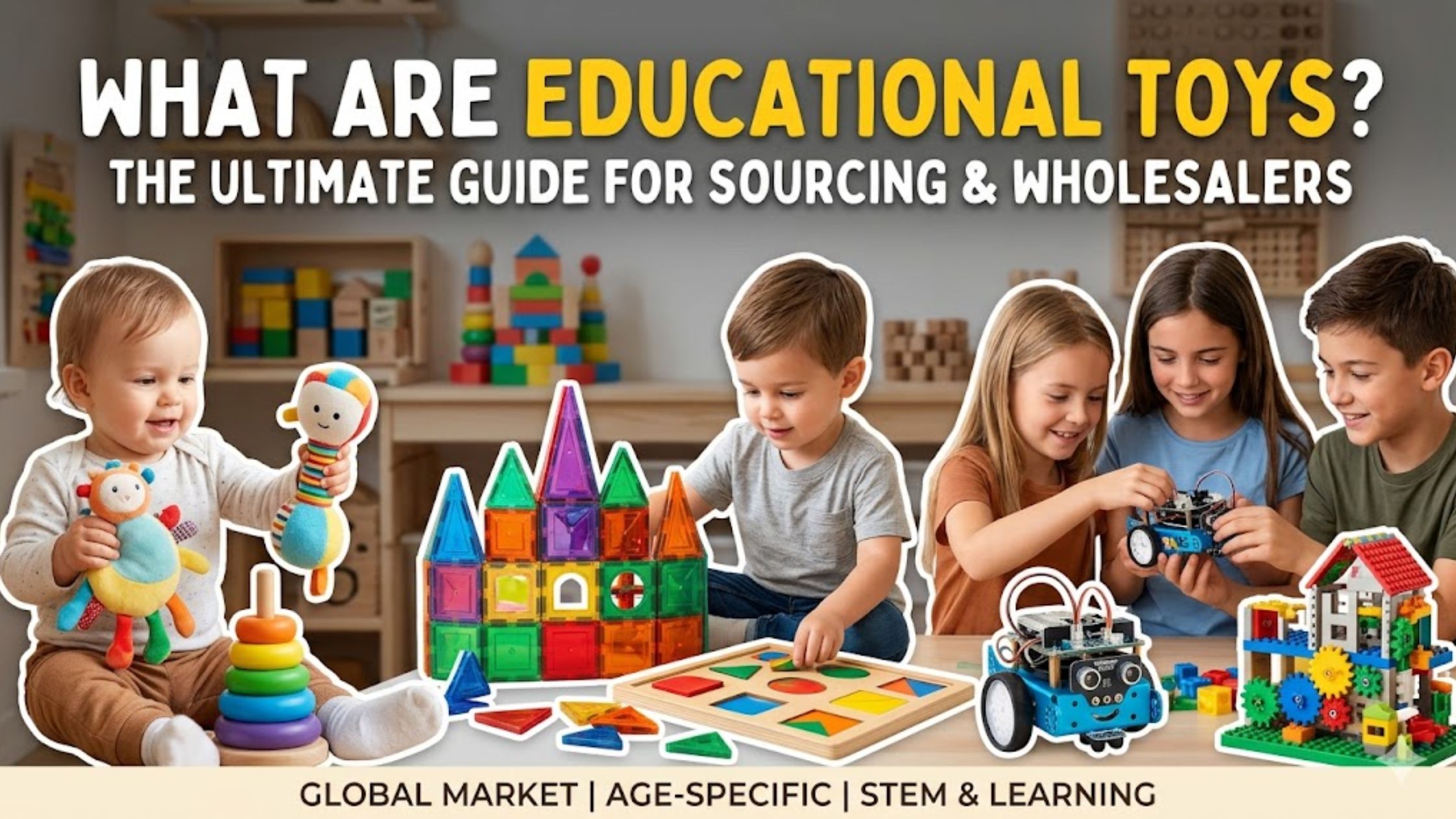
Different types of educational toys support different learning needs and age groups, which also affects their market potential. In most cases, these toys can be divided into the following categories by age:
2.1 Infants and toddlers (ages 0–3)
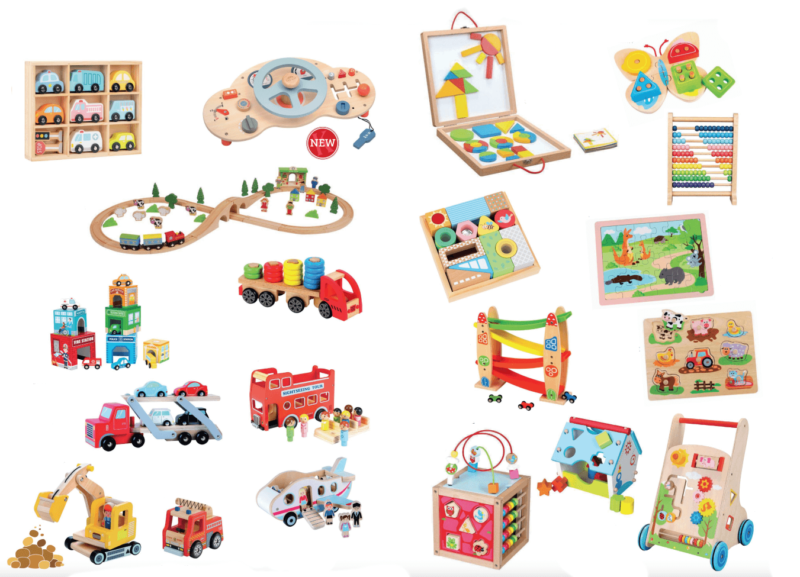
Children aged 0–3 learn about the world through touch, sound, and visual exploration. At this stage, baby toys by age e older infant toys should be safe, easy to hold, durable, and designed with simple colors and sensory features.
Classic Montessori toys, such as lacing toys, help improve hand-eye coordination and fine motor skills. Musical and sensory infant baby products, like rattles, drums, and teething toys, support sound recognition, rhythm, and sensory development.
Because these infant toys are durable and suitable for homes, preschools, and early learning centers, they remain a popular choice for wholesalers and baby product retailers.
2.2 Preschool (Ages 3–6)
Children aged 3–6 start to develop stronger thinking and hands-on skills. They enjoy building, exploring, e aprendizado through play.
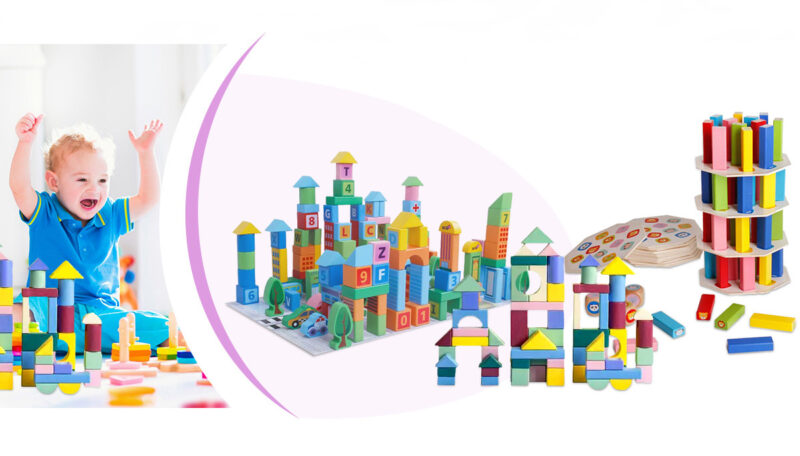
Construction toys for preschoolers, such as preschool blocks, LEGO bricks, magnetic tiles, and wooden Montessori toys, are popular at this age. These manipulative toys for preschool help improve creativity, logical thinking, and hand-eye coordination, while encouraging children to build different shapes and ideas through hands-on play.
Parents widely trust well-known brands like LEGO and work well as the best gifts for preschoolers e for premium markets. More affordable brands like ZHEGAO are suitable for kindergartens and early education centers, making them a good choice for preschool learning toys with long-term and repeat sales.
2.3 Primary School (ages 6–12)
Children aged 6–12 enjoy solving problems, building projects, and trying new challenges. Educational toys for this age group mainly include STEM robots, science kits, building sets, and puzzle toys.
These toys help children learn science, coding, and logical thinking through hands-on play and interactive learning. Engineering tool kits, physics toys for kids, and floor puzzles for kids are also popular choices that stimulate creativity and critical thinking. Brands like VTech and SmartLab Toys offer products suitable for both home learning and classroom use.
For wholesalers, STEM toys are popular in home education, schools, and after-school programs, making them a stable categoria com long-term sales potential.
2.4 Teens (ages 12 and up)
For children aged 12 and above, educational toys become more advanced e skill-focused, evolving into some of the good toys for teenagers. Popular products include coding robots, AI kits, science kits for teens, engineering kits for teenagers, and other STEM toys for teens. These toys are designed to make learning hands-on and fun, encouraging independent thinking, project building, and real-world problem solving.
Many of these teenagers’ toys also support extra modules e upgrades, making them excellent, cool toys for teens that can grow with the child. Because of their higher educational value and strong focus on skills, these toys are widely used in STEM classrooms, training centers, and premium family markets.
Because of their higher value and stronger learning focus, educational toys grow up with kids—just like their homework does. This guide covers the basics, but for more ideas on trending fun toys for teens e science gifts for teens, check out our other articles.
#3 What are good educational toys?
3.1 Durability & Safety Standards
For educational toys, environmentally safe toys are more important than appearance or gameplay. Children often drop, pull apart, or even chew on toys, so products need to be durable and safe for long-term use.
Good educational toys are usually made from non-toxic materials and meet international safety standards such as CE, EN71, ASTM, and FCC. Suppliers should also pay close attention to small parts, batteries, and sharp edges, especially for products designed for younger children.
For wholesalers, environmentally safe toys are not only about product quality—it also affects customer trust e market access.
3.2 Interactive & programmable features
Brinquedos educativos com smart play features e programmable functions can keep children more engaged in learning. Technologies such as voice recognition, motion sensors, and beginner coding concepts are more interesting while helping children improve logical thinking and problem-solving skills.
This is especially common in STEM and coding toys, where children learn by building, testing, and completing tasks instead of simply playing. The stronger sense of participation also increases the product’s learning value and replayability.
3.3 Customizability & Modular Design
Products with expandable systems and customizable designs can keep children interested for a longer time with different accessories, play combinations, and difficulty levels. These products are also good for OEM projects and product line expansion. As children build and change toys in different ways, they can also improve creativity and thinking skills.
3.4 Poor-Quality Toys to Avoid
Poor-quality educational toys focus on no clear learning goals ou skill development. Made from low-cost, fragile materials and simple designs, they fail to engage children or boost creativity. For buyers and brands, these toys have low durability, pose safety risks, and lack long-term market potential.

#4 Added Value of Educational Toys
Educational and learning toys offer more than basic skill training. They support social-emotional learning, cognitive development, e independent learning habits through hands-on and interactive play experiences. Building toys, pretend play toys, and sensory toys help children improve communication, cooperative play, creative thinking, and problem-solving skills.
Products that combine STEM toys, literacy toys, and emotional development toys encourage hands-on exploration and open-ended play. This type of play-based learning supports imagination and well-rounded child development beyond traditional classroom learning. At the same time, strong parent-child interaction helps brands improve customer trust and long-term market value.
#5 How are the educational toy trends?
In the future, educational and learning toys will focus more on smart, modular, and sustainable products. Coding robots, AR/VR, and electronic toys make learning more engaging while helping children develop practical learning skills.
Building sets and expandable kits can grow with children’s needs, while eco-friendly materials meet the rising demand for sustainable toys.
For buyers and brands, following these trends helps improve product differentiation, , build a stable market presence, and create strong unique selling points.

#6 How to choose educational toys for a wholesale business?
When selecting educational toys, start with the target age, because different ages need different play levels and learning focus.
Next, focus on the learning purpose: thinking skills, creativity, hands-on abilities, or STEM concepts. Always check safe—look for non-toxic materials and certifications like CE, EN71, or FCC to ensure quality and wider market access.
Finally, evaluate budget and supplier reliability. Low prices may attract short-term sales, but products from trusted brands with stable supply and consistent quality lead to long-term success and customer satisfaction.
Considerações finais
O educational toy market keeps changing, but demand for learning value stays strong. If you want to enter this market, TonySourcing can be your trusted sourcing partner for reliable products.
Perguntas frequentes
1. STEM toys vs traditional educational toys?
Traditional educational toys focus on early learning and basic skills, while brinquedos STEM emphasize hands-on play and logical thinking. Activities like coding and experiments help children learn science and problem-solving in an engaging way.
2. How can beginners start sourcing educational toys from China?
If you’re novo to sourcing educational toys, don’t worry. Tony Sourcing can help you find the right produtos e avoid common mistakes. Just this May, a first-time buyer, Nick in Yiwu, used our “real-life Google Maps + product filter” service and quickly found exactly what he needed. Just start sourcing with us!
3. Which educational toys are best for long-term wholesale and short-term sales?
Para long-term wholesale, focus on products com steady demand e reusable value, like STEM kits, building blocks, and science sets—they offer consistent sales.
Para short-term sales, seasonal or trendy items like DIY crafts e mini-experiment kits sell fast but have shorter market cycles.
4. Why do modular and programmable educational toys have higher repeat purchase rates?
These products can be upgraded com extra accessories, new features, ou additional content. This keeps children engaged longer and makes it easier to sell related items and accessories.
5. How do schools and educational institutions choose educational toys?
Schools and training centers usually focus on a toy’s learning value, durability, curriculum fit, and group usability, rather than just its look or short-term popularity.