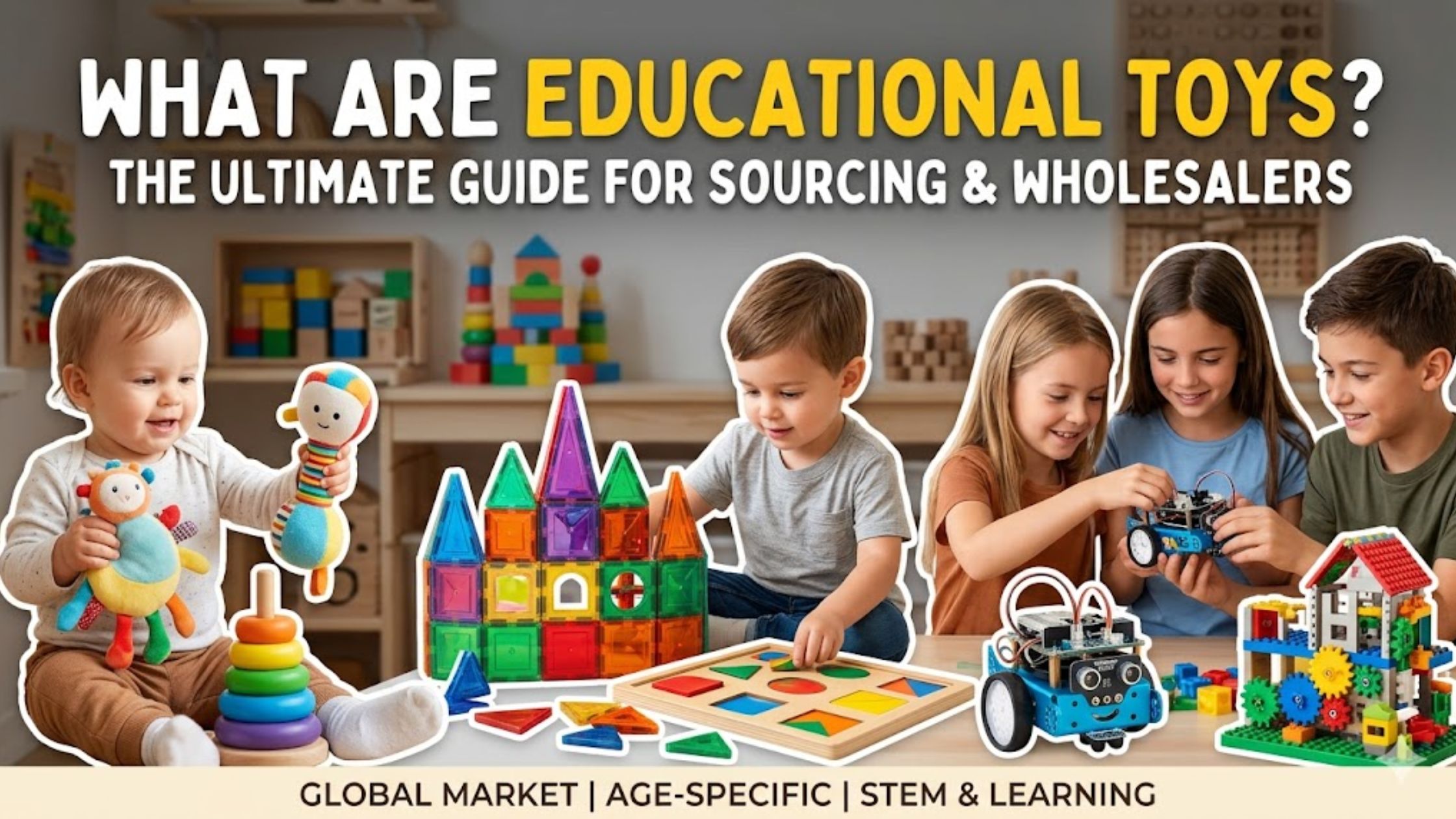
Что такое развивающие игрушки? Полное руководство для оптовых продавцов.
Half the boxes in a toy catalogue say “educational”. Very few can explain what it means. If you buy for resale, that gap is a costing problem, not a philosophy problem. This guide gives you a definition you can put in a spec sheet, the five parts that make a toy educational, and the point where the word starts costing you money.
1. What Are Educational Toys? The Short Answer
An educational toy is a toy whose play is built around a named learning goal. The child does something, sees a result, and tries again at a harder level. The learning sits in the design, not in the label.
The clearest official wording comes from the US Consumer Product Safety Commission. Its age-grading guidance lists “educational” as one product feature, and defines it as “toys designed and marketed specifically for academic gains.”
Read that twice. The regulator talks about design and marketing. It says nothing about whether a child actually learns. That is the whole argument of this page: “educational” is a design brief and a claim, not a product class. So what are educational toys in practice? Three things at once:
- a toy with a stated skill behind it;
- a product with a path from easy to hard;
- a box with a promise printed on it that you must be able to defend.
Everything else — material, price band, channel — is normal sourcing work. The three lines above are the part buyers skip, and they are the part that decides returns.
2. What Are Educational Toys Made Of?
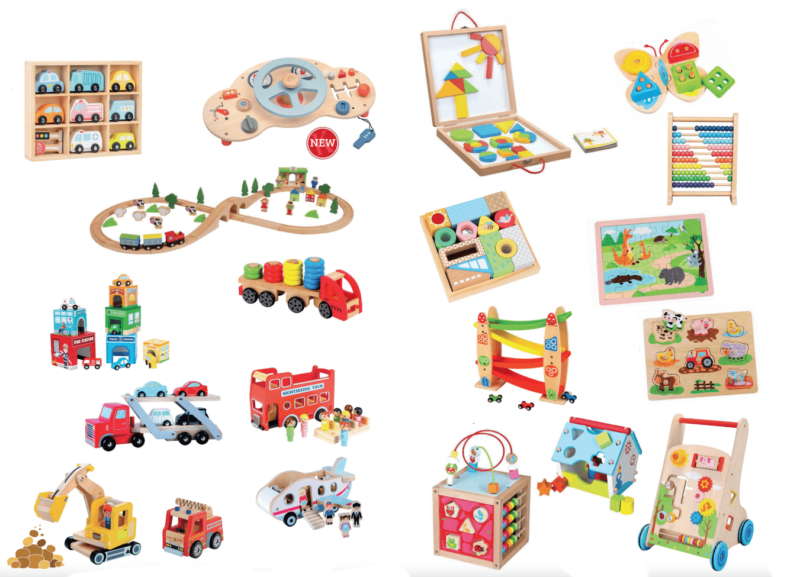
Strip the marketing away and a real educational toy has five parts. Cheap ones have two.
| Part | What it does | What it adds to cost | Ask the factory |
|---|---|---|---|
| Learning goal | Names the skill | Nothing, but needs a written brief | Which skill, in one sentence? |
| Difficulty ladder | Three or more levels, easy to hard | Extra moulds, print or content | How many levels, and are they one SKU or three? |
| Feedback | Child sees right or wrong | Self-correcting parts, or adult guidance | Can a child tell they got it right alone? |
| Manipulative | The part the hand works | Material and part count | How many unique parts? |
| Consumable | Content that runs out | Reprint and chemical testing | What runs out first, and can I buy refills? |
Most “educational” toys in a wholesale catalogue have parts one, four and five. They name a skill, they have pieces, they have a workbook. What they lack is the ladder and the feedback. That is why they sell once and then stall.
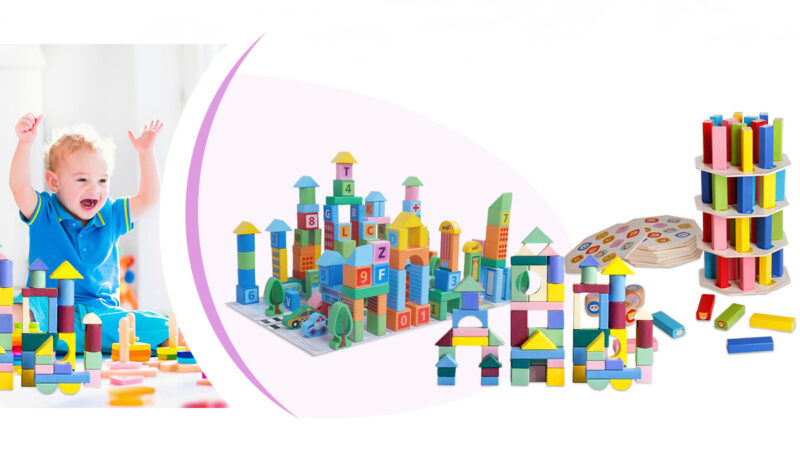
The ladder is the expensive part. Three levels can mean three moulds, three print runs or three content files. Ask before you compare quotes, because it changes your MOQ. The same logic is why building brick toys are priced by cavity count, not by box size.
Feedback is cheaper than buyers expect. A puzzle that only fits one way gives feedback for free. A talking toy needs a chip to do the same job. Two products, one function, very different cost.
One Kit or a Ladder? The Choice That Decides Reorders
The five parts above describe one product. Your range needs a decision on top of that.
- One kit, one sale. Cheapest to launch: one mould set, one box, one listing. It also sells once, so revenue depends on finding new customers.
- A ladder of three SKUs. More tooling and more content, but the same child buys level two. Most school suppliers work this way.
- A starter plus refills. The best repeat rate, because the content runs out. It needs a steady reprint partner, or the refill lands after the season.
Decide this before you brief a factory. A supplier told to “make it modular” will add parts. A supplier told that “level two must reuse every part from level one” will design for cost.

3. Which Toys Count as Educational Toys? Six Checks
Run any product through these before you ask for a price.
1. Can you name the skill in five words? “Letter recognition.” “Fine motor control.” “Counting to twenty.” If the answer needs a paragraph, there is no goal. 2. Does it get harder? A toy with one difficulty level is a demo. 3. Can the child see the result? Self-correcting is best. Adult-guided is fine. Nothing at all is a red flag. 4. Does it work with the adult out of the room? Some kits only teach while a parent narrates. That is acceptable, but say so on the box or you will get returns. 5. Is the goal in the play, or only on the box? This is the check that fails most often. 6. Would a child pick it up again? Replay is the only honest test of engagement.
Check five deserves an example. A plain wooden shape sorter passes. The same sorter with “STEM” printed on the lid, and nothing else changed, does not. The product did not become educational. The packaging did.
Every item on your shelf has two halves — the part that teaches and the part that only promises. The table below separates them for three common products.
| Продукт | The real educational part | The part that is only packaging |
|---|---|---|
| Wooden letter board | 26 recessed slots, self-correcting | The word “Montessori” on the lid |
| Talking alphabet tablet | Ordered levels, audio feedback | The “AI smart learning” badge |
| Craft kit with 12 projects | Rising difficulty, refills sold | The “creative genius” slogan |
You are paying for the left column. The right column is what your customer reads first. Both have to be right, and only one of them can be tested in a lab.
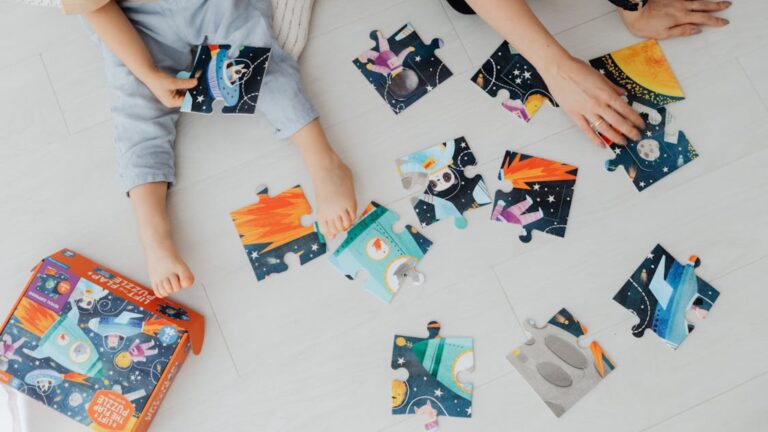
Two types pass these checks most reliably. Board games pass check five, because the rules *are* the play. Jigsaw puzzles pass check three, because the picture only fits one way. Neither needs a battery or a claim.
4. Who Decides Whether a Toy Is Educational?
Nobody, in law. No toy regulation in the US or the EU defines an educational toy. That single fact explains most of the confusion on this topic.
Start with Europe. Regulation (EU) 2025/2509 defines a toy by age: a product designed for a child under 14 to play with. The word “educational” appears in the text only in the list of things the law does *not* cover:
- science equipment used in schools under an adult instructor;
- functional teaching products over 24 volts, sold only for teaching;
- reading and educational books for children over 36 months with no play value.
Each of those is an exclusion. In Europe, calling a product educational can move it *out* of toy law. The same microscope is school equipment in a classroom and a toy in a gift box. Timing matters too: the new regulation applies from 1 August 2030, and the current toy directive still governs until then.
The United States runs the other way. The customs notes for HS heading 9503 list educational toys inside the heading, and rulings have put science kits under 9503.00.0090. The label that removes you from toy law in Europe puts you inside the toy tariff line in America.
Three rules follow:
- Do нет use the word to argue your goods out of a test.
- Do check your duty line with a broker before you price.
- Fix the box copy early. In both markets, the copy decides.
The tariff detail is a separate topic, and we cover it type by type in виды развивающих игрушек. For this page, the point is narrower: if the law says nothing, then the only thing that gives the word meaning is what you print and what you can prove.
5. How Do You Make an Educational Claim You Can Defend?
The moment you print “educational” on a box, you have made an advertising claim. In the US, the FTC requires a reasonable basis for objective claims before the ad runs — not after a complaint arrives.
The wording decides the proof:
| Level | What it looks like | Proof you need | Who asks |
|---|---|---|---|
| 1. Content | “Includes 26 letter tiles” | Spec sheet | Nobody |
| 2. Activity | “Children match letters to pictures” | The instruction sheet | Retail buyer |
| 3. Practice | “Ten graded matching tasks” | The box contents | Marketplace review |
| 4. Learning result | “Builds letter recognition” | Test data, expert review or published research on this design | Retailer, FTC |
| 5. Academic or medical result | “Raises reading scores”, “helps ADHD” | Controlled studies on your product | Regulators, lawyers |
Level 3 is where good toy copy lives. It is specific, it is provable, and it still sells. Level 4 is workable if you have a file behind it. Level 5 is where money starts leaving the business.
The line for level 4 is older than most of the products on your shelf. In 2007, FTC staff reviewed “educational” claims for baby videos and drew a distinction that still holds. Saying a product exposes a child to letters is one thing. Saying it delivers a cognitive benefit is another, and the second claim needs reliable scientific evidence. Both companies changed their claims. A few years later, the FTC settled with a maker of “brain training” games over promises of permanent cognitive improvement in children.
The practical rule is short: sell the activity, not the outcome. Then put your proof behind the one outcome you can defend, and leave the rest off the box.
This also shapes your range. A product that can honestly reach level 3 is easy to market. A product that needs level 5 to sound interesting is usually a weak product with strong copy.
6. What Is the Difference Between Educational, STEM and Montessori Toys?
Buyers use six labels for one shelf. None of them is a legal class, but each one changes what you have to ask.
| Label | Who uses it | Legal weight | What to ask |
|---|---|---|---|
| Educational / learning toy | Everyone | None | Which skill, and how is it practised? |
| Developmental toy | Special-needs and therapy buyers | None, but health-adjacent | Which development area, and who assessed it? |
| STEM / STEAM toy | Schools, parents, retail | No standard | Which of the subjects does the kit really cover? |
| Montessori toy | Premium retail | None — the word went generic in a 1967 US trademark ruling | Wood spec, edge radius, coating, current test report |
| Sensory / fidget toy | Special-needs, teen, impulse | None, plus extra US rules on water beads | Which materials, and does the report name the new rule? |
| Brain / IQ toy | Online ads | Highest risk | Treat it as a level 5 claim |
The naming matters commercially for one reason. The label sets the age grade, and the age grade sets the test programme. A toy sold as “for ages 3+” skips the small-parts tests that a “for ages 18 months+” toy must pass. Same product, different box, different test bill.
That is why the label is not a marketing detail. It is a line in your cost sheet. If you sell Montessori toys wholesale, you are also selling a wood spec and a finish spec, whether you meant to or not.
Sensory and fidget lines sit in the same trap. There the label sells the product, but the report decides the cost. See sensory toys и игрушки-антистресс оптом for the range this applies to.
The STEM row works the same way. School buyers ask which subjects a kit covers. Retail buyers ask which age it suits. A single STEM toy range rarely answers both at once.
7. How Do You Write an Educational Toy Spec the Factory Can Quote?
A factory will quote what you describe. If your brief is one line, you get a generic product with your logo on it. Write eight lines instead:
1. Age grade, plus the age you will test with real children. 2. The skill, in one sentence. 3. Part count, and unique part count. 4. Levels, and whether they are separate SKUs. 5. Material and finish, with the standard you will accept. 6. What is in the box, including consumables and refills. 7. Markets and tests, named one by one. 8. The claim you will print, word for word.
Line eight is the one buyers skip, and the one that ties your spec to your risk. If the claim says “builds letter recognition”, the factory knows the letter set must be complete and correct in every language you sell. If the claim says “ten graded tasks”, the factory knows ten is a number it has to hit.
Then the boring part, in writing: MOQ, unit price at your real volume, sample cost, production days after deposit, Incoterm, payment terms. A brief that covers those six is worth more than a forty-page catalogue.

8. What Do Educational Toys Cost, and What Moves the Quote?
Six things move the number. The rest is noise.
- Tooling. Paid once per unique part. Cutting ten shapes to five can halve it.
- Content. A workbook, card set or level list has to be written, translated and printed.
- Part count. Every extra piece means mould time, sorting and packing labour.
- Testing. Age grade and battery decide the bill. Under-3s and anything with a chip cost more.
- Packaging. A rigid box can cost more per unit than the toy inside it.
- Freight. Bulky kits pay for space, not weight.
Here is what real quotes look like. In listings we reviewed from Zhejiang and Guangdong, wooden puzzle sets ran from US$0.29 to US$5.20 FOB, moving with volume and finish. MOQ sat at 500 to 1,000 sets. Standard production ran 25 to 30 days, stretching to 45 days with custom tooling. Payment was 30% deposit, 70% before the bill of lading, with LC at sight for larger orders. Stock samples were free, with the buyer paying freight. Custom samples were charged and refunded on order.
Quote levels also track the factory area. Plastics and electronics cluster in Chenghai, near Shantou. Wooden items come from the Zhejiang belt. Our China toy wholesale guide maps both.
Treat every figure above as a rough guide, not a promise. Your quote will move with your spec, your season and your factory’s order book. For a fuller breakdown by item, see the baby toy wholesale price guide.
9. How Do You Check a Supplier’s Educational Claim?
Five questions. Ask them before you ask for a price.
1. Send the instruction sheet, not the catalogue page. The sheet shows whether a ladder exists. 2. How many unique parts, and who owns each mould? This decides your exclusivity later. 3. Which reports cover this exact SKU, dated within 12 months? A report for a similar item is not a report. Toy testing labs can confirm the scope. 4. What is the age grade, and what changed to justify it? Moving from 3+ to 18 months is a test decision, not a marketing one. 5. Who wrote the learning content? A teacher, a curriculum designer, or nobody.
Then order a pre-production sample and keep it. That sample is the reference for the whole container. Full shipping and paperwork steps sit in how to import toys from China. If you want a longer list to compare before you shortlist, start with toy manufacturers in China.
10. FAQ: What Are Educational Toys?
What are educational toys for a one-year-old? Toys that work on cause and effect, grasping and first words — stacking cups, posting boxes, board books with textures. For buyers, the important part is the test load. Anything graded under 3 faces small-parts rules and tighter limits. Sensory items also face the US water bead rule that took effect on 12 March 2026. Our toddler toy range shows what that looks like on a shelf.
Do educational toys need CE and EN 71? If they are toys, yes. In the EU, EN 71 testing and CE marking apply under the current toy directive until 1 August 2030. In the US, ASTM F963-23 has been mandatory since 20 April 2024, plus CPSIA tracking labels. The word “educational” changes none of this.
Can I print “educational” on the box without any testing? Legally, in most markets, yes. Commercially, no. The word is an advertising claim. If you also claim a learning result, you need a basis for it before the product ships.
Which age band is easiest to sell? Ages 3 to 6 is the widest, because nursery, gift and retail all buy there. Ages 0 to 3 carries the strictest tests and the least room for error. Pretend play sits in the middle: it sells hard into Christmas and back to school, and flat in between. Pretend play toys are the clearest example of that season curve.
Do educational toys sell at a higher price? They carry a higher unit cost and a better margin than novelty toys. The catch is returns. A toy that promises a skill and does not deliver comes back, and a return costs more than the margin. That is why the ladder and the feedback loop in section 2 matter to your P&L, not just to the child.
What are educational toys made of in practice? Mostly wood, paper, ABS and fabric, with a small and growing share of electronics. The оптовая продажа развивающих игрушек range we handle runs across all four, and the material decides both the price and the test bill.
Заключительная мысль
What are educational toys, then? They are toys with a stated skill, a ladder, and a way for a child to know they got it right. The word on the box is a claim you have to defend. In Europe it can even move your goods out of toy law; in America it moves them into a tariff line.
Get those three things right — spec, claim, age grade — and the rest is ordinary sourcing. If you are still building a range, start with the main educational toy types и brands that sell them. If you already know what you want, compare educational toy suppliers и manufacturers on MOQ before you compare price.
When you are ready to price a line, send our team three things: your age grade, your target retail price and your markets. Use the sourcing inquiry page and we will come back with a shortlist, real factory quotes and the test list you actually need. If you need stock rather than production, compare wholesale distributors on MOQ first. If you are still choosing a partner, read how China toy sourcing companies compare before you commit volume.