O que são cordões para crachá? Guia completo sobre tipos, materiais e personalização.
Have you ever wondered what lanyards are and why businesses use them widely? Lanyards are more than simple straps — they combine daily functionality with brand visibility. This guide explains lanyard components, printing methods, and customization options to help you choose the right solution for your business.
#1 What Are Lanyards?
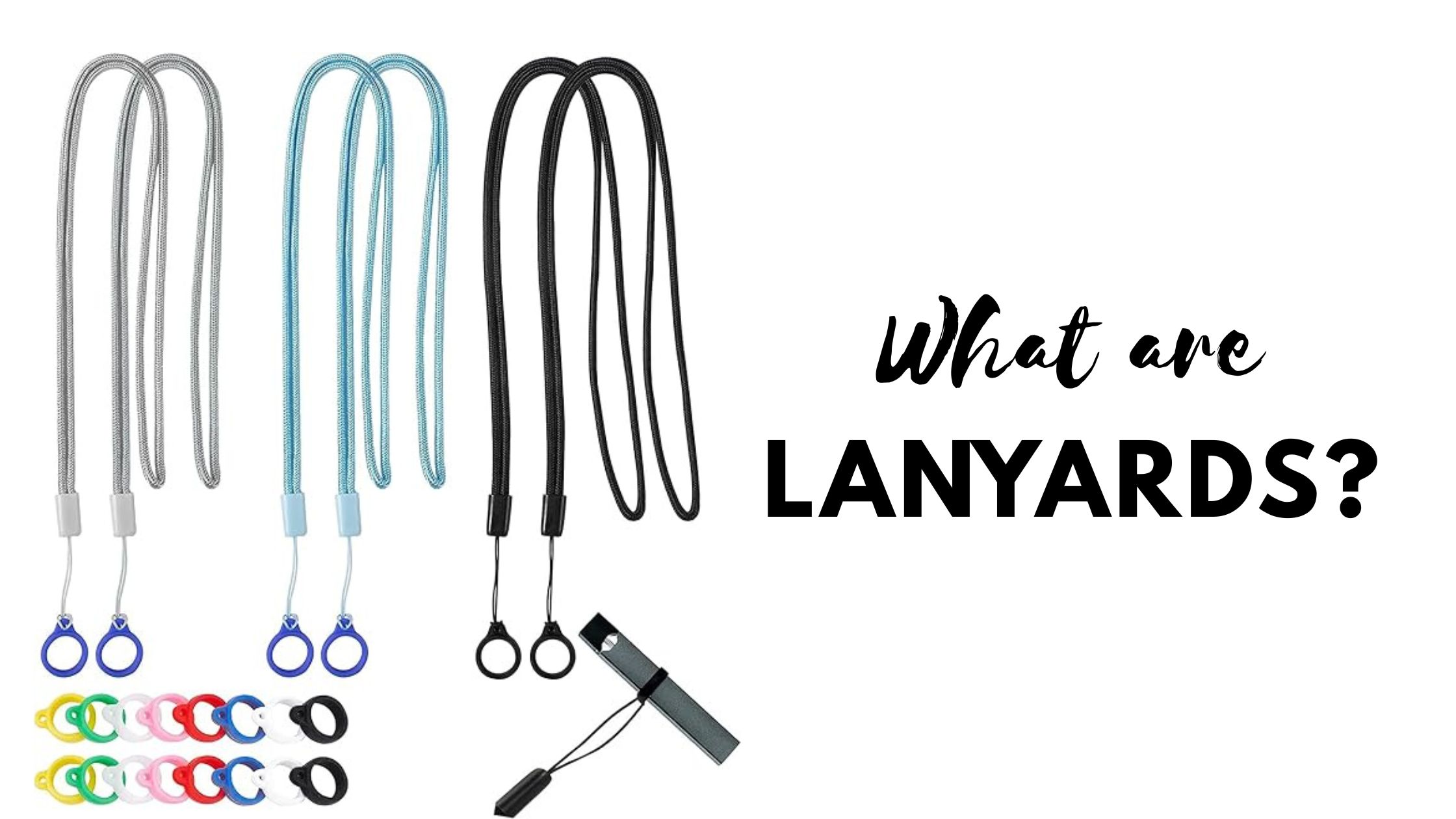
A lanyard is a wearable strap used to carry and display items. In simple terms, the lanyard definition refers to a strap designed for holding ID badges, access cards, keys, tools, and other small items.
For businesses, custom lanyards and branded lanyards are practical products used in offices, schools, trade shows, promotional events, healthcare facilities, and industrial environments.
#2 Anatomy of a Lanyard: Three Main Components
Although lanyards may look simple, they are made up of several lanyard parts. Each part affects comfort, durability, customization results, and overall user experience.
#2.1 Strap
The strap is the main part of a lanyard. It determines how comfortable the product feels to wear, how it looks, and how it represents a brand.
Material
Material selection affects three things: cost, comfort, and appearance. Common lanyard materials include polyester, nylon, cotton, PVC, silicone, and rubber. The right options depend on the balance between cost, comfort, durability, and brand positioning.
Width
The width of the strap directly affects wearing comfort and the space available for logo display. Wide straps are suitable for projects that need a large logo display area, while narrower straps are better for use cases where lightweight design is a key concern.
Printing method
Since the strap is the main visible area of a lanyard, print quality directly affects how your brand is presented. Screen printing is commonly used for simple logos and cost-effective projects, while dye sublimation lanyards are suitable for full-color patterns. Woven lanyard designs provide a more durable and premium logo presentation.
For bulk-order projects, the strap usually accounts for the largest share of the cost. However, cutting costs on materials too much may reduce wearing comfort and weaken brand presentation.
#2.2 Attachment
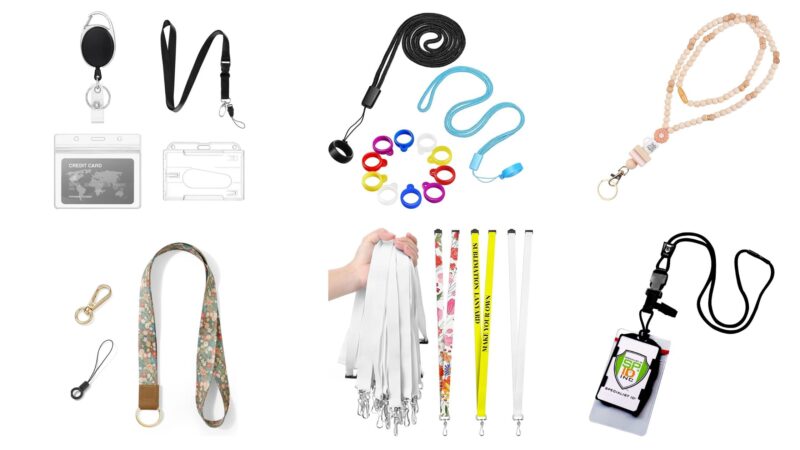
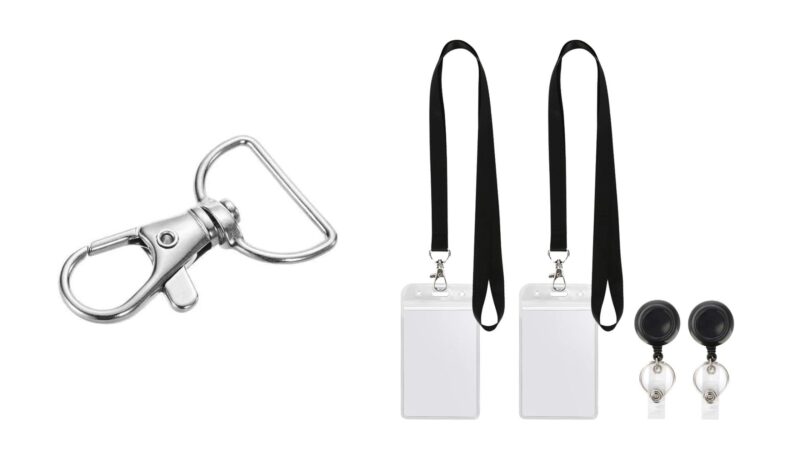
Lanyard attachments are used to connect the strap to the item being carried, such as employee ID cards, keys, or tools. Although they are small, attachments are essential—they directly affect convenience and the overall durability of the lanyard.
When choosing attachments, it is important to consider how often the lanyard will be used and what type of item it will carry. For example, employees who need to use card readers daily require quick and easy access to their ID cards.
Common types of lanyard clips include:
- Lobster claw clasp: lightweight and low-cost, so it is commonly used for ID cards.
- Metal hook: offers greater holding power and is suitable for tools and industrial applications.
- Key ring: simple design, ideal for keys and small accessories.
#2.3 Accessories
Lanyard accessories can turn a simple lanyard into a functional product. The right choice of accessories should be based on your specific application needs.
Por exemplo:
Retractable badge reels allow users to scan their ID cards without removing the lanyard. Badge holders protect the card and improve its visibility or presentation.
More attachments do not always mean better. The right combination matters more than a complex design, because every extra attachment adds cost, increases production complexity, and extends delivery time.
#3 Different Types of Lanyards by Material
When choosing a lanyard material, you usually need to consider cost, durability, comfort, and brand image.
| Material | Ideal para | Cost Level | Main-Advantages |
| Poliéster | Bulk orders and daily use | Baixo | Cost-effective and durable |
| Nylon | Premium brands and professional events | Médio | Soft and high-quality feel |
| Algodão | Eco-friendly projects | Medium-high | Natural and sustainable image |
| PVC/Silicone | Special applications | Medium-high | Waterproof and unique design |
Different materials have different advantages. Understanding these differences can help businesses choose the right lanyard solution before placing bulk orders.
#4 How to Select the Right Printing Methods for Lanyards?
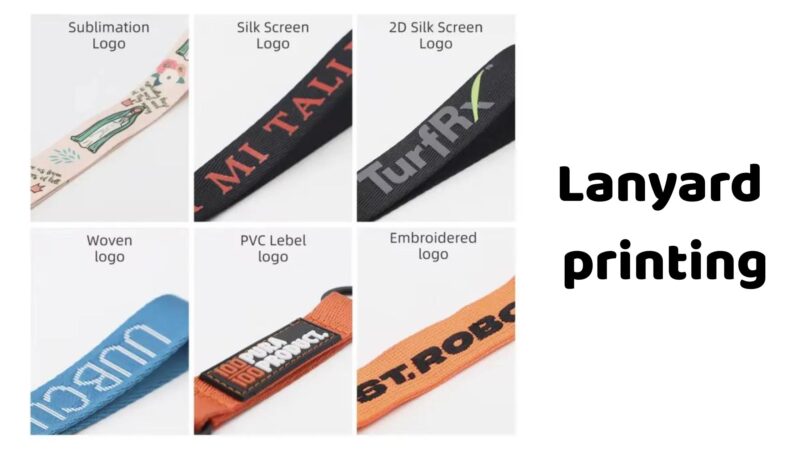
Different printing methods affect the appearance, durability, and price of custom lanyards.
Common options include:
Serigrafia
- Suitable for simple logos and large quantity orders
- Cost-effective choice for budget projects
Dye Sublimation Lanyards
- Suitable for full-color designs and complex patterns
- Provides clear and long-lasting colors
Woven Logo Lanyards
- Suitable for premium brands and high-quality products
- Creates a professional and durable look
Choosing the right printing method depends on your design, order quantity, and budget.
#5 How to Choose the Right Custom Lanyard?
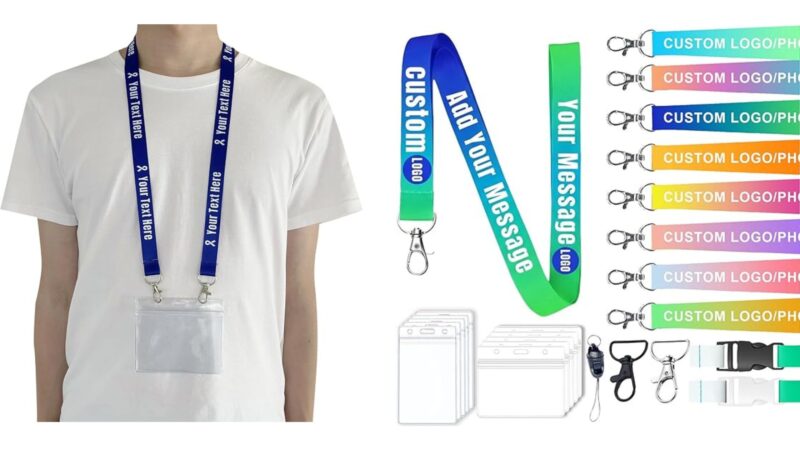
Choosing the right lanyard depends on your application, budget, and customization needs. The table below provides a quick guide to help you find the most suitable option for your project.
| Your Need | Cordão recomendado | Key Benefits |
| Large quantity events or promotional campaigns | Cordões de poliéster | Cost-effective, lightweight, and easy to customize |
| Employee ID badges and daily office use | Polyester or nylon lanyards | Comfortable, durable, and suitable for long-term use |
| Premium brand presentation | Nylon or woven lanyards | Provides a smoother texture and more professional appearance |
| Sustainable brand projects | Cotton or recycled lanyards | Supports eco-friendly branding goals |
| Workplace safety applications | cordões de segurança | Allows quick release and improves user safety |
#6 How to Choose a Reliable Lanyard Supplier
Before placing wholesale lanyard orders, you should evaluate whether the supplier can provide:
- A variety of material options
- Customization capabilities
- Stable production capacity
- Quality control systems
- On-time delivery
A reliable supplier should help you choose the right materials, accessories, and production methods based on your project requirements.
Perguntas frequentes
Q: What’s the best material for custom lanyards?
A: The best material depends on your project needs, budget, and usage environment. Polyester lanyards are popular for bulk orders because they are cost-effective and durable. Nylon lanyards provide a softer feel and premium appearance, while cotton and recycled materials are suitable for brands focusing on sustainability.
Q: Which lanyard is best for bulk orders?
A: Polyester lanyards are usually the preferred choice for bulk orders because they offer competitive pricing, stable production efficiency, and reliable durability. They are commonly used for trade shows, employee ID badges, promotional campaigns, and large-scale events.
Q: What lanyard accessories should I choose for my project?
A: The right accessory depends on what the lanyard needs to carry. Lobster clasps and badge holders are suitable for ID cards, key rings work well for keys, and metal hooks are better for tools or industrial applications. Breakaway buckles are recommended when additional safety is required.
Q: Can lanyards be customized with logos and designs?
A: Yes. Custom lanyards can be personalized with logos, colors, patterns, strap widths, materials, and attachment options. Businesses can choose different customization methods based on their branding needs, budget, and application requirements.
Q: What printing methods can be used for custom lanyards?
A: Common printing methods include screen printing, dye sublimation, and woven logos. Screen printing is suitable for simple designs and large quantities, while dye sublimation works well for full-color patterns. Woven lanyards provide a premium and durable logo appearance.
Conclusão
Choosing the right lanyard solution requires a balance between material, design, application, and budget. At TonySourcing, we provide a wide range of cordões personalizados, including different materials, printing options, accessories, and styles to meet various business needs. Whether you need bulk lanyards for events, branded lanyards for promotions, ou durable lanyards for industrial applications, TonySourcing can help you find the right solution with reliable quality, flexible customization, and competitive pricing.