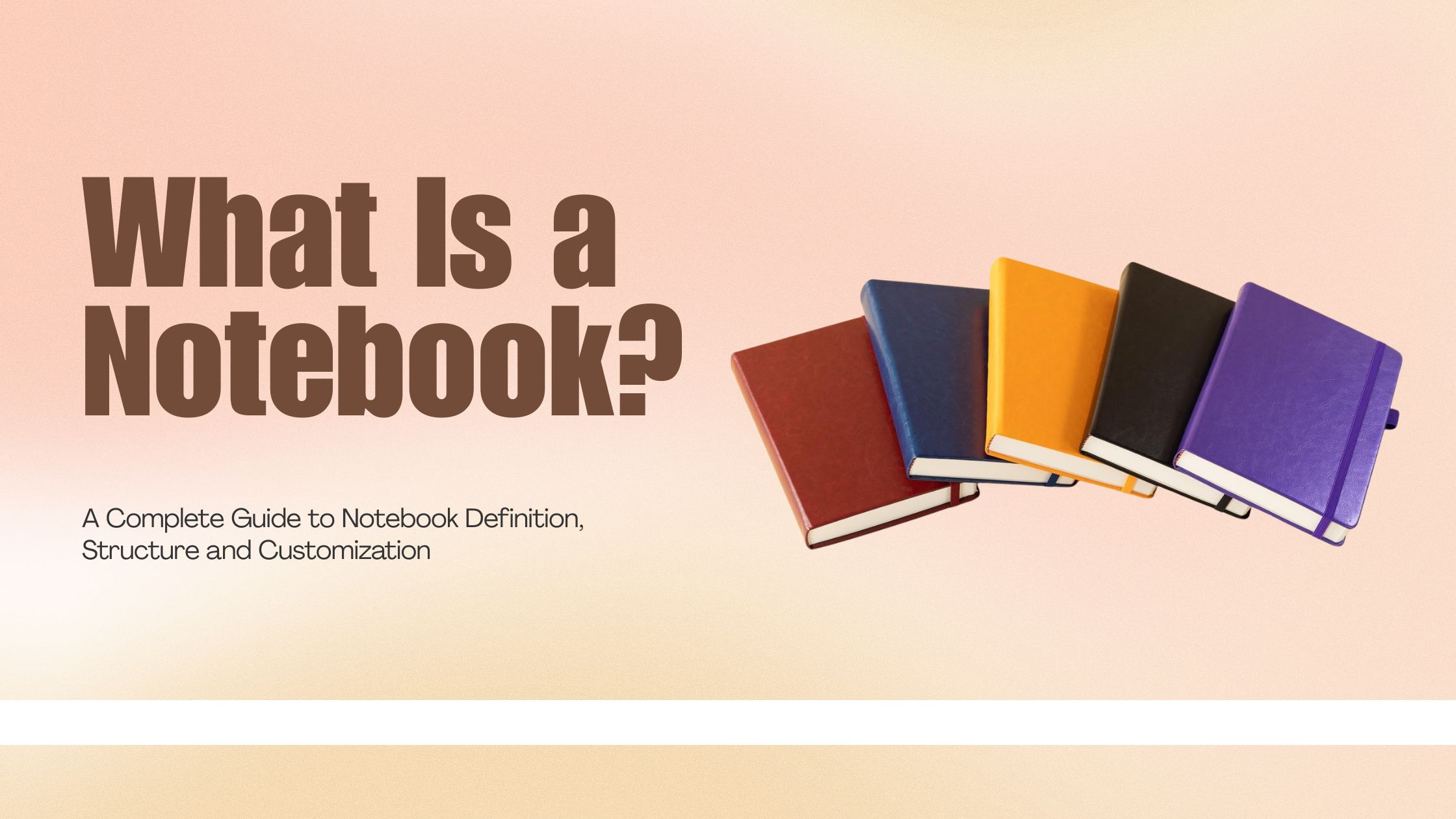
O que é um caderno? O guia completo sobre estrutura, materiais e personalização.
A notebook is more than a simple writing product. The cover materials, paper types, binding methods, and accessories all influence its appearance, durability, and customization possibilities.
This guide explains the basic structure of notebooks and the key factors brands should consider when sourcing custom notebooks.
#1 Notebook Definition?
A notebook is a writing product made of inner pages, a cover, and a binding structure, mainly used for writing, note-taking, drawing, and organizing information. For businesses, notebooks are not just office supplies; they are also widely used for brand promotion, corporate gifts, retail products, and stationery projects.
#2 Main Components of a Notebook
Although a notebook may look simple, each component influences the overall durability, cost, and user experience, from notebook covers and paper types to binding methods and notebook accessories.
#2.1 Notebook Covers
The cover is one of the most important parts of a notebook, as it affects the appearance, durability, and brand presentation.
| Cover Material | Features | Ideal para |
| Paperboard | Lightweight and suitable for printing | Promotional notebooks |
| PU Leather | Professional appearance and cost-effective | Business notebooks |
| Genuine Leather | Premium appearance and long lifespan | Luxury notebooks |
| Tela | Casual and eco-friendly style | Creative notebooks |
| PP Cover | Water-resistant and lightweight | School and promotional notebooks |
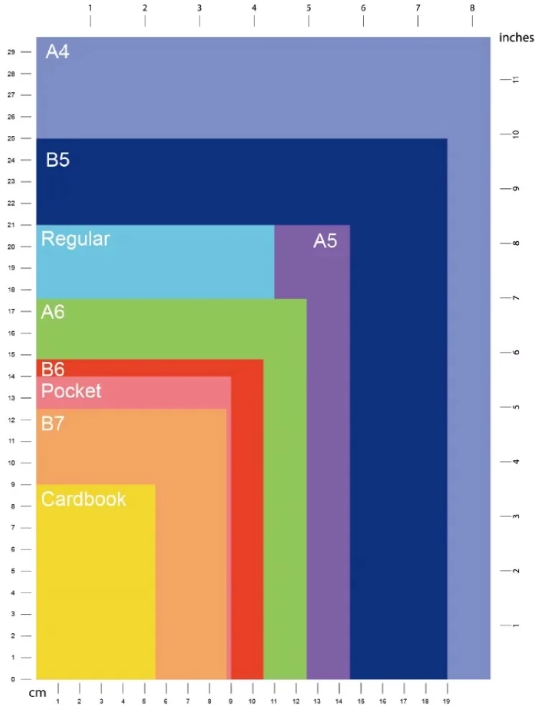
#2.2 Notebook Sizes
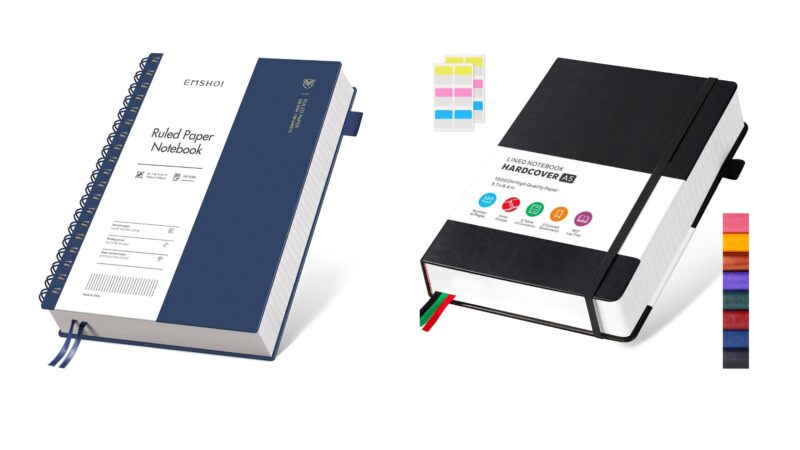
Notebook size is an important factor that affects portability, usability, and production requirements. Common notebook sizes include A4, A5, and A6, while custom sizes are also available for special projects and retail products.
#2.3 Notebook Inner Pages
#2.3.1 Page Layout
Ruled paper: Evenly spaced horizontal lines provide writing guidance and are suitable for daily notes, meetings, and records.
Dot-grid paper: Evenly spaced dots serve as reference points for writing and drawing.
Grid paper: Small squares arranged in a regular pattern give you guidelines, allowing you to draw charts, diagrams, and technical sketches.
Blank paper: Provides maximum flexibility for writing, drawing, and creative work.
#2.3.2 Paper Color
White paper: Provides a clean and professional appearance, commonly used in business notebooks.
Cream paper: Creates a softer reading experience and is often used for premium notebooks.
#2.3.3 Page Weight and GSM
Paper weight affects writing experience, durability, and printing performance.
50- 90 GSM: The most common paper weight for everyday use.
100- 165 GSM: Thicker and heavier paper, made for higher-quality notebooks like sketchbooks or marker drawing pads. It can help reduce ink bleeding through the paper.
GSM (grams per square meter) refers to the weight of paper. A higher GSM usually indicates thicker and more durable paper.
#2.4 Notebook Binding methods
Binding is the way the pages and the cover are connected.
Hardcover binding: A rigid cover provides better protection and durability.
Spiral binding: Pages held by a wire or plastic coil.
Glue binding: Pages glued at the spine.
Sewn binding: Pages stitched with thread.
Saddle stitching: Pages folded and stapled in the middle.
#2.5 Notebook Accessories
Ribbon Bookmark: Adds a premium feel and is often used in high-end notebooks and business gifts.
Elastic Closure Band: Keeps the pages from opening and makes the notebook easier to carry.
Inner Pocket: Adds extra storage and is practical for office use, especially for notebooks with pockets.
Magnetic Closure: It can give the notebook a more elegant look and is suitable for business settings.
Page Marker Tabs: Help you find pages quickly by category, making them great for studying.
#3 What Factors Affect the Cost of Custom Notebooks?
When customizing notebooks, many factors can affect the final product cost and user experience. Understanding these factors can help you choose the right customization solution for your project.
| Factors | How It Affects Cost and Quality |
| Cover Material | Affects product positioning, appearance, and perceived value. |
| Inner Page Design | Special page requirements may increase costs while meeting specific usage needs. |
| Tamanho | Influences material usage and production costs. Common sizes include A4, A5, and custom sizes. |
| Paper Quality | Affects writing experience, printing performance, and overall quality. |
| Binding Method | Influences durability, usability, and production costs. |
| Acessórios | Increases product functionality and may affect the final cost. |
| Customization Method | Printing methods, logo techniques, and special finishes affect cost and appearance. |
| Embalagem | Gift and retail packaging influence final costs and enhance product presentation. |
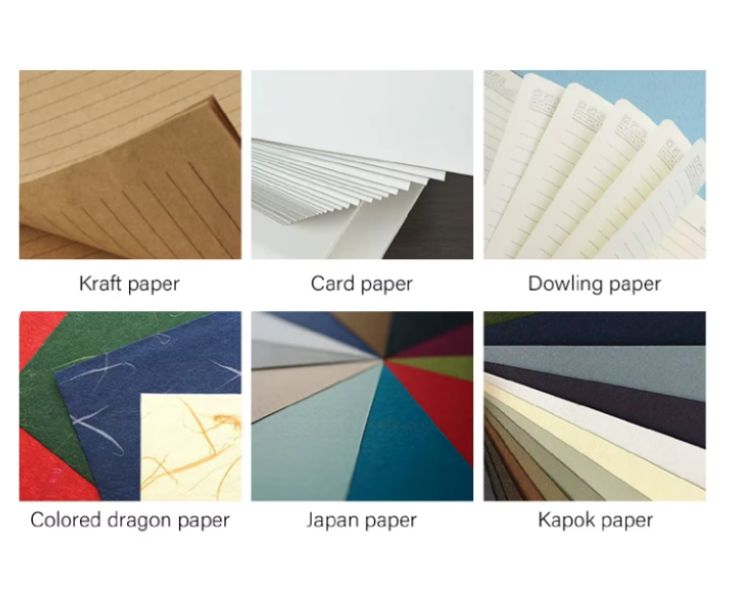
#4 Which Parts of a Notebook Can Be Customized?
#4.1 Cover Customization
- Material
- Cor
- Impressão de logotipo
- Embossing
- Foil stamping
#4.2 Page Customization
- Layout
- Paper type
- Branded pages
#4.3 Binding Customization
- Binding style
- Thread color
- Spiral color
#4.4 Packaging Customization
- Individual packaging
- Gift packaging
- Retail packaging
Perguntas frequentes
Q: What is the meaning of notebook?
A: A notebook is a collection of pages bound together with a cover, used for writing, note-taking, drawing, and organizing information. For businesses, notebooks can also serve as promotional products, corporate gifts, and customized stationery.
Q: What are the main parts of a notebook?
A: A notebook usually consists of a cover, inner pages, binding, and accessories. Each part affects the notebook’s appearance, durability, and customization options.
Q: What materials are notebooks made from?
A: Notebook covers are commonly made from paperboard, PU leather, genuine leather, canvas, and PP plastic.
Q: What paper thickness is best for notebooks?
A: 50-90 GSM paper is suitable for everyday writing, while 100-165 GSM paper is commonly used for premium notebooks, sketchbooks, and creative applications.
Q: Can notebooks be customized with a logo?
A: Yes. Custom notebooks can be customized with logo printing, embossing, foil stamping, branded pages, and packaging.
Q: What information should I provide when ordering custom notebooks?
A: You should provide notebook size, quantity, cover material, paper type, customization requirements, and packaging details.
Q: What is the MOQ for custom notebooks?
A: MOQ depends on notebook specifications, materials, printing methods, and packaging requirements. Standard custom notebooks usually have lower MOQs, while special materials or complex designs may require higher quantities.
Conclusão
Choosing the right notebooks requires an understanding of their structure, materials, and customization options. From cover materials and paper types to binding methods and accessories, every component affects the notebook’s quality and user experience. For brands, selecting the right specifications helps create notebooks that meet their project requirements.
TonySourcing provides customized notebook solutions for brands, importers, and corporate purchasers. With flexible options in materials, printing methods, and packaging, we help customers create notebooks that meet the needs of different markets.