
Different Types of Toys: 10 Categories and What Each One Costs
Every list of different types of toys splits them by what a child does with them. That is the right split for a parent. It is the wrong split for anyone placing an order.
A buyer needs a split by what the factory has to do and what the lab has to test. Those two things set your MOQ, your FOB price and your certificate bill. This page gives you that split, one number per type.
Why the Buyer’s Split Is Not the Regulator’s Split
The US Consumer Product Safety Commission publishes age guidance that sorts toys into seven play categories and 21 subcategories. It is the reference document most labs and test houses work from.
| CPSC play category | What sits inside it |
|---|---|
| Exploratory and practice play | Rattles, mobiles, push and pull toys |
| Building play | Blocks, interlocking bricks, model kits |
| Pretend and role play | Dolls, stuffed animals, play scenes, dress-up, small vehicles |
| Game and activity play | Puzzles, card games, board games |
| Sports, recreational and outdoor play | Ride-ons, tents, sports sets |
| Media play | Arts and crafts, musical instruments |
| Educational and academic play | Books, learning toys |
| Technology play, listed separately | Smart toys, audio-visual toys, video games |
That split is honest, and it is useless at a quotation stage. Dolls and stuffed animals sit in the same CPSC subcategory. On the buying side they are two different industries, in two different provinces, with a two-times price gap and a different failure mode. Plush fails at the seam. Dolls fail at the hair and the vinyl head.
So the list of different types of toys below uses ten entries, split by production route. Where a type has its own deep guide on this site, the link is in the section.

The 10 Types of Toys, Side by Side
| Type | MOQ | FOB per unit | What drives the price |
|---|---|---|---|
| STEM and educational | 500–1,000 | USD 2.50–18.00 | Electronics, and the instruction book |
| Puzzles | 500–1,000 | USD 0.60–3.50 | Board grade, and the print run |
| Diecast and collectibles | 120–1,000 | USD 1.85–5.20 | The licence first, then the tooling |
| Dolls and role-play | 500–1,000 | USD 2.00–8.00 | Hair, rooted or moulded |
| Remote control and electronic | 500–1,000 | USD 4.40–34.00 | The radio module and the battery pack |
| Arts, crafts and board games | 500–1,000 | USD 1.00–6.00 | Component count, and the print run |
| Plush and soft | 300–500 | USD 1.50–7.00 | Fabric, and how much is hand-sewn |
| Baby and toddler | 500–1,000 | USD 0.80–3.00 | The test bill, not the toy |
| Outdoor and active | 100–500 | USD 13.00–65.00 | Carton volume |
| Building and construction | 1,000 | USD 1.50–5.00 | Fit tolerance, and magnets |
Prices are rough 2026 factory ranges, not a quote. The last column is the part worth reading twice: in seven of the ten rows, the thing that moves the price is not the toy.
1. STEM and Educational Toys: Best Margin, Longest Paperwork
This type covers science kits, coding robots, circuit boards and interactive learning sets. Unit prices run from USD 2.50 for a basic experiment kit to USD 18 and well past it for anything with a screen or a motor.
Two costs sit on top of the toy. A battery means EN 62115, including a battery cover that stays shut at 20 newtons from any direction. A radio or a Bluetooth module means a second approval entirely. And the instruction book is not free: a 40-page manual in four languages can add more to the unit cost than the plastic.
The margin is real. So is the paperwork. If you are still deciding whether the label means anything, the 11 types of educational toys breaks the group down. For where the four letters stop being a marketing claim, read what a STEM toy actually is.
2. Puzzles: Cheapest to Ship, Easiest to Sell
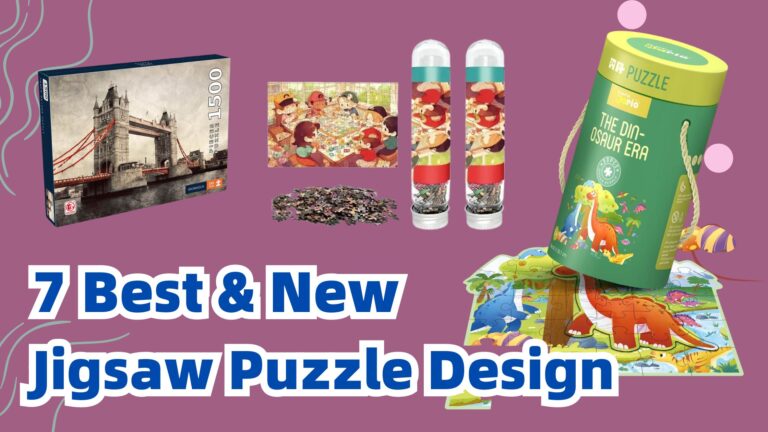
Puzzles are the lowest-risk type on this list. A 500-piece adult puzzle lands around USD 0.90 to 2.50, a children’s wooden puzzle from USD 0.60, and both pack into a carton you can lift.
There is one rule in this type that most buyers miss. In the EU, a puzzle of more than 500 pieces falls outside the toy directive. It is treated as a printed game, not a toy, so no CE toy marking and no EN 71-1 mechanical test. Below 500 pieces, the full route applies. That single line decides your test bill on a 1,000-piece line.
O jigsaw puzzle types guide covers cut, board and finish. If your line runs to cube puzzles instead, the Rubik’s cube types page covers that side.
3. Diecast and Collectibles: Highest Unit Price, Licence First
Of all the different types of toys, this one carries the best unit margin and the worst legal exposure. A 1:64 model starts near USD 1.85 and a detailed 1:18 runs well past USD 5.
The cost driver is the licence. Royalty on a licensed model runs 4% to 12% of the model’s sales revenue, paid to the car maker. Without a licence you can still make an accurate replica, and a German court confirmed that in 2025. What you cannot do is imply the brand approved it, or get it through customs. A single seizure in 2025 pulled 662 cartons of unlicensed models with a declared value of USD 29,600.
Note also that “diecast” is a process name, not a promise of material. A typical 1:64 has a metal body and a plastic base, interior and windows. The diecast explainer covers the process, and the scale size guide covers what each scale actually measures.
4. Dolls and Role-Play: The Steady Volume Type
Baby dolls, fashion dolls, play kitchens, tool sets and costumes. This is the type that keeps a toy department running all year, and it is the least seasonal on the list.
Dolls price by the head and the hair. A moulded head with painted hair sits near USD 2. A rooted-hair doll with a vinyl head and glass eyes can pass USD 8. The phthalate test on that vinyl is a separate line on the lab bill. Rooting is hand work, so it barely gets cheaper with volume. That is why the price ladder in this type is flatter than in plush.
Play kitchens belong to the same commercial group but behave nothing like dolls: one unit per carton, flat pack, USD 30 to 65. The 7 types of dolls covers the doll side in detail.
5. Remote Control and Electronic: Two Certificates, Not One
RC cars, drones, robots and light-and-sound toys. Prices spread wider here than anywhere else: USD 4.40 for an entry 1:18 RC car, USD 8 for a climbing model, USD 31 to 34 for hobby grade.
Of all the different types of toys on this list, this is the only one where toy safety is half the approval. A radio-controlled toy needs radio approval as well — the Radio Equipment Directive in the EU, FCC Part 15 in the United States. A factory that only holds an EN 71 report cannot ship you a compliant RC toy, however good the report looks.
Batteries add a third layer. Lithium cells bring transport rules on top of product rules, and a battery compartment without a captive screw fails EN 62115 on the first inspection.
We do not yet have a dedicated page for this type on the site. When we do, it will sit here.

6. Arts, Crafts and Board Games: Where the Age Label Changes the Test
Craft kits, paints, modelling clay, plus family board games. USD 1 to 6 covers most of it.
Two rules catch buyers out. First, art materials sold as such fall under a separate US scheme — LHAMA, tested to ASTM D-4236. That is what the AP seal means, and it is not a toy safety mark. A paint set can hold an AP seal and still need EN 71-3 for the EU.
Second, board games are priced by component count, not by box size. Sixty cards and four wooden tokens cost less to make than twelve moulded figures, and the box is the same. That inverts the usual assumption that a bigger box means a dearer product.
O arts and crafts supply page covers the craft side. The board games page is thinner and due a rebuild.
7. Plush and Soft Toys: The Cheapest Way Into Private Label
Plush is the easiest of the different types of toys to start a private label with. MOQ starts at 300 to 500 pieces, and personalisation is embroidery, not tooling, so a custom character adds cost per unit without adding a mould.
A standard 30 cm animal runs USD 1.50 to 4.00. A custom character design runs USD 3 to 7. Add a sound module and you are at USD 5 to 12, with a battery to certify.
The failure point is not the fabric. It is the seam. A seam that opens under the EN 71-1 tension test is the most common reason a plush shipment fails. It also fails on a sample you could have squeezed yourself in thirty seconds. The wholesale plush toys guide covers the rest of the route.
8. Baby and Toddler: Strictest Test, Highest Trust
Rattles, teethers, activity mats, soft blocks. Unit prices look harmless at USD 0.80 to 3.00, and then the test bill arrives.
This is the most expensive type to certify and the least forgiving. Every part has to survive the small parts cylinder. The chemical limits are the tightest in the toy standard. A teether also goes into a mouth, so the material declaration matters as much as the test.
The economics only work one way: spread one test report across as many SKUs as you honestly can, and keep the age band consistent across the range. A 0–3 label on one item pulls the whole range into the strictest route. The tipos de brinquedos para bebês guide covers the range, and the baby toy price guide covers what each band costs.
9. Outdoor and Active: Sold by the Cubic Metre
Scooters, balance bikes, playhouses, sandboxes, water toys. High ticket, clear season, and a freight problem. Among the different types of toys, this is the one sold by the cubic metre.
A balance bike is USD 13 to 25 and takes 0.028 CBM in a half-assembled carton. A playhouse is USD 30 to 65 and takes 0.17 CBM assembled. At this point you are not buying toys, you are buying cubic metres. On a small order, the freight per unit can exceed the factory cost.
Two standards sit outside the toy rule here: scooters fall under EN 14619, trampolines under EN 71-14. Neither is covered by a standard toy report.
We do not yet have a dedicated page for this type on the site. When we do, it will sit here.
10. Building and Construction: The Repeat-Purchase Type
Blocks, magnetic tiles, interlocking bricks and connective systems. MOQ is the highest on this list at 1,000, and the unit price is USD 1.50 to 5.00.
Construction toys earn their place because the same child buys twice. A starter set leads to an expansion set, so the second order costs you nothing in design or tooling. That is also why factories in this type care about one thing above all: fit tolerance. A block that is 0.3 mm out binds after twenty pieces, and no test report catches that.
Magnets change the rules. Magnetic tiles need the magnet requirements in EN 71-1 and ASTM F963. A magnet that comes loose is treated as a serious hazard, not a small part. The building blocks factory guide covers the supply side. If you are choosing between wood and plastic, the types of wooden toys page explains why wood has no steel mould, and therefore no MOQ floor.
Which Type Should You Start With?
| If this is you | Start with | Because |
|---|---|---|
| First order under USD 3,000 | Puzzles or plush | MOQ 300–500, lowest unit cost |
| Gift or souvenir channel | Plush | Embroidery instead of tooling |
| School or education channel | blocos de construção | Widest age band, repeat purchase |
| Hobby or collector base | Fundido em metal | Highest unit price, licence first |
| Amazon or marketplace seller | Puzzles or baby | Small parcel, low return rate |
| Shop with floor space | Outdoor or play kitchens | High ticket, one unit per carton |
Can You Order Across Several Types at Once?
Yes, and you should. MOQ applies per SKU, not per order. Ten different types of toys at 300 pieces each is a normal mixed container, not ten separate shipments.
Three things make it work. Each SKU keeps its own carton mark. One inspection covers the whole load. And one bill of lading covers the lot, which is what keeps the freight per unit down.
What you cannot mix is the paperwork. A plush animal, an RC car and a paint set need three different test routes, and one report will not cover all three. If you are shortlisting factories for a mixed order, the factory vetting checklist is the one we use. The Shantou cluster guide explains why so many of these types sit within 40 km of each other.
Perguntas frequentes
How many different types of toys are there? There is no fixed number. The CPSC guidance uses 7 play categories and 21 subcategories. Commercially, buyers work with 10 to 15 types, because that is roughly how many different production routes and test routes exist.
Which type has the lowest MOQ? Plush, at 300 to 500 pieces per design, because personalisation is embroidery rather than a mould. Puzzles are next at 500. Building blocks are highest at 1,000.
Which type makes the most money per unit? Diecast and RC, at USD 1.85 to 34 depending on grade. Both carry the highest compliance cost too, so check the net rather than the gross.
Do all these different types of toys need the same certificate? No. Plush needs seam and flammability testing. RC needs radio approval on top of toy safety. Art materials need a separate US scheme. Baby products sit in the strictest band. One report does not cover a range.
Which type is hardest to import? Remote control, because it needs two approvals, and baby, because the test limits are the tightest and the age band is unforgiving. Both are worth a specialist rather than a general factory.
What is the cheapest type to test? Puzzles above 500 pieces, in the EU, because they fall outside the toy directive entirely. Below that threshold the usual route applies.
Can I get samples of several types before committing? Yes. Stock samples ship in 3 to 5 days and are usually free, with you paying the courier. Custom samples take 7 to 12 days and run USD 35 to 80 per set, refundable against the order.
Where do most of these types come from? Chenghai in Shantou for plastic and plush, Zhejiang for wood and puzzles, Guangdong for electronics and diecast. The Shantou sourcing guide covers the main cluster.
Next Step
Tell us which of the different types of toys you are considering, and the quantity you have in mind. You get back MOQ, FOB, carton size and lead time for each one, in a single sheet you can compare.
We quote the factory’s number, and we tell you which certificate each type actually needs. That is usually the part that decides the order.
Request a quote or email info@tonysourcing.com.
Before you commit, the CE and EN71 certification guide covers the EU route. The CPC process for Amazon covers the US route. And the import duty guide covers what the tariff adds on top.