What is a STEM toy & how to profit from the wholesale market?
Want to profit from the STEM education market? This guide will quickly explain the main features, market value, and purchase standards to help you pick the right STEM toys. If you are running a STEM toys business, this post can help.
#1 The Rise of STEM Toys
1.1 Concept of STEM Toys
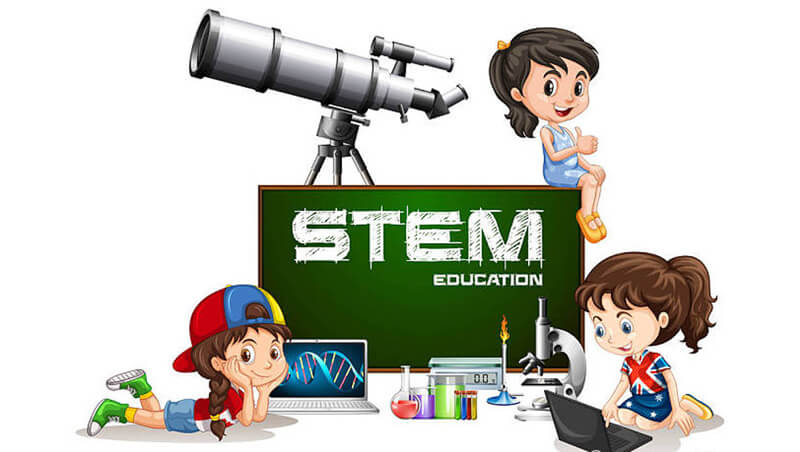
STEM toys are развивающие игрушки that help children to learn science, technology, engineering, and mathematics while they play. Through hands-on building, experiments, or programming, they help children develop logical thinking and problem-solving skills.
1.2 Why STEM Toys Are Booming Worldwide.
With AI driving demand for science and math, the global STEM toy market is expanding rapidly. Hands-on, screen-free toys are becoming a top choice for both home and classroom learning. For wholesale and brands, STEM toys offer higher repeat purchase potential and easy-to-build product lines.
#2 What type of STEM toys?
Wondering which STEM toy is right for your customer? Here’s a simple way to categorize them by function.
2.1 Building & Construction Toys
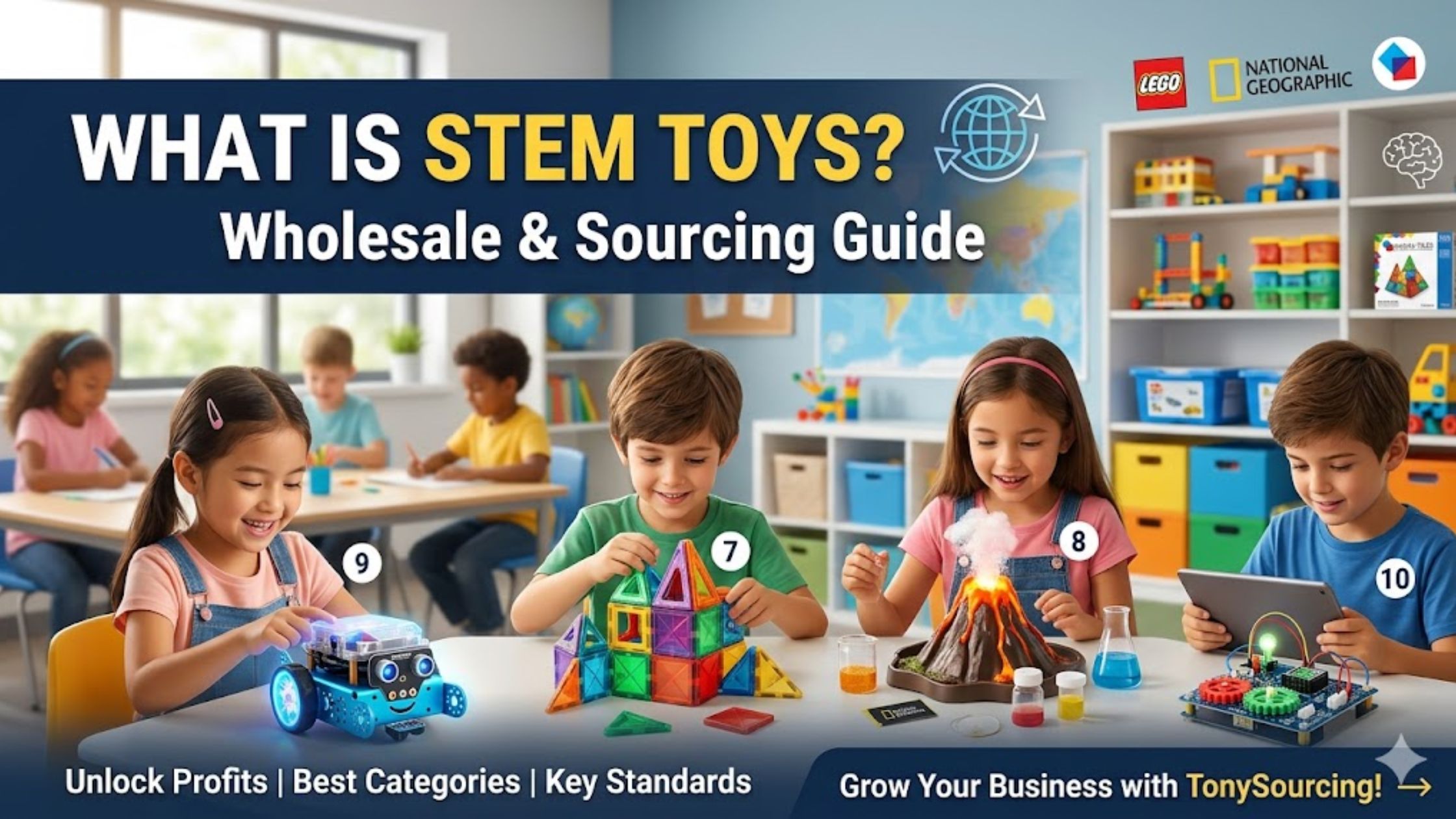
Building and construction toys are classic STEM products. Popular choices include construction kits for 12-year-olds, building sets for kids, construction toys for preschoolers, and engineering toys for 4-year-olds.
The market for magnetic tiles, modular building blocks, and engineering-themed construction sets is growing rapidly. These toys combine educational value with visual appeal, making them fit for e-commerce, schools, and toy retailers.
For wholesale, a key advantage of STEM-style toys is their replay value. Designed for open-ended play, these toys encourage kids to imagine freely, making these toys long-lasting and good for your business.
2.2 Coding & Robotics Toys
Coding and robotics toys are the fastest-growing STEM category. Popular products include coding robots, programmable toys, AI robots, and solar-powered robots.
For beginners and mass-market customers, many products now use low-barrier designs like block coding, visual programming, and app control.
Matching trends in AI and technology education, these toys are popular with parents and schools. They also perform well in e-commerce, the gift market, and STEM education channels. Toys with modular expansion, multiple play modes, и app integration are especially likely to encourage your repeat purchases.
2.3 Science Experiment Kits
Science experiment kits are STEM toys focused most on results. The experiment process makes them easy to use in education programs and stores.
Common products include science kits for 3-year-olds, chemistry kits, biology kits, physics experiment kits, and volcano kits. These products emphasize observation. They help kids learn why things happen, not just how to play.
If you are a wholesaler, these kits are ideal for content-driven marketing. Their experiments are eye-catching and interactive, perfect for short videos, parent-child content, and classroom demos on TikTok, YouTube, and educational platforms.
2.4 Electronics & Circuit Toys
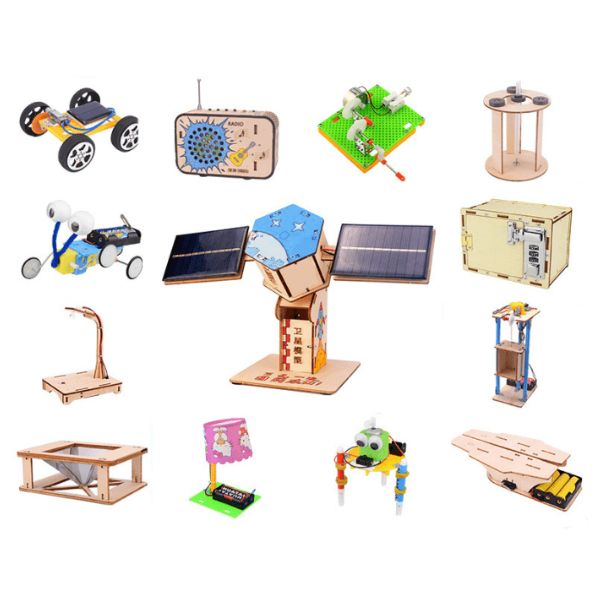
Electronics & circuit toys are the most technically advanced STEM categories. Common toys include circuit building blocks, electronics experiment kits, and electric assembly toys. They are fit for structured learning environments.
These products’ market demand is from schools’ STEM courses, maker education, training centers, and shops.
For wholesale, these toys are popular with older children and tech lovers, allowing for higher prices and better profit margins. Products that support upgrades и expansions are especially valuable, helping you create a full product line and keep your brand popular long-term.
2.5 Logic & Puzzle STEM Toys
Logic & puzzle STEM toys may not look as cool as robot STEM toys, but they are highly effective for developing logical thinking. Popular products include logic puzzles, strategy puzzles, educational jigsaw puzzles, and children’s wooden puzzles.
Logic and puzzle toys are easy to sell and promote. They don’t require complex electronics or apps, which reduces supply chain risk. These toys give you a lot of sales channels, including schools, home education, and board game retailers.
With the growing trend of screen-free learning, they are increasingly popular with parents and the education market, offering strong commercial potential.
2.6 DIY Maker & Engineering Kits
DIY maker and engineering kits are ideal for long-term learning. Include DIY maker kits, machine-building kits, and chain reaction kits, offering children hands-on creation from concept to finished product.
These kits are progressive: they begin with easy and gradually try more complex structures. Many бренды образовательных игрушек expand product lines with expansion packs, extra tools, and varying difficulty levels, making them popular with older children.
For you, these types of educational products fit school curricula, maker spaces, and STEM training programs. They emphasize learning and skill development, making them suitable for розничная торговля и educational institutions.
3. Top STEM Toy Brands in the Market
3.1 Popular STEM Brands
International STEM toy brands stand out for their recognition, complete educational ecosystems, and strong consumer trust.
· LEGO Education—strong focus on school curriculum integration and building sets for kids.
· Learning Resources – well-connected with early years educators, offering educational toys for 5-year-olds.
· ThinkFun specializes in logic and puzzle toys, suitable as educational toys for 8-year-olds.
· Snap Circuits – respected in electronic circuit products.
· National Geographic – combines scientific exploration с рынок подарков призыв, в том числе, к выпуску научных наборов для 3-летних детей.
Эти бренды завоевали доверие и долгосрочное признание в образовательном секторе, создав стабильный спрос в школах, на рынке подарков и в розничной торговле среднего и высокого ценового сегмента.
3.2 China brands
В последние годы китайские бренды STEM-игрушек быстро развиваются, чему способствуют следующие факторы: быстрые обновления продукта и Отличное соотношение цены и качества..
- Makeblock – структурированные учебные программы для программирование роботов и обучение мейкеров.
- Мидир – привлекательный дизайн для рынок дошкольного образования.
- Верхний яркий – широкий спектр развивающие деревянные игрушки для раннего обучения, а также развивающие игрушки для 5-летних детей.
- Robotime/ROKR – популярен среди молодых пользователей и рынок подарков, используя механические модели и маркетинг в социальных сетях.
Если вы ищете хорошее соотношение цены и качества, стоит обратить внимание на китайские бренды. Они предлагают игрушки, а также... OEM-услуги, индивидуальная упаковка и быстрая разработка..
Они идеально подходят для трансграничная электронная коммерция, персонализация бренда и контент-маркетинг, помогая вам эффективно расширять ассортимент продукции.
4. Что делает игрушку хорошей STEM-игрушкой?
Жизненный цикл продукта важен, и как покупатель, вы оцените его потенциал роста. Дополнения, обновления модулей или тематические серии помогут продлить жизненный цикл продукта и увеличить количество повторных покупок.
Игрушки, которые поддерживают модульные системы Они идеально подходят для долгосрочной эксплуатации и создания полного ассортимента продукции.
Не содержит BPA. Помимо игровой ценности, безопасность и материалы имеют решающее значение для основных рынков. Европейские и американские покупатели часто требуют соответствия стандартам ASTM, EN71 и отсутствия BPA. Деревянные игрушки ориентированы на экологичность и раннее развитие, в то время как пластиковые STEM-игрушки подходят для сложных конструкций, электроники и массового производства.
Для создания отличных STEM-игрушек также необходимы следующие качества: подходящий уровень сложности—не слишком просто, не слишком сложно.
Такая структура позволяет вашим брендам создавать более длинные товарные позиции (SKU) для разных возрастных групп.
5. How to Choose the Right STEM Toys for Your Business
При выборе STEM-игрушек следует обращать внимание на возрастная пригодность, рыночный спрос, каналы сбыта и будущий рост продаж продукции., вместо того, чтобы просто следовать трендам.
5.1 Рыночный спрос
- Товары для раннего возраста нуждаться безопасность и простые взаимодействия, так магнитные плитки, основные строительные блоки и наборы для строительства работают лучше всего.
- Товары для детей старшего возраста искать проблемы и технологические инновации, изготовление программирование роботов и наборы для самостоятельной сборки идеально подходит для школы и рынки подарков.
Поиск поставщиков продукции адаптировано под каждую возрастную группу помогает вам Выберите свою стратегию продаж и удовлетворите рыночный спрос..
5.2 Retail Channel
Различные каналы сбыта имеют различные требования к продукции:
- Amazon – компактные STEM-игрушки, которые легко показывать.
- Магазин TikTok – визуально впечатляющий, товары, которыми можно делиться.
- Школы и образовательные учреждения - сосредоточиться на интеграция учебной программы и длительное использование.
Бестселлеры не всегда подходят для каждого канала продаж. Выбор товаров на основе... характеристики канала помогает вам максимизировать продажи и влияние на рынок.
5.3 Рассмотрите возможности OEM-производства и индивидуальной настройки.
Если вы являетесь онлайн-ритейлером или владельцем бренда, занимающимся трансграничной электронной коммерцией, OEM и персонализация очень важны.
Маркировка: Покупатели уделяют внимание не только маркировке, но и другим аспектам товара. упаковка, обучающие пособия, комплекты продукции, и Брендинговое повествование.
Гибкая цепочка поставок, позволяющая быстро изготавливать образцы и поддерживающая индивидуальные темы оформления, помогает создать уникальный бренд.
Заключительная мысль
Ребёнок может разобрать игрушку за три минуты, но широкий ассортимент STEM-продуктов может обеспечить стабильные продажи вашего бренда на протяжении многих лет. Если вы ищете надёжный источник информации, то вам стоит обратить внимание на этот продукт. поставщик развивающих игрушек, Компания TonySourcing поможет вашему бизнесу ‘играть’, чтобы победить!
Часто задаваемые вопросы
1. Какие STEM-игрушки будут самыми продаваемыми в 2026 году?
В этом году самыми продаваемыми STEM-игрушками стали: Программирование роботов, магнитные плитки, наборы для научных экспериментов и конструкторы для самостоятельной сборки.
Однако действительно прибыльные продукты соответствуют вашим потребностям. каналы продаж.
Поделитесь с нами своими каналами, и Тонисорсинг’Это поможет вам найти наиболее подходящие категории товаров.
2. Как выбрать подходящие STEM-игрушки для разных возрастных групп?
Разным возрастным группам нужны разные STEM-игрушки:
- Возраст 3–5 лет: Безопасные и простые продукты, такие как магнитные плитки и наборы для строительства из крупных блоков.
- Возраст 6–8 лет: Наборы для научных экспериментов, лабиринты для шариков, и вводные игрушки для программирования.
- Возраст 9–12 лет: Более сложные варианты, такие как роботы для программирования, наборы для самостоятельной сборки инженерных конструкций, и игрушки с электронными схемами.
3. Какие категории STEM-игрушек имеют самую высокую рентабельность?
Наши данные показывают, что программирование роботы, электронные схемы и наборы для самостоятельной сборки предлагают более высокую рентабельность.
Их технологичность привлекает внимание детей. Продажа в рамках учебной программы или в виде серии товаров позволяет увеличить прибыль с каждого заказа.
4. Какие самые распространённые ошибки совершают покупатели новых STEM-игрушек?
Многие новые покупатели обращают внимание только на внешний вид игрушки и игнорируют рыночный спрос. Игрушки с ограниченные возможности для игры, неправильный уровень сложности или неясные возрастные диапазоны Часто они плохо продаются, и процент возвратов высок. Выбор низких цен сам по себе рискован. Популярные STEM-игрушки ориентированы на устойчивые игры, безопасность и обучение., поддержание интереса детей и обеспечение стабильных повторных продаж.
5. How to Choose a Reliable STEM Toy Supplier in China?
Чтобы найти надежного поставщика STEM-игрушек в Китае, выберите компанию, которая... опыт, сертификаты качества и четкая коммуникация. Убедитесь, что они предлагают Индивидуальный подход, быстрое изготовление образцов и своевременная доставка. Проверка отзывов и торговой истории помогает убедиться в надежности; TonySourcing — хороший выбор.