What is a STEM toy & how to profit from the wholesale market?
Ask ten suppliers what is a STEM toy and you get ten answers. All of them are about the box, not the child. That is the problem this page fixes.
A STEM toy is a toy where the play depends on the child doing something a scientist, technician, engineer or mathematician does. Predicting. Testing. Building to a limit. Counting. Not following eight pictures to one fixed result.
That definition has a commercial use. It tells you what to write on the box, what to test, and what to pay. This guide gives you all three.
1. What Is a STEM Toy? One Sentence and Four Letters
Here is the short answer. A STEM toy is a toy that fails if the child does nothing.
A puzzle still becomes a picture if the child sits on their hands. A magnetic tile set still stands. But a kit where you must guess which wire lights the bulb, then try again, is a different product. The child is the mechanism.
The four letters are often treated as decoration. They are not. Each one is a test you can run on a sample in about a minute.
| Letter | What the child must do | What proves it in the box | What it adds to your cost |
|---|---|---|---|
| S | Predict an outcome, then check it | A result that can come out wrong | A second consumable, or a refill pack |
| T | Give an input, get a response | A switch, sensor, motor or app | A circuit, a battery, a test report |
| E | Build under a limit: height, weight, time, budget | A rule the build can break | Part count, tooling, longer instructions |
| M | Count, compare or measure something | A number the child writes down | Almost nothing |
Read the table as a score. A toy that passes one letter is a toy with a theme. A toy that passes three is a STEM toy. A toy that passes none is a craft kit with a science sticker.
The acronym itself is newer than most of the toys on the shelf. In 2001, Judith Ramaley at the US National Science Foundation reordered the existing SMET into STEM. She wanted science and maths as bookends, with technology and engineering between them, because the four only work as one thing.
Most products sold as STEM pass one. That is not a scandal. It is a pricing fact, and you should know where your product sits before your customer does.
2. Why Do the Market Numbers Disagree by 50%?
Three research firms published a 2025 figure for the same market. One said US$7.1 billion. One said US$8.62 billion. One said US$10.89 billion.
Same year. Same words. A 50% gap.
The reason is the question on this page. There is no agreed answer to what is a STEM toy, so each analyst counts a different shelf. One counts only kits with electronics. One counts all construction toys. One counts anything a teacher could use.
If the analysts cannot agree, your customer will not either. So the definition has to be printed on your box. That line of copy is not marketing. It is the specification of a claim, and in the US it is the thing you may be asked to prove.
The price data says the same thing louder. Here is what factories call a STEM toy, at the same time, in the same country.
| What the listing calls it | MOQ | FOB per set | Letters it really passes |
|---|---|---|---|
| 10-in-1 experiment kit | 100 pcs | US$0.82–1.30 | S only |
| Solar walking robot | 50 pcs | US$1.20–1.50 | S + E |
| Magnetic tiles, 52 pcs | 500 sets | US$6.40–8.70 | E + M |
| App-control robot, 5-in-1 | 16 sets | US$14.99–15.99 | T + E |
| 72-in-1 programmable kit | 1 set | US$18–29 | T + E + M |
| School ESP32 robot kit | 2 sets | US$68–98 | all four, plus lesson plans |
Source: factory listings on Made-in-China and Global Sources, October 2026. Rough guide, not a promise.
The spread from bottom to top is over a hundred times. One word covers a one-dollar plastic kit and a US$98 classroom set. That is why a definition matters more here than in any other toy category. The same split shows up in types of educational toys, which sorts by product family rather than by claim.
3. How Do You Test a Sample in Under a Minute?
Pick the product up. Ask four questions in order. Stop at the first one that fails.
1. Can the child get a different answer? If every build ends the same way, S is zero. 2. Does anything respond to the child? A light, a sound, a movement, a screen. If nothing responds, T is zero. 3. Can the build fail? If it cannot fall down, be too tall, or run out of time, E is zero. 4. Is there a number? A count, a measurement, a score. If nothing gets counted, M is zero.
Two products can look identical and score differently. A magnetic tile set scores E and M. Hand the same child a card with six builds and a stopwatch, and it now scores S too. The letters live in the play instruction, not in the plastic.
That is the cheapest upgrade you will ever make. Not a new mould. A new instruction card.

4. How Is a STEM Toy Different From an Educational Toy or a Craft Kit?
Buyers use three words for one shelf. They are not the same product, and this is where the question of what is a STEM toy usually gets lost.
| STEM toy | Educational toy | Craft kit | |
|---|---|---|---|
| What the child does | Designs, tests, repeats | Learns a content: letters, colours, numbers | Follows steps to one object |
| What the adult does | Sets the limit, then steps back | Teaches or checks | Prepares and cleans up |
| What the box claims | A method | A knowledge | A result |
| Who buys it | Parents, schools, gift buyers | Parents, nurseries, schools | Parents, party planners, gift buyers |
| What it costs to test | Highest, if it has electrics | Middle | Lowest |
| Typical example | Circuit kit, coding robot | Alphabet puzzle, shape sorter | Felt animal, bead set |
The short version: an educational toy teaches a thing, a STEM toy teaches a method, a craft kit makes an object.
None of the three is better. All three sell. The mistake is using one word for all three, because the word you print sets the test you owe. If you want the “educational” half of this argument, our guide to what educational toys are covers the claim and its limits.
One more variant, because it comes up in every quote. STEAM adds arts. It changes nothing in the test file. It changes the buyer, and it changes the shelf you sit on next to craft products. Use it when your product really has a design or story element. Do not use it as a way to avoid the four letters.
5. Which Six Types Actually Sell?
These are the six that appear in almost every catalogue, in rough order of how easy they are to start with.
| Type | Parts per set | MOQ | FOB | Extra test file | Best channel |
|---|---|---|---|---|---|
| Construction and magnetic tiles | 30–150 | 100–500 sets | US$3.50–19.50 | None beyond EN 71 | Amazon, retail, schools |
| Logic and puzzle | 10–100 | 300–1,000 | US$0.90–6.00 | None | Retail, gift, bookshops |
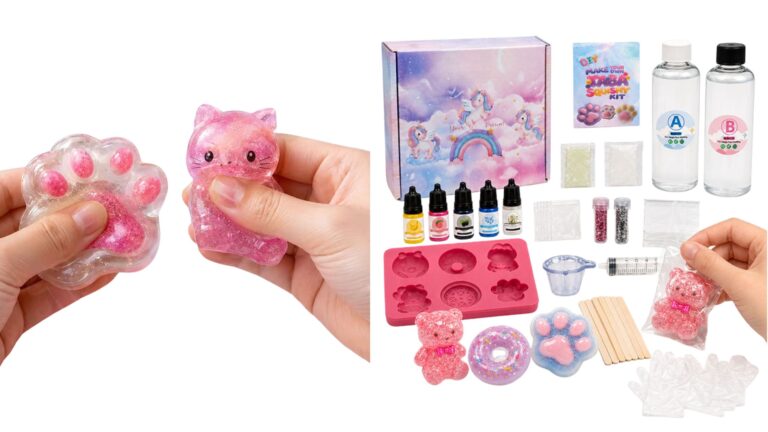
| Science experiment kits | 6–20 experiments | 100–500 | US$0.82–5.00 | EN 71-4, plus chemical labels | Amazon, gift, home school |
| Circuit and electronics | 20–60 | 200–500 | US$4.00–18.00 | EN 62115 | Schools, hobby retail |
| Coding robots | 40–200 | 16–500 | US$14.99–98.00 | EN 62115, plus radio | Amazon, schools, DTC |
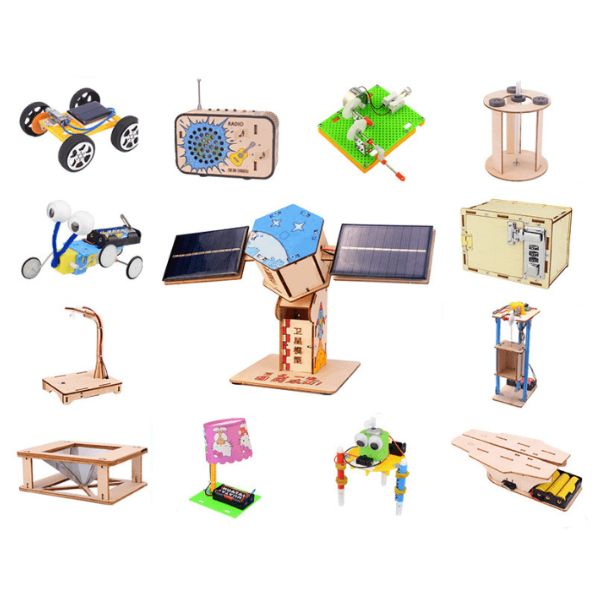
| DIY maker and engineering | 50–300 | 200–500 | US$5.00–25.00 | EN 62115 if it moves | Schools, maker clubs |
Sources: factory listings, October 2026. Rough guide, not a promise.
Three notes that the table cannot hold.
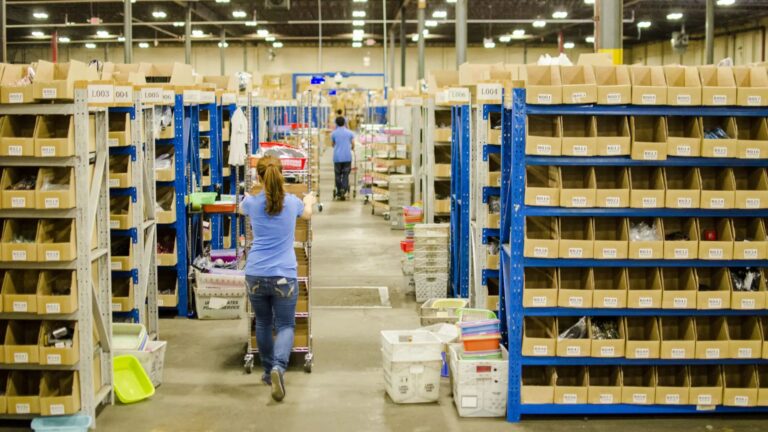
Construction is the cheapest door. No battery, no circuit, no EN 62115. You can start at 500 sets and learn the compliance process on the easiest file you will ever have. The Chenghai factory cluster is where most of it is moulded.
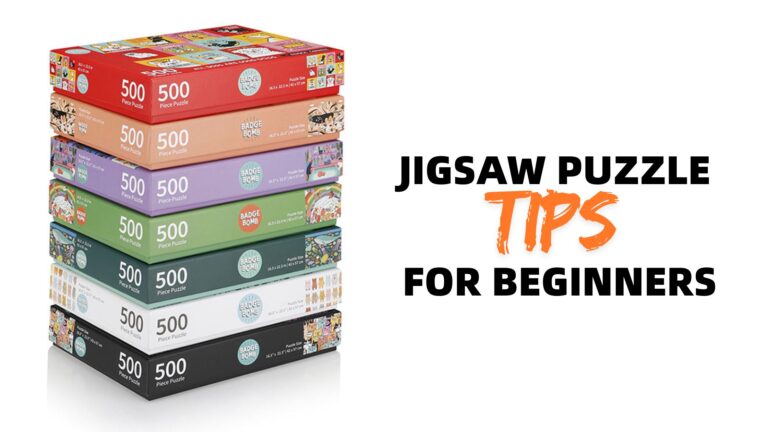
Logic and puzzle is the cheapest to ship. Thin, light, flat. A container holds far more of it. If your margin is thin, freight decides more than FOB. The formats and board grades behind that row sit in types of jigsaw puzzles.
Coding robots carry the highest price and the highest return rate. Every return is a software question, and you cannot fix software from a warehouse. Budget for a support page in the buyer’s language before you budget for ads. A simpler kids range is the safer way to test the channel first.
6. What Does “STEM” Add to Your Test File?
This is where what is a STEM toy stops being a definition and becomes paperwork. Most buyers compare two quotes and never compare two test files. The test file is often the larger number.
| What the toy contains | What it adds to the file | Who checks it |
|---|---|---|
| Plastic or wood, nothing electric | EN 71-1/2/3, ASTM F963, CPC | Test lab |
| Any battery or motor | EN IEC 62115:2020/A11:2020 | Test lab |
| Button or coin cell | Tool or two-hand opening, plus warnings | Lab, then a reviewer |
| Wireless: Bluetooth or 2.4 GHz | RED in the EU, FCC Part 15 in the US | Notified body, lab |
| Lithium cell | UN38.3 for the shipment | Carrier, not the lab |
| Magnets | Magnet tests inside ASTM F963 | Test lab |
| Chemicals in sachets | EN 71-4, plus CLP labels per sachet | Lab, plus your label designer |
Two details decide more claims than the rest.
The battery screw has to stay attached. Under EN IEC 62115, a screw holding the battery cover must be captive: it stays with the cover when you open it. Then it is pulled with 20 N for 10 seconds in any direction and must not come off. Most samples fail here, because a loose screw falls into the box. The fix is a captive screw or a spring washer. It is decided at tooling, not at inspection.
Reese’s Law is not the rule most buyers think it is. In the US, a product with a coin cell must meet 16 CFR part 1263, which adopts ANSI/UL 4200A-2023. The compartment needs a tool, or two independent hand movements, to open. But a toy for children under 14 that meets ASTM F963 is exempt from that section, because the toy standard already covers battery access. Your age grade decides which rulebook you are in. Label the same item 14+ and you are in 1263. Label it 6+ and you are in F963. Neither is wrong. Guessing is.
For the wider file, including which labs will issue what, see toy testing labs for CE and ASTM.
7. How Do You Grade a STEM Toy by Age?
The age on the box is a legal statement, not a suggestion. It sets the test, the warning text and the channel.
| Age band | What changes | What usually fails |
|---|---|---|
| 3–5 | No small parts, no loose magnets, chunkier tools | The small parts cylinder |
| 6–8 | Small parts allowed, instructions must be picture-led | Reading level of the manual |
| 9–12 | Real tools, real circuits, real reading | Sharp edges, tool safety |
| 13+ | Not a children’s product in the US, so no CPC by rule | Losing the CPC that retail still asks for |
The strict end of that table costs the most. The baby toy price guide shows what that adds to testing and to packaging.
The rule that saves the most money: a STEM toy’s real age is set by its hardest step, not its average step. A kit with one soldering joint belongs in the oldest band, whatever the other nine activities look like. Split the kit, or raise the grade. Do not average it.
8. What Should Be in a STEM Toy Spec Sheet?
A photo is not a spec. A catalogue page is not a spec. The spec sheet is the only document you can inspect against, and it takes an hour to write.
Twelve lines cover most STEM toys:
- Model code and artwork version
- Finished size and weight, with tolerance
- Plastic grade per part: ABS, PP, PVC
- Part count, plus the spare parts list for the three parts that always go missing
- Battery type, whether included, and the charger
- Tool included, if the build needs one
- Experiment or build count, and the list itself
- Age grade, plus the warning text for each market
- Instruction languages, named one by one
- Carton size, units per carton, gross weight
- Test standards, named by number
- The one-line STEM claim, in the words you will print
A factory quoting against this list answers in a day. A trader answers in a week, and usually misses three lines. Educational toy manufacturers in Chenghai expect the list in this shape.
That last line is the one buyers skip. Write it before you approve the box. “Builds 12 working circuits” is a claim you can test. “Develops STEM skills” is a claim you cannot, and in the US an advertising claim needs evidence before you publish it, not after.
9. What Moves the Price More Than the Product?
Once you know what is a STEM toy, the next question is what it costs. Three things move the price, and none of them is the toy.
Volume. One supplier’s magnetic tile ladder reads US$4.70 at 50 sets, US$4.28 at 500 sets and US$3.98 at 3,000 sets. Sixty times the volume buys you about 15% off. That is the real curve. Anyone promising 40% off for a bigger order is moving a different cost line.
Electronics content. The jump from a US$1.50 solar kit to a US$15 app robot is not plastic. It is a chip, a motor, a moulded battery bay, and a second test report. Each of those is a fixed cost per model, so small orders carry it badly.
The test file. A report is priced per model, not per unit. Change the colour and some labs will ask for a new one. Change the board and all of them will. If you plan five colours, ask the lab for a family quote before you plan the range.
Then the practical numbers. A stock construction item takes 7–15 days for 500–1,000 sets. A new tool adds 20–35 days, and a full run takes 15–45 days. Stock samples move in two days. A custom sample runs US$50–150 and is usually credited against the order. Payment is normally 30% deposit, 70% against the bill of lading.
One shipping note specific to this category. A 52-piece magnetic tile set ships in a box around 25 × 17.5 × 6.5 cm at 1.15 kg. That is a volumetric product, so your freight per unit is set by the box, not the toy. Ask for the carton dimensions before you ask for the FOB. The wider sequence sits in how to import toys from China.
10. How Do You Check a STEM Supplier in One Afternoon?
Five checks. Four are free. One costs a phone call.
1. Match the model number on the test report to the sample in your hand. This is the most common fake, and it takes ten seconds to find. 2. Check the report date. A 2019 EN 62115 report predates the 2020 version. It is not the same test. 3. Ask for a video of the battery cover being opened and pulled. Thirty seconds. A captive screw is visible. 4. Ask for a video of a child at the bottom of the age band building it. Not an adult. Not a time lapse. This one question separates a real product from a demo. 5. Ask for the spare parts list. A supplier who has one has shipped this product before.
A supplier with its own export licence will answer all five in a day. A trader will answer two. The same five questions work on an educational toys supplier you have never used before.
For the wider factory picture, toy manufacturers in China shows how the clusters divide by material and electronics.
11. What Do Buyers Get Wrong Most Often?
Five mistakes, in the order they cost money.
Buying the demo video, not the box. The video is built by an adult who has done it forty times. The box is opened by a six-year-old on a birthday. Ask for the second one.
Counting pieces and calling it STEM. A 1,000-piece set that follows one fixed design is a jigsaw with extra steps. Piece count is a price driver. It is not a letter.
Skipping EN 62115 because it is “only a small motor”. Any battery means the standard applies. This is the single most common reason a container gets held.
Grading by the marketing age. The grade has to clear the hardest step in the box. If it does not, the return rate tells you in week three.
Treating the manual as a courtesy. The instruction language is a legal requirement in most markets, and it is also the cheapest upgrade to your letters. A better card can turn a construction set into a real STEM toy without touching the mould.
12. FAQ: What Is a STEM Toy?
What is a STEM toy in one sentence? A toy where the child has to predict, test, build to a limit, or measure something. The play stops working if the child does nothing.
Why is there no single answer to what is a STEM toy? Because no regulator defines it. There is no EN number, no CPC field and no customs code for the word. Analysts, retailers and factories each count a different shelf, so the label is a claim rather than a category.
Is every educational toy a STEM toy? No. An educational toy teaches a content, such as letters or colours. A STEM toy teaches a method. Many educational toys pass none of the four letters, and that is fine. Just do not print both claims on one box.
Does a STEM toy have to include electronics? No. Magnetic tiles pass E and M with no battery. Electronics add T, and they also add EN 62115, a battery rule and a bigger test bill. Decide which you want before you quote.
What age should I grade my STEM toy at? The age that clears the hardest step, not the average. A kit with one soldering joint belongs in the oldest band, even if the other nine activities suit a seven-year-old. Split the kit or raise the grade.
What does a STEM toy cost to make? At factory level, from about US$0.82 for a 10-in-1 experiment kit to US$98 for a school robotics kit, depending on electronics and part count. The spread is over 100 times, so compare within a type, never across types.
What is a STEM toy not? It is not a box of many pieces, and it is not a science-themed craft. A 1,000-piece set with one fixed design is a jigsaw. A volcano kit where an adult pours the vinegar is a demo. Neither is a bad product. Neither passes the four letters.
How many do I need to order? Construction and science kits open at 100–500 sets. Coding robots can open at 16–50 if you accept a stock model. A new mould usually means 1,000 or more to make the tooling worth it.
13. Where Do You Start?
Start with one product and one letter. Take the sample you already like, score it on the four letters, and write the score down. That number tells you what to print, what to test and what to charge.
If you want a second opinion, send three things through the sourcing inquiry page: the product photo, your target shelf price and your market. We will come back with the letters it actually passes, the test list you need and real factory quotes.
If you would rather browse first, the STEM toy range shows current stock. STEM kits for schools covers classroom packs. The 2026 showroom picks show what is moving. You can also pull the full STEM toys catalogue as a PDF.
One last thing. The word STEM is free to print and expensive to defend. Pick the letters first, then the price. Not the other way round.