How to Source Rubik’s Cubes from China: Factories, Prices, and the Trademark Rule
If you want to source Rubik’s cubes from China, the good news is that almost everything is easier than with other toys. Cubes are small, light, cheap to ship, and made by a tight cluster of specialist factories. The bad news is the name: the cube itself is free to make, but the word Rubik’s is not yours to use. Get that one wrong and your whole shipment can become a liability. This guide covers who makes cubes, what they really cost, what papers you need, the magnet test most buyers never hear about, and how to check quality before you pay.
What You Are Actually Buying When You Source Rubik’s Cubes from China
Start with one legal fact, because it shapes every listing you will ever write. The original 3×3 patent expired decades ago, so any factory may produce and export the cube shape. Courts in the United States and the EU have both confirmed there is no trademark protection on the cube design itself. That is why thousands of factories can quote you the same puzzle.
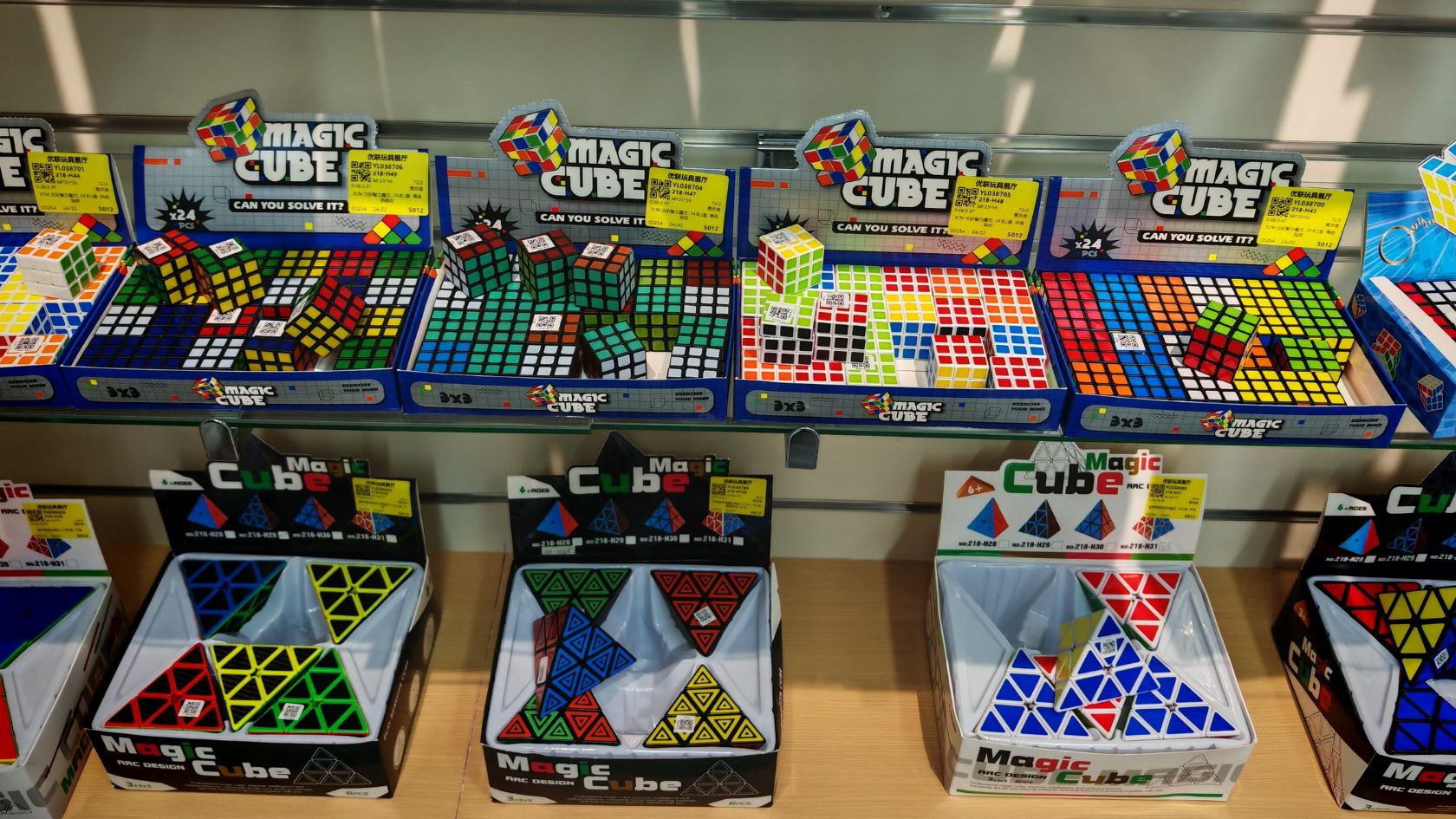
What survives is the name. Spin Master, which owns the Rubik’s brand, holds more than 400 trademarks worldwide, and its own brand guidelines say it plainly: when you sell a third-party cube, you must call it a “puzzle cube”, a “magic cube”, or a “3D puzzle”. You cannot call it a Rubik’s cube on the product, the packaging, or your listing. Amazon sellers get takedowns for exactly this.
So here is the honest framing of this whole guide. You are not sourcing a Rubik’s cube. You are sourcing a magic cube or speed cube, and the market for it is huge: our guide to every cube type splits the category into six groups, from pocket cubes to 21×21 collector pieces. The World Cube Association counts over 280,000 registered competitors, so demand is steady, not a fad. If you want the full legal picture — which EU and US registrations still stand, and where the lawsuits landed — read our separate guide to the magic cube vs Rubik’s cube trademark question.
Where the Real Rubik’s Cube Factories Are (and What They Sell You)
Cubes are not spread across China like plush toys or plastic cars. They sit in one cluster. Most cube factories are in Chenghai, Shantou, the district China calls its toy capital, and the rest are in Guangzhou and Dongguan. If you plan a factory trip, one afternoon in Chenghai covers more cube suppliers than a week of cold emails.
The interesting part is that cubes are a mold business, not a toy business. Turning feel depends on plastic tolerance, so the top factories all run their own mold workshops. These are the names you will meet:
| Factory brand | Based in | What they offer a buyer |
| MoYu (Meilong line) | Shantou, Chenghai | The volume favorite; Meilong 3×3 lists around $0.49 with tiny MOQs |
| QiYi / X-Man Design | Shantou, Chenghai | Entry to competition cubes, strong custom work |
| Yuxin | Shantou, Chenghai | Veteran maker since 1998, known for very high-order cubes |
| SengSo | Shantou, Chenghai | Mold shop since 2000, own brand since 2009 |
| Yongjun (YJ, GuanLong) | Guangdong | GuanLong line is a WCA-designated competition cube |
| GAN | Гуанчжоу | Premium and smart cubes, sells to 100+ countries |
Two practical notes on this table. First, buying these brands under their own names is normal business — that is distribution, and speedcube shops do it every day. Second, a general toy factory that “also does cubes” is usually trading someone else’s production. For real volume, go to the cluster: our Shantou import guide covers the district in detail, and this page on finding toy manufacturers in China shows how to verify any factory before you visit.
What Cubes Cost from Chinese Factories
Prices for cubes are some of the most transparent in the toy trade, because listings are public. Here is what factory and trading-company listings showed in November 2026. Treat every number as a rough guide, not a promise — resin and freight move.
| Продукт | Order size | Listed price | Listed MOQ | Source type |
| Basic 3×3 (Guangdong factory) | 120 pcs | $0.69 | 100 | Factory listing |
| GuanLong 3×3 (Yongjun) | 240 pcs | $0.52 | 240 | Brand factory |
| Meilong 3C (MoYu) | 50 pcs | $0.49 | 50 | Trading co. |
| Promo cube (Yiwu trader) | 25–99 pcs | $1.02 | 25 | Trading co. |
| Magnetic mirror cube | 1,000 pcs | ~$1.00 | 1,000 | Trading co. |
| Meilong 4×4 / 5×5 | 10–50 pcs | $1.78 / $2.10 | 10 | Trading co. |
| Foldable promo cube (printed) | 500 pcs | $2.19–2.99 | 500 | Supplier listing |
Three lessons hide in these rows. Basic 3×3 cubes land between $0.50 and $0.70 at factory direct volume, and the price steps down slowly after that. The listed factory price only reached $0.49 at 24,000 pieces, so chasing volume for pennies rarely pays. Trading companies charge more per unit but take tiny orders, which makes them the cheap way to test a design. And magnets or printing raise the MOQ, not just the price.
Also budget the full order, not the unit price. Sample cost, certification, and freight are separate lines. The USA toy import cost guide walks a real toy order line by line, including the 12.5% duty, and the toy price guide shows what a fair wholesale markup looks like across categories. Buying cubes as corporate gifts changes the math again, which our guide to promotional Rubik’s cubes covers in detail. For payment, most toy factories ask a 30% deposit with the balance before shipment, and our step-by-step buying guide covers how to stage payments safely.
Sample First, Then Scale
Cubes are cheap enough that sampling costs almost nothing, but do not skip it. A listing photo cannot tell you whether a cube turns smoothly, locks up, or pops. One supplier in our research charges $20 for a 3×3 sample with 7–15 day production lead time, and most quote within a similar window. Our full toy sample ordering guide covers sample types, costs, and timelines in depth.
When the sample arrives, twist it for five minutes before anything else. Then check the details in the quality section below. Order samples from two or three factories at once; at these prices it costs less than one dinner.
Which Certificates a Cube Needs for the US, EU, and India
Cubes are toys in the eyes of every regulator, so the paperwork is standard toy paperwork:
- United States: ASTM F963 testing plus a Children’s Product Certificate for toys aimed at kids under 12.
- European Union: EN 71 compliance, and GPSR documentation duties now sit on EU sellers. One cube-specific rule: EN 71-1 sets a flux-index limit on magnets, so magnetic cubes must be tested against it, not just drop-tested.
- India: BIS certification is mandatory for imported toys, and cube listings routinely show BIS alongside EN 71 for that reason.
One warning while we are here: the strict rules on “small high-powered magnets” target loose magnet sets, not cubes with magnets sealed inside. Still, keep magnet cubes out of the toddler section, and age-grade honestly. If you are unsure which lab to use, our toy testing lab comparison lists accredited options.
Magnetic Cubes Need a Magnet Test Before They Fly
This is the section most cube buyers learn the hard way. Magnets inside cubes are harmless in use, but a full pallet of them acts like one big magnet, and airlines care about that. Under IATA rules, every magnetic shipment must pass a magnet field test on its packed cartons, done at 2.1 and 4.6 meters from the package.
The outcomes are three. Pass, and your cubes fly as normal cargo with the test report attached to the booking. Fail at 2.1 meters but pass at 4.6 meters, and your cubes are reclassified as Class 9 dangerous goods (UN 2807) — legal, but with dangerous-goods handling and much higher freight. Fail at 4.6 meters, and air freight is closed to you.
The fix is boring and cheap. Factories and forwarders add simple steel shielding sheets between cartons, or rearrange cubes so their fields cancel, then retest. Sea freight has no such bottleneck, which is one more reason cubes usually ship by sea anyway. Just remember the test report is tied to one packaging configuration — change the carton design and you retest.
Five Cube Defects to Check Before You Pay the Balance
Cube complaints are predictable, and all five common defects are checkable in an hour with a table and a scale:
- Rough turning. Twist every face fast. Grit, catching, or a plastic smell point to mold wear.
- Corner twists and pops. Over-tensioned or dry cubes lock up mid-solve. Ask whether the factory lubricates and tensions before packing.
- Sticker problems. Stickered cubes peel at the edges. Stickerless cubes are molded in color and do not have this failure mode — most volume buyers now go stickerless for that reason.
- Uneven magnet strength. Twist two identical magnetic cubes side by side; if one feels dead, the magnet process is loose, and customers will notice.
- Loose magnets. Magnets must survive pull testing. A swallowed magnet is a medical emergency, so treat this as a hard fail.
Big cubes (6×6 and up) deserve a harder look than 3×3, because their extra layers pop more easily, and they belong in the premium wholesale toy segment rather than the bargain bin. For a full inspection workflow, start from the China toy suppliers page before booking an inspection, and the toy quotation checklist shows how to compare factory quotes line by line. You can also cross-check factory credibility against known Chinese toy brands.
What You Can Customize on a Cube, and at What MOQ
Cubes are one of the easiest toys to brand, which is why they keep showing up in corporate gift catalogs:
- Logo on the center pieces: printed or laser-marked; listings typically start this at 2,000 pieces.
- Custom packaging: boxes, tins, or printed sleeves, usually from 1,000–2,000 pieces; our toy packaging guide covers the options.
- Color and body changes: stickerless colorways and shape mods are mold-level work; expect higher MOQs and tooling discussion.
- Set building: bundles of 2×2 to 5×5, or cube-plus-accessory kits for schools and gift programs. Kits pair well with other brain-teaser lines like the jigsaw puzzle ranges и fidget toy lines.
If you want your own cube brand rather than a logo on an existing model, follow the private label toys path. The custom baby toy manufacturing page shows what factories need from you before quoting. For classroom and education channels, cubes slot naturally next to the STEM toy wholesale range и educational toy lines. And for gift and promo resellers, logo cubes fit straight into the promotional items lineup or a wider custom promotional products program.
Which Channel Fits Your First Cube Order
The same seven channels exist as for any toy, but cubes weight them differently. Specialist factories beat market halls for volume, because you are buying one precision product, not a mixed shelf. As a rule of thumb:
- Chenghai brand factories: best unit price, best QC, MOQs from about 50–240. This is where your real order belongs.
- Yiwu trading companies: MOQs as low as 25, good for test orders and mixed containers. You pay roughly 20–50% more per unit for that flexibility. Compare the two cities in our Guangzhou vs Yiwu toy market guide, see what Yiwu is best at, how the wholesale market works day to day, и which Yiwu products Amazon sellers reorder.
- 1688: the domestic price floor, if you have a China presence; our Alibaba alternatives comparison covers how it works.
- Алибаба: export-ready with trade assurance; fine for first orders. Our Alibaba vs direct factory comparison explains what you give up, and the full China import walkthrough fills in the shipping steps.
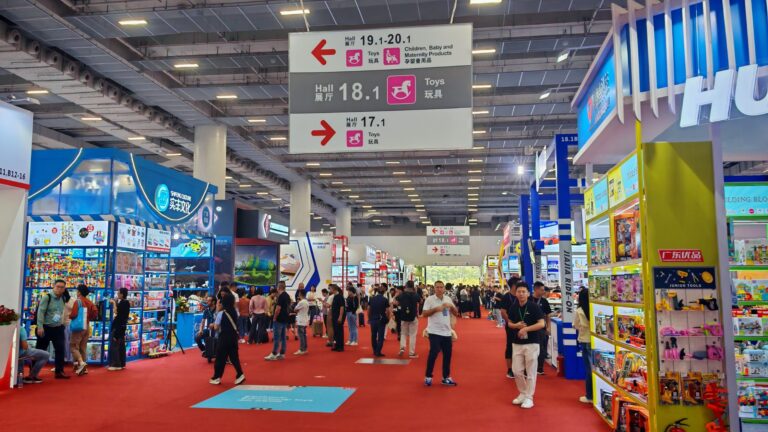
- Trade fairs: cubes appear at the Canton Fair toy phase and the Chenghai toy fair; touching 50 cube brands in one hall is the fastest way to calibrate your hand.
Whichever channel you pick, the core China toy wholesale overview и wholesale market snapshot give you the wider map. The top toy markets guide ranks them all, and the zero-experience import case study shows what a first order looks like in practice. If you are consolidating cubes with other goods, the Yiwu consolidation service page explains how mixed containers work.
FAQ: Sourcing Rubik’s Cubes from China
Is it legal to sell cubes like the Rubik’s Cube? Selling the puzzle is legal — the shape is not protected anymore. Using the Rubik’s name, or anything close to it, on non-licensed products is not. Call it a magic cube or speed cube everywhere.
What MOQ should I expect for cubes with my logo? Blank cubes often start near 50–240 pieces. Printed logos and custom packaging usually start around 1,000–2,000 pieces based on current listings.
How much does a 3×3 cube cost from China? Factory listings in November 2026 showed roughly **$0.50–0.70 per basic 3×3** at MOQ volumes, dropping toward $0.50 at large volumes. Treat it as a rough guide, not a quote.
Can I ship magnetic cubes by air? Yes, after a magnet field test on the packed cartons. If the field is too strong, expect Class 9 handling or switch to sea freight.
Which cube type sells best? The 3×3 dominates sales value in the category, and shape mods are the fastest-growing segment. Stock both, and check the seasonal best sellers before you plan Q4 quantities.
Do I need certificates for every market? Yes — ASTM F963 with a CPC for the US, EN 71 for the EU, BIS for India. Budget for testing before your first big order.
Get Your Cube Order Sourced the Right Way
Cubes reward buyers who go straight to the specialist cluster, respect the trademark line, and test before they trust. TonySourcing sits next to the Chenghai cube factories and runs this exact process for importers every week — shortlisting factories, checking samples, booking inspections, and consolidating cubes with the rest of your toy order. If you want cubes in your catalog for next season, start from our China toys wholesale market 2025 guide или tell the TonySourcing team your target market and volumes. We will come back with a factory shortlist and a landed cost you can plan around.