China Toy Brands: 12 Real Ones, and Who Will Actually Put Your Logo On
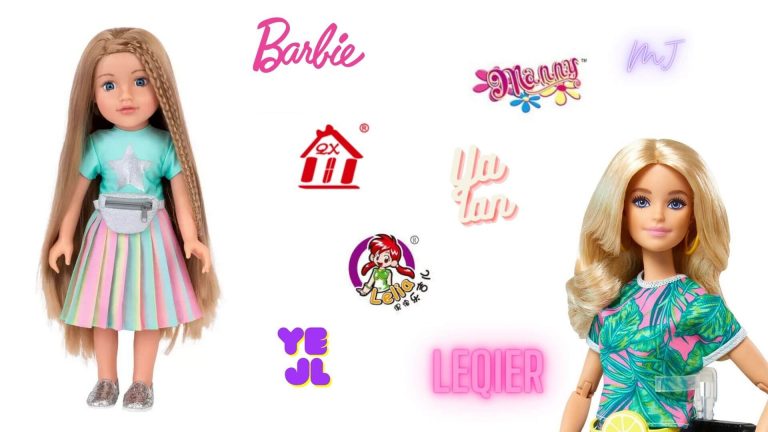
Type “China toy brands” into a search box and you get a list of ten names. On plenty of those lists, half the names are not Chinese. LEGO is Danish. Barbie and Hasbro are American. BANDAI is Japanese. They sell into China, so they end up on Chinese brand charts.
That is annoying if you are curious. It is expensive if you are buying. You flew here to find a factory that will make your product, and a list that mixes up brand ownership has already cost you two weeks of emails.
This page lists 12 Chinese toy brands that are really Chinese, and splits them by the only thing that matters to a buyer: will they put your name on the box, or only sell you theirs.
Оглавление
ПереключатьWhy Most Lists of China Toy Brands Get It Wrong
Three mistakes show up again and again, and each one hides a real buying problem.
Mistake one: counting foreign brands as Chinese. Brand ranking sites aimed at Chinese shoppers routinely put LEGO, Hasbro, MATTEL and BANDAI in the top ten. That is fine for a shopper in Shanghai. For an importer asking “who owns the factory”, it sends you to a licensing office in Denmark.
Mistake two: mistaking the factory for the brand. This is the one that causes real trouble. If a company makes toys for a famous brand, it does not own that name. It cannot sell you that name either.
Mistake three: thinking “made in China” means “Chinese brand”. Roughly speaking, most of the world’s toys are assembled in China. Half of them belong to companies in the US, Japan and Europe. The factory that builds them is Chinese. The brand is not.
The Carrera Case: Why This Page Exists
An older version of this very page listed Carrera as one of China’s top toy companies. It is not.
Carrera started in Germany in the early 1960s, in Fürth near Nuremberg. It was bought by the Stadlbauer group of Salzburg, Austria in 1999, and that group passed to Quantum Capital Partners in 2019. Its operating company today is Carrera Toys GmbH, based in Puch, Austria.
So why did it end up on a Chinese list? Because the company that makes Carrera slot car sets is in Dongguan. Guangdong Yu Lee Technology produces licensed toys for several global names, and it is Carrera’s contract maker and China distributor.
The giveaway sits on Yu Lee’s own website (yu-lee.com, Chinese and English homepages, checked October 2026). Their brand list describes it this way:
> “Carrera – The famous German brand, track racing world first.”
The maker says it plainly. The list got it wrong by reading “Carrera is made here” as “Carrera is from here”.
Keep that habit in mind. When you meet a new “Chinese toy brand”, ask who owns the name, not who moulds the plastic. Our China toy suppliers page covers that same split from the buying side.
What Kind of Chinese Toy Brand Are You Actually Talking About?
Before the names, sort them into groups. There are three, and they behave completely differently the moment you ask for a quote.
| Type | Will it print your logo? | Order size you need | Who it suits |
|---|---|---|---|
| IP brands | No. You resell their box. | Dealer terms, often container-plus | Distributors with shelf space |
| Factory brands | Yes, this is their main trade | Often from a few thousand dollars up | Anyone building their own line |
| Brand-only names | No — there is no owned factory to ask | — | Look elsewhere if you need factories |
Here is the thing nobody tells you. The names you have heard of are almost all in the first group. Pop Mart and Blokees are famous because they own characters and spend millions on them. That fame is exactly why they will not stop and print your logo instead.
The names you have never heard of are in the second group. They do not spend money on brand ads, because their customers are importers like you.
Type 1: IP Brands — You Resell Them, You Don’t Rebrand Them
These three own characters, run global licensing deals, and sell finished products under their own names. Approach them as a distributor, not as a private label client.
1. Blokees (Bloks Group, 00325.HK)
Blokees is the clearest example of the split. The group was founded in Shanghai in December 2014 by Zhu Weisong. It listed in Hong Kong on 10 January 2025. It sold RMB 2.91 billion of buildable character toys in FY2025, up 30.0%. (Figures from its FY2025 results and annual report, filed on HKEX, March and April 2026.)
The IP line-up explains why there is nothing left for you to rebrand. As of 31 December 2025, Blokees held 73 licensed IPs, up from 50 a year earlier. It had turned 29 of them into products. Transformers brought in RMB 951 million and Ultraman RMB 815 million. Only two of its IPs are its own.
Now the part that matters for your enquiry. We read both official HKEX filings end to end. The words OEM, ODM, contract manufacturing and white label appear zero times across roughly 630,000 characters of disclosures. That is not proof they never do it — their own report mentions working with automated plants — but it tells you the company does not sell that service. Nobody will take your call asking for Blokees characters in your carton.
Overseas is where the growth was: offshore revenue hit RMB 319 million, up 396.6%, with the Americas up 804.1%. It is a global brand going wider, not a factory looking for clients. Read the blind box business guide if you want the model behind it.
Buy from them if: you have retail channels and want hot IP on your shelf. Skip them if: you want your own brand. They are not that kind of supplier.
2. Pop Mart (09992.HK)
Pop Mart is the biggest Chinese toy company by a wide distance, and it is entirely an IP business — characters, blind boxes, its own stores. Nothing about that is a manufacturing service you can buy into.
Which means the useful question is not “can they supply me”, but “should I stock them”. That answer depends on your territory, buyer age group and whether your country has already been allocated. We work through that in the Pop Mart retail review, so we will not repeat it here.
One practical warning. Pop Mart products are heavily counterfeited, and a “Pop Mart factory” offering you stock is almost always selling fakes.
Buy from them if: you are a distributor with genuine territory rights. Skip them if: you want anything with your own name on it.
3. Alpha Group / AULDEY (002292.SZ)
Alpha is the oldest of the three, founded in Chenghai, Shantou in December 1993, and it owns the characters many Chinese children grew up with: Super Wings, Pleasant Goat, Balala the Fairies and Armor Hero.
Look at where the money comes from, though (FY2025 annual report, Shenzhen Stock Exchange, filed April 2026). Total revenue was RMB 2.47 billion, down 8.93%. Toy sales were RMB 953 million, 38.54% of the group. The largest line was baby and toddler products at 47.19%.
So Alpha is more than half a non-toy business. Its line-up now reads like a media company that happens to make toys. Its biggest growth lever is selling those characters as licences, not filling your order.
Buy from them if: you want classic animation IP in a market Alpha has not licensed yet. Skip them if: you need a toy-focused production partner.
Type 2: Factory Brands — These Will Put Your Name On the Box
Now the useful half. Nine times out of ten, this is the group you were looking for when you started searching. These companies own their plants, hold their own licences, and sell to importers.
4. Rastar Group (300043.SZ)
If you want one number that tells you a supplier really exports, Rastar has it. In FY2025 total revenue was RMB 2.09 billion, but toy business specifically was RMB 451 million — and of that toy revenue, RMB 363 million came from overseas. That is 80.42% (FY2025 annual report, Shenzhen Stock Exchange, filed March 2026).
A Chinese toy brand selling four fifths of its toys abroad is rare. Most Chinese brands are built for the home market first.
Founded in May 2000 and based in Chenghai, Shantou, Rastar holds licences from more than 35 car makers, with trademarks in over 110 countries. It has held the global exclusive licence for BMW remote-control car models and children’s bicycles for over ten years. In 2025 it added Toyota GAZOO Racing, Mercedes-AMG GT3, Aston Martin Valhalla and Bugatti Tourbillon, plus official F1 team IP.
One caution. FY2025 revenue jumped 53.81%, but that came mostly from selling football players, not toys — toy revenue actually slipped 3.06%, and the club was sold off in October 2025. Judge Rastar on the toy line, not the headline.
For model car buyers, our diecast car brands page covers the same licence layer in more depth.
Buy from them if: you sell licensed model cars and need the paperwork to hold up. Watch out for: licence areas. A licence for one region is not a global one.
5. Double Eagle and CaDA
Here is the most useful fact we found in this whole round of checking, and it is a simple one. Of the Chinese toy brands we verified, Double Eagle is the only one that publishes its minimum order value on its own website.
Their FAQ says it directly:
> “What is the minimum order value? The minimum value order starts from 5,000 US dollars.”
The same page says most orders ship within two weeks, and around 45 days if stock has to be made. That single firm number is worth more to you than a hundred paragraphs of marketing copy.
Note also that CaDA is not a separate company. Double Eagle’s own timeline records “2016 Establishment of CaDa Bricks”. Either way you are dealing with one group. It sits in Chenghai, Shantou, and has run since 1988. Three plants give it 50,000 square metres, close to 1,000 staff and over 300 injection machines. Its lines are Double E Toys, Double E Hobby, STEELLION, and CaDA Bricks.
Licences include Mercedes-Benz and Volvo, alongside Land Rover, JCB, Jeep, Toyota and others. Named trade customers include Jamara, Carson, Smith Toys, Carrefour and Lidl.
Two things to check yourself. Their site lists safety marks twice with different spellings — ASTM F-963 on one page and ASTM F-936 on another, EN71 written as NE-71. The intended marks are ASTM F963 and EN71, plus CE, FCC, ROHS and a BSCI audit, but ask for the actual test reports rather than the web copy. And be careful with domains: cada.toys is run by a German distributor, not the factory.
Buy from them if: you want a stated entry point of about $5,000 and licensed RC vehicles. Watch out for: they set recommended resale prices for dealers.
6. Sembo Block
Sembo makes small-particle building sets, and it is one of the few Chinese block brands that designs its own themes rather than copying a Danish catalogue. Its ranges run to military models, city street scenes and mecha, with sub-brands AREAX and Moonlight Society.
The scale is real. The company calls itself a national high-tech enterprise. It says it runs over 5,000 staff and 200,000 square metres of floor space, with more than 1,000 patents. The injection room and the tool room are its own. It says its products reach over 100 countries.
Now the honest limits. The word OEM does not appear anywhere on the Sembo site. Their partnership pages cover brand cooperation, media enquiries, offline distribution, e-commerce channels and overseas cooperation — all routes for selling Sembo-branded goods. They also publish no minimum order figure. We could not confirm either way what happens if you ask for your own tooling, so ask them, but do not assume.
Their certificates are shown only as icons — China 3C, EU toy standard, US toy standard — with no standard numbers printed. Fine as a starting signal, useless as compliance proof.
Also worth knowing: semboblocks.com is their retail shop, not their corporate site. Their head office is in Chenghai, Shantou, though that store lists a Shenzhen warehouse. Founding year is genuinely messy — their site says 2012, business registration says August 2009, and one interview says 2003 with a switch to bricks in 2013.
We compare these names against Western alternatives in the LEGO alternative brands guide.
Buy from them if: you want to distribute well-designed Chinese block sets. Watch out for: trademark similarity disputes around block themes. It is common in this category.
7. Huina
Huina builds something nobody in Europe or North America really does: radio-controlled construction machines. Its catalogue is excavators, dump trucks, wheel loaders, bulldozers, forklifts, log grabbers and tower cranes, mostly at 1:14, with absolute top models running up to 22 channels. Try to name a Western equivalent. There isn’t a serious one.
That makes Huina a good choice for a niche importer. Huina is based in Chenghai, Shantou, and was founded in 2012 by its own account. Its plant runs over 13,000 square metres, with its own tool room. It also owns two side brands: Kabolite since 2019 for high-end hydraulic models, and Kaliwo since 2022 for the value line.
Where we have to be straight with you: we found no OEM or ODM mention on the Huina site, and no minimum order figure either. Its published certificates are CCC and BSCI, with ISO9001 listed in a garbled form. There is a page for authorised products, but no licence list we could pull. And we found no proof of supply deals with big Western stores, whatever other sites claim.
Also note huinaconstructiontoys.com is an importer’s site, not the factory. The factory site is huinatoys.com.
The detailed format comparison sits on our RC car brands page.
Buy from them if: construction machines are your niche and you want depth nobody else has. Watch out for: radio approval. 2.4GHz gear needs its own paperwork per market.
8. Caipo
Caipo is the answer when an importer asks “can I get real factory-backed car licences in China”. Their company profile names the brands outright:
> “a designated R&D and production licensee for Bentley, BMW, Mercedes-Benz, Lamborghini, Maserati, Porsche, Lexus, Land Rover, Hummer, Ford, Volvo, Volkswagen, Toyota, Jeep, Jaguar, Audi, Pagani and other internationally known car brands.”
That phrasing matters. Plenty of factories show logo pictures on a wall page. Caipo states the licence relationship in text, which is far easier to verify before you commit. Based in Chenghai, Shantou, founded 1999, they produce diecast across 1:12, 1:24, 1:32, 1:43 and 1:64, under four brand lines.
Two honest gaps. Their certificates are pictures only, so we cannot tell you which standards they hold — same problem as Sembo, ask for the reports. And their English site now returns an error, so plan on Chinese-language contact or an agent.
Buy from them if: licensed diecast is your core business. Watch out for: licence scope. Model-year and territory limits are normal.
9. Huadawei / Makeda
Makeda is the one name here that openly does contract work. In their own words, they “work with a number of internationally known companies and take on processing and production of branded products“. Read that again if you have spent a week being told no.
Their track record backs it up. Their own news page reports a first Disney-licensed shipment to the United States. It was 16,332 toy cars, worth $16,300. That came after work as a licensed maker for the Sochi Winter Olympics and the Brazil World Cup.
The setup is odd, and worth knowing. The plant sits in Zhao’an county, Zhangzhou, Fujian — 80,000 square metres, founded 2010, Hong Kong-funded, with several hundred staff — while sales and marketing operates from Chenghai, Shantou. Production and sales in two different cities is common in Chinese toys and it confuses buyers who expect one address.
Their licence wall spans KTM, Kawasaki, Honda, Toyota, Volkswagen, Maserati, Lamborghini, Bentley, McLaren, Scania, Liebherr and more, plus commercial marks like BP, Castrol and DHL. One caveat: that list comes from image tags on their site, not from text, so confirm any single licence in writing. They also publish no MOQ and no listed standard numbers, only general claims of testing to EU, US, Japanese and Chinese safety requirements.
Use the right URL — http://hdwtoys.com, without www, as HTTPS and www both fail.
Buy from them if: you want a Chinese factory that says yes to contract work. Watch out for: they explicitly resell under their own Makeda brand too. Say which deal you want.


Type 3: Big Names You Shouldn’t Ask for a White Label
These three are famous, real, and still worth knowing. But none of them is going to make your product, for three very different reasons. Knowing why saves you a wasted month.
10. TOPBRIGHT — It Says No Out Loud
TOPBRIGHT makes wooden early-learning toys for ages 0 to 6, out of Ruian, Wenzhou, under Aoguang Animation. The company traces itself to 1989, holds foreign trademarks in dozens of countries, runs a German office, and its optical microscope became a Smyths Toys feature line in 2024.
So why is it not a supplier for your own label? Because the company said so on the record. Zhejiang Daily interviewed the deputy general manager in 2024 about taking the brand abroad. His answer was clear: key products will not accept contract manufacturing. They will sell only under their own brand.
That is not a gap in our research. It is a stated position, and honestly it is refreshing. Take it as a signal of how the whole group thinks.
Buy from them if: you want a credible European-facing wooden toy line to distribute. Start with the wooden toys wholesale page. Skip them if: you want your own label.
11. Nukied — A Brand With No Factory
Nukied sells well and widely in China, covering magnetic tiles, dominoes, dinosaur figures and pretend-play sets. Its brand roots are Hong Kong, and mainland operations run through Shantou Haisen Electronic Technology in Chenghai.
Here is the catch, and it matters to any importer. In a 2016 China Toy Journal interview, the general manager said the company uses several partner factories, each making a different line. He called it a deliberate “professional division of labour”. Nukied, in short, does not own its production.
That is a perfectly good way to run a brand. It just means there is no factory floor to point at your custom tooling, and no owned capacity behind a private-label promise. Their website was also down when we checked in October 2026.
Buy from them if: you want a proven product catalogue to distribute. Skip them if: you need someone to build your design. For that you want our Shantou toy manufacturer page instead.
12. BanBao — Still a Brand, No Longer That Business
BanBao bricks have been sold for over twenty years, and plenty of buyers still search for the name. Before you email them, read this.
BanBao belongs to Jiangxi Mubang High-Tech, listed in Shanghai under 603398. The company was originally Guangdong BanBao Educational Toys, set up in July 2003, and it moved its registration from Shantou to Nanchang in 2021. Today it trades under the ticker \*ST Mubang, the warning label Chinese exchanges put on a company at risk of delisting.
Follow the money in the FY2025 annual report, filed with the official disclosure platform in April 2026. Revenue was RMB 389 million. Profit was a loss of RMB 820 million. The toy line itself is a rounding error next to photovoltaics. And the number that should stop you: of main business revenue, only RMB 3.36 million came from abroad — 0.97%.
Its auditors flagged real doubt that the company can keep going. It started a rescue plan in late 2025. Its Shantou assets went to a court auction in October 2026, and nobody bid the first time.
The bricks may still be good. The company behind them is fighting for its life, and it barely exports. That is exactly the kind of thing no supplier profile page will ever tell you.
Buy from them if: you are buying existing stock on a short-term cash deal. Skip them if: you need a partner who will still be there for your second order.
What the FY2025 Annual Reports Show That No Supplier Page Will
Listed companies have to publish numbers. Private factories can write anything they like on a profile page. That difference is the single best research tool available to you, and almost nobody uses it.
Here is what the FY2025 filings show for China’s listed toy names. All figures are RMB. All come from official filings on the Shenzhen, Shanghai or Hong Kong exchanges, read in October 2026.
| Company | FY2025 revenue | Toy revenue | Profit | Export signal |
|---|---|---|---|---|
| Blokees 00325.HK | 2.91 bn (+30.0%) | 2.84 bn characters | 634 m, first profit | Offshore 319 m, +396.6% |
| Rastar 300043 | 2.09 bn (+53.8%) | 451 m (-3.1%) | 302 m, turned around | 80.42% of toys sold overseas |
| Alpha 002292 | 2.47 bn (-8.9%) | 953 m (-7.1%) | 71.9 m, turned around | Toys not split from baby goods |
| GOLDLOK 002348 | 322 m (+2.2%) | 315 m (+3.7%) | -43.2 m | US sales -60.75% |
| Shifeng 002862 | 417 m (-4.5%) | 242 m (-18.4%) | -174.8 m | Not split out |
| \*ST Mubang (BanBao) 603398 | 389 m (+40.4%) | 34–76 m (two figures) | -820 m | Export only 0.97% |
Read that table once more and the picture changes. Three of these six lost money in 2025. One is under a delisting warning. One saw US sales fall by more than half in a single year, which is almost certainly tariff-driven.
None of that is about quality. A factory can lose money and still ship you excellent toys. But it does tell you where to spend your checking time. And it says something about fame: being famous and being safe to pay are two different things.
Two other things worth pulling from the filings. GOLDLOK’s report holds a line we rarely see put so plainly. It says many Chinese toy exporters work as OEM subcontractors for overseas traders. That, it says, is why local brands grow so slowly. That is a Chinese listed company describing its own industry in writing. Second, all six annual reports use the words OEM or ODM either zero times or only in unrelated segments. Not one of them sells itself as your private-label partner.
If you want the wider market picture these numbers sit in, the 2025 toy industry analysis has it.
How to Check a “Chinese Toy Brand” in 20 Minutes
You can do this before your first reply to any supplier. None of it needs a China team.
1. Search the exchange first. If the company is listed, pull its latest annual report. Look at the regional revenue split — that single table tells you whether they really export. 2. Ask who owns the name, not who makes it. A factory holding a licence for another company’s brand cannot sell you that brand. This is the Carrera mistake. 3. Search their site for “OEM” and “ODM”. If these words do not appear, they probably do not do it. Nine brands we checked, only one published entry terms. 4. Ask for one specific test report, not a certificate wall. “Which standard, which lab, which date?” Any real supplier answers in a day. Icon galleries on a website mean nothing. 5. Check whether they have own-brand retail too. Many here do. You need to say clearly whether you want their box or yours, because silence gets you their box. 6. Visit, or send someone. Licence claims, floor space and staff numbers all look different in person. Our Shantou showroom guide explains what a real visit covers.
We walk through this same process step by step on the Shantou manufacturer sourcing page.
Which Type Should You Buy From?
Want shelves filled next season? Type 1. Go to Blokees, Pop Mart or Alpha with your territory and channel numbers, and negotiate as a distributor. Expect minimum volumes tied to their IP calendar.
Want your own line? Type 2. Double Eagle gives you a stated entry point around $5,000. Rastar brings 1,500+ car licences and holds up at customs. Caipo and Huadawei cover diecast and contract work. Sembo and Huina own real category depth in blocks and construction machines.
Already talking to a Type 3 name? Ask one question — who owns the factory — and you will usually save a month.
One more thing on money. Every brand above either publishes no MOQ or asks around $5,000 minimum. On payment, the usual shape is a 30% deposit, then the balance against the shipping papers. Settle that split before you ask for a sample. Sample fees often come back to you against your first order. Treat any tidy “MOQ 500 pieces” found on a listicle as fiction, especially next to a matching EN71/ASTM/CCC badge.
Freight also shapes your choice more than the unit price does. Bulky ride-ons and large-scale models are mostly air in a carton. Our freight forwarder page has the numbers.
Часто задаваемые вопросы
Are these real Chinese brands, or just Chinese factories? Real Chinese-owned brands, with their own approvals and their own name on the box. That is the test we used. If a company only builds another brand’s products under licence, it belongs on a factory list, not this one. The Carrera section shows how easily the two get mixed up.
Why is there no MOQ for most names? Because they do not publish one. Nine brands we checked, only one does. We checked nine brands and only Double Eagle states a minimum — around US$5,000. The other eight leave it to negotiation. Keeping it quiet is normal here. It is not a sign of anything.
Which Chinese toy brand is safest to start with? For a first container with stated terms, Double Eagle — it publishes its minimum, its lead time, and its licence list. For licensed model cars, Rastar, whose filings show 80.42% of toy revenue coming from overseas.
Can Chinese factories legally use cartoon characters? Only with a licence, and licences are IP-by-IP, year-by-year and territory-by-territory. Blokees holds 73 of them. A factory showing a character on a wall is not showing you a contract. Always ask which IP, which years, which countries.
Do I need different certificates for a branded toy? The tests are the same whoever makes it. What changes is who holds the paperwork — a retail brand holds its own, and with a private-label run you hold it. The CPC children’s product certificate page covers the US side.
Is it cheaper to buy factory direct than through an agent? Usually yes on unit price, occasionally no on total cost. An agent catches the licence gap before you ship, not after customs does. Our page on why not to buy from Alibaba directly goes into that.
Next Step
Send us the shortlist you are weighing and we will tell you which group each one sits in, and what public filings say about the ones that are listed. If the name you brought only does its own brand, we will say so, and we will point you at the Chenghai or Shantou plants that build your category instead.
We can also verify any licence claim directly — which IP, which territory, which expiry — before you pay a deposit. That call has saved clients more than the sourcing fee, more than once.
Request a quote or send us a запрос на поиск поставщиков продукции. Samples run about seven days, and production is 25 to 35 days after sign-off.