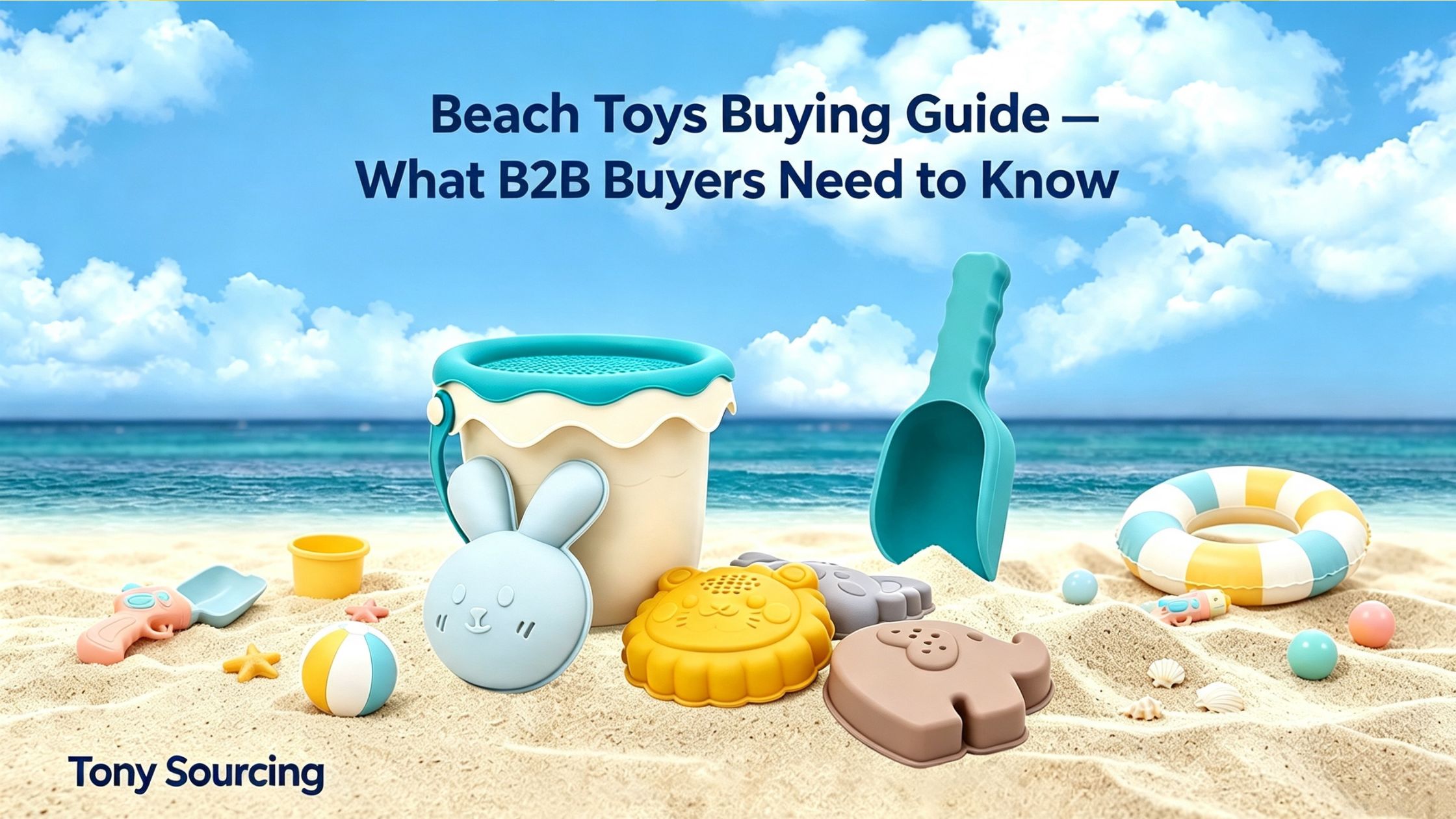
Beach Toys Buying Guide: What B2B Buyers Need to Know
Beach toys are outdoor products designed for children to play in sand and water and for beach activities. From sand toy sets and water toys to beach sports products, they cover a wide range of seasonal toy categories.
This guide explains beach toy categories, materials, and key sourcing factors to help you evaluate products, control costs, and develop suitable product lines.
#1 What are beach toys?
Beach toys are toys specially designed for children to play in sand and water environments. Unlike traditional indoor toys, they focus on hands-on activities, physical movement, and outdoor interaction. Common examples include sand buckets, shovels, sand molds, water guns, toy boats, beach balls, and flying discs.
From a sourcing perspective, beach toys are usually lightweight plastic products with simple structures. Many products are manufactured through mature processes such as plastic injection molding, making them suitable for bulk beach toys orders and large-volume retail supply.
#2 Why Are Beach Toys Becoming Popular?
Beach toys have stable seasonal demand driven by outdoor activities, summer sales, and growing interest in family activities.
For businesses, beach toys offer several advantages:
- Strong Seasonal Demand
Beach toys benefit from summer vacations, beach trips, and outdoor activities. Retailers can use them as seasonal products to attract customers during peak travel periods.
- Wide product selection
The category includes low-cost basic products as well as higher-value sets. You can develop different product lines based on target price ranges.
- Flexible Customization Options
Many beach toys can be customized through colors, packaging, accessories, shapes, and themed designs. Adding extra tools or creating themed sets can increase product value.
- Low Transportation Risk
Compared with electronic toys, most beach toys have simple structures and fewer fragile components. However, larger products or sets with many accessories still require careful packaging design.
#3 Types of Beach Toys
Beach toys can generally be divided into three categories: sand toys, water toys, and beach sports toys. Each category has different product features and market potential.
3.1 Sand Toy Sets
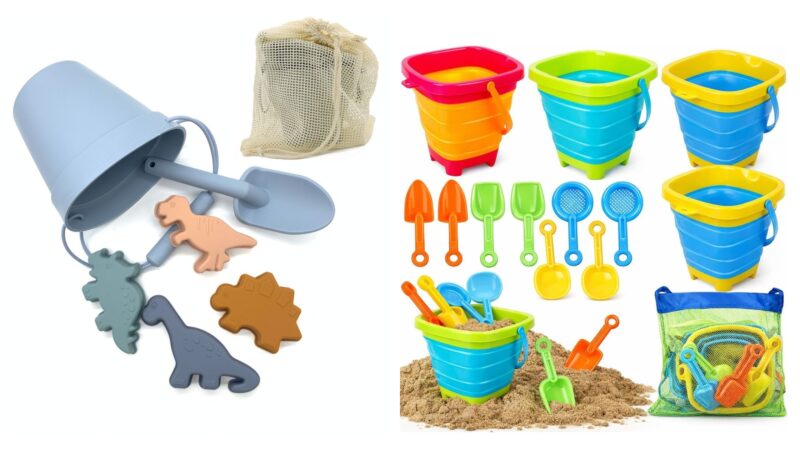
Sand toy sets are one of the most common beach toy categories. They are designed for digging, shaping, and building with sand. A typical set usually includes buckets, shovels, sand molds, water wheels, watering cans, sieves, and other accessories.
| Component | Function | Purchasing Considerations |
| Buckets and containers | Used for carrying sand, holding water, and building sand structures. | Larger sizes require more plastic and packaging space, which may increase costs. |
| Shovels and rakes | Used for digging, moving sand, and shaping surfaces. | Usually low-cost accessories, but material strength and edge safety should be checked. |
| Sand molds | Used to create different sand shapes, such as animals or castles. | Unique designs may require additional mold costs but can improve product differentiation. |
| Sieves | Used to filter sand and separate shells or small debris. | Simple structures with low costs, but durability should be tested. |
| Water wheels | Create interactive effects by rotating with sand or water flow. | More components increase production complexity and require quality checks. |
For production, most sand toys are made from PP, PE, PVC, or ABS plastic through injection molding. Since the structure is simple and molds are mature, production costs are mainly affected by mold development, plastic usage, the number of accessories, and packaging design.
Sand toy sets usually have a low damage rate during transportation and offer flexible SKU options. However, larger products may increase shipping costs, while multi-piece sets require better packaging to prevent missing accessories. When sourcing, buyers should pay attention to material safety, mold quality, accessory quantity, and toy safety requirements.
3.2 Water Toys
Water toys are designed for play on beaches, pools, and other water environments. Compared with sand toys, they usually have more complex structures and require stricter quality control.
Common types of water toys include:
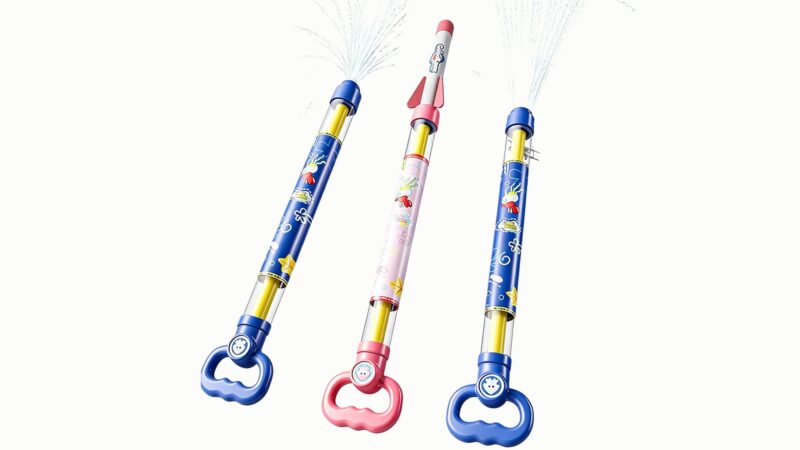
- Water guns and spray toys
These toys use pumps or pressure systems to spray water. Their cost mainly depends on plastic parts, sealing structures, and assembly requirements. - Floating toys
Including inflatable floats and tubes, these products require durable materials and reliable air-tightness to reduce leakage risks. - Diving toys
Weighted rings, sticks, and animal-shaped toys are designed for underwater retrieval games. Buyers should check safety, weight components, and assembly quality. - Water exploration toys
Products such as toy boats and fishing nets encourage outdoor exploration. They usually have simple structures but still require durable materials and secure accessories.
Water toys usually have medium production costs because some products require additional components, sealing structures, or functional testing. You should check leakage risks, component stability, and production consistency. With strong seasonal demand, water toys are suitable for summer promotions, toy stores, swimming pool retailers, and online sales channels.
3.3 Beach Sports Toys
Beach sports toys are designed for active outdoor games on beaches or near water. They combine entertainment with physical exercise and usually have stronger selling potential compared with basic beach toys.
Popular beach sports toys include:
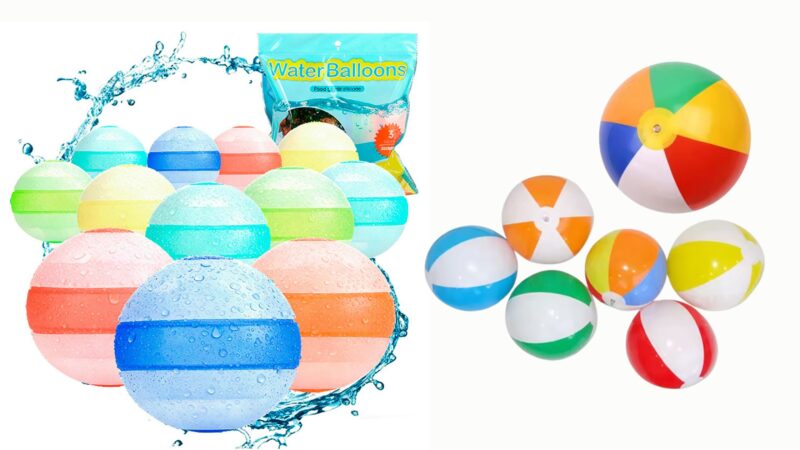
- Beach balls and inflatable sports balls
Large, lightweight inflatable balls are easy to carry and suitable for family activities. - Flying discs and flying rings
Made from lightweight plastic or foam materials, these products are easy to throw and suitable for open outdoor spaces. - Beach rackets and ball sets
Simple racket games are popular because they are easy to learn and suitable for different age groups. - Water bouncing balls
Specially designed balls can bounce on water surfaces, creating unique play experiences.
The cost of beach sports toys mainly depends on materials, size, and structure. Larger inflatable products and sports sets may increase packaging and shipping costs. Buyers should check durability, material thickness, and packaging efficiency before bulk orders.
Inflatable toys require air-tightness testing, while racket products need strong connections. With customization options such as themed sets and branded designs, beach sports toys can achieve higher selling potential.
#4 Materials Used in Beach Toys
The materials used in beach toys directly affect product safety, durability, production costs, and market positioning. Different product categories usually require different material choices.
| Material | Common Uses | Key Features & Purchasing Notes |
| PP & PE | Sand buckets, shovels, molds, sieves | Low-cost, lightweight, and suitable for injection molding. Commonly used for mass-market beach toys. |
| PVC | Inflatable beach balls and floating toys | Flexible and waterproof. You should check material thickness and sealing quality. |
| TPU | Premium inflatable toys | More durable and better-looking than basic materials, suitable for higher-value products. |
| EVA & Foam | Floating accessories, soft flying discs, sports toys | Lightweight, soft, and impact-resistant, suitable for portable products. |
| Silicone | Premium kids’ beach toys | Soft and durable, usually used for higher-end products due to higher material costs. |
When sourcing beach toys, selecting the right material combination can help balance product cost, quality, and target market requirements. PP/PE materials are suitable for affordable mass-market products, while PVC, TPU, and silicone can support more premium beach toy lines.
#5 How to Choose Beach Toys for Different Markets
Choosing the right beach toys depends on your target market and product positioning. Age groups should also be considered, as beach toys for toddlers usually require simpler designs and safer materials, while older children may prefer more interactive products.
For mass-market retail, affordable and easy-to-sell products are usually the best choice. Sand toy sets are suitable because they have simple designs, stable demand, and lower production costs. They can be widely sold through supermarkets, toy stores, and seasonal retail channels.
For online marketplaces, products with unique designs, strong visual appeal, and portability often perform better. Travel beach toys and compact water toys can attract customers through easy storage, interactive features, and attractive packaging.
For outdoor and premium markets, beach sports toys and multifunctional sets provide better opportunities for higher-value positioning. Products such as paddle sets, flying discs, and family activity kits can offer stronger differentiation and higher selling prices.
#6 How to Build a Beach Toy Product Line
Building a successful beach toy product line requires a balance between product variety, cost control, and market demand. Instead of choosing only one type of product, you can combine different categories to meet various customer needs.
A balanced product line usually includes basic products, interactive products, and premium products. Combining different categories can help cover different price ranges and reduce dependence on a single product type.
When planning a beach toy product line, buyers should consider target markets, price ranges, packaging sizes, and seasonal demand. A well-designed product mix can help reduce inventory risks and create more opportunities across different sales channels.
FAQ
What are the most popular types of children’s beach toys?
The most popular beach toys include sand toy sets, water toys, and beach sports toys. Sand toy sets are widely used because of their affordable prices and stable demand, while water toys and sports toys attract customers through interactive features and outdoor activities.
What safety standards should beach toys meet?
Beach toys are designed for children, so you should check whether products meet the required toy safety standards in their target markets. Material safety, small parts, sharp edges, and chemical restrictions are important factors to consider before bulk orders.
What factors affect the cost of beach toys?
The cost of beach toys is mainly affected by materials, product complexity, mold requirements, accessory quantities, and packaging methods. Simple sand toy sets usually have lower costs, while products with more functions, unique designs, or multiple accessories require higher production investment.
Can beach toys be customized for private label products?
Yes. Beach toys usually have strong customization potential. Businesses can customize colors, product designs, packaging, accessory combinations, and branding elements to create products that match different markets and price ranges.
What should I consider when sourcing beach toys?
When sourcing beach toys, you should consider product safety, quality standards, supplier capabilities, production lead times, and seasonal demand. Choosing the right supplier can help ensure stable quality, timely delivery, and better product competitiveness.
Final Thoughts
Beach toys offer various opportunities for businesses to build seasonal product lines. Choosing the right products requires balancing product types, materials, costs, and market demand. With experience in beach toy sourcing, customization, and quality control, TonySourcing helps businesses find suitable products, optimize sourcing processes, and develop beach toy collections that match their target markets.