11 Types of Educational Toys for Brands and Wholesalers
The global educational toy market is growing and may reach $30–40 billion by 2026. For brands and wholesalers, success means choosing toys with steady demand, strong profits, and long-term appeal. I’ll introduce the main types of educational toys and see which categories can boost your sales and stay popular.
#1. STEM Toys
1. Gear toys
Gear toys have been a popular STEM educational toy in Europe and the U.S. in recent years. Using interlocking gears and moving parts, they give children a more interactive building experience. Gears Toys can create realistic motion. The rotation and assembly of different gears make building more visual and engaging, giving the product a strong competitive edge in both education and retail markets.
The product line includes basic gear sets, early learning kits for toddlers, and multi-theme series with attractive designs like flowers and marine life, catering to different ages and sales channels. A variety of gear parts and expansion accessories allow for many combinations and upgrades, creating repeat purchase opportunities and long-term sales potential for both retailers and educational buyers.
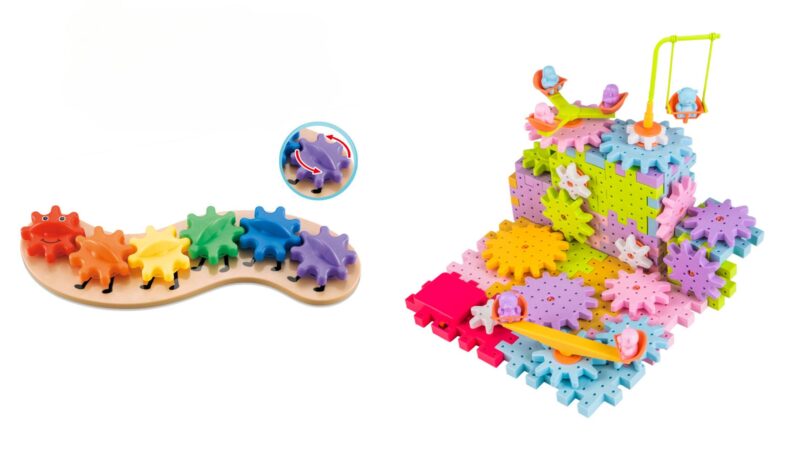
If you want a product with long-term sales potential, Gears Toys is an ideal choice. By building and playing with the gears, children develop key skills like counting, sorting, critical thinking, and hand-eye coordination, providing both educational value and lasting benefits. Suitable for home learning, classrooms, or STEM programs, Gear Toys are a top educational category that combines learning with strong market potential.
2. Science kit
Science kits are changing the way children learn science, making it hands-on, interesting, and exciting. With over 100 experiments across chemistry, physics, biology, earth science, and space, these children’s science kits provide long-lasting play value. From preschool science toys to more advanced sets, they are the best toys for kids who love science and work well in schools, homes, and gift markets.
These science toys emphasize “learning by doing” rather than just teaching facts. Each best science kit for kids comes with clear, easy-to-follow guides suitable for 5-year-olds. Children explore science through observation, reasoning, and testing, developing logic, focus, problem-solving skills, and scientific thinking. These cool, interesting science toys turn learning into an adventure, making science meaningful.
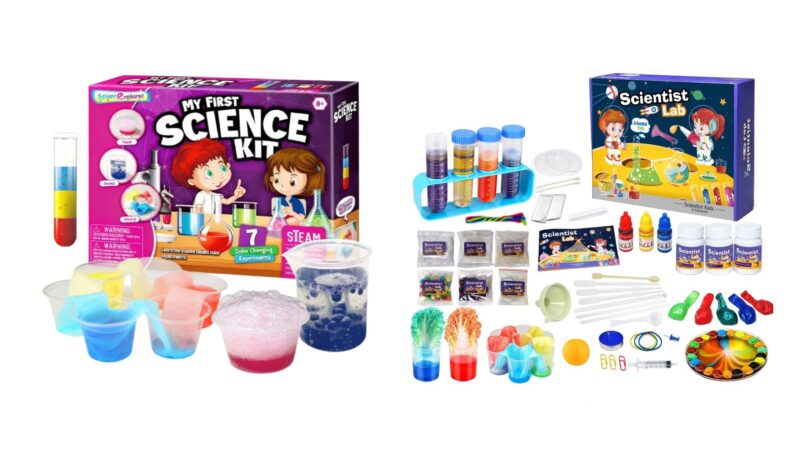
The market for science kits is growing rapidly. Modern STEM products now include AI interaction, coding, and screen-free exploration, meeting parents’ demand for toys that build creativity and logical skills. With scientific stuff and hands-on experiments, these kits are a high-potential category for buyers and distributors seeking products that both educate and engage children.
3. Microscope kits
The microscope kit combines a “professional feel” with “easy use.” It offers three magnification levels—40x, 100x, and 400x—covering basic observation to advanced exploration. Fixed eyepieces with a coaxial focusing knob make operation simple and stable, ideal for beginners. The dual lighting system uses natural light and LEDs, powered by AAA batteries, ensuring durability, energy efficiency, and flexible use. This stable and user-friendly design enhances satisfaction and encourages long-term use.
From a sales perspective, the kit includes a complete set of tools, such as prepared slides, blank slides, and tweezers, ready for use straight out of the box. Because slides are consumable, there is ongoing demand for replacements, creating repeat purchases and additional accessory sales.
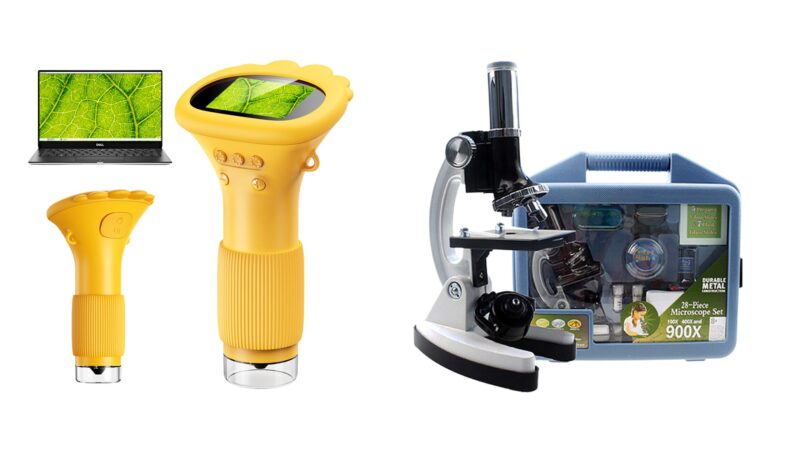
In terms of educational value, the microscope kit introduces children to biology and cytology, developing observation and critical thinking skills. Unlike ordinary toys, it fits current STEM education trends, making parents willing to invest in its learning benefits. This creates stable demand across e-commerce, schools, educational channels, and the gift market, while offering flexible pricing and strong long-term sales potential.
#2. Coding Robots
1. Coding Robot
The coding robot market is not just about being “fun”; its success depends on parents’ willingness to continue paying for “what their children learn.”
The coding robot market mainly includes block coding robots, screen-free robots, Scratch coding robots, and AI robots. Block coding robots remain the most popular, as they are easier to learn and clear, and are the best coding and programming toys for 8-year-olds. Brands like LEGO Education and Makeblock are widely recognized worldwide for their mature curricula and consistent product quality.
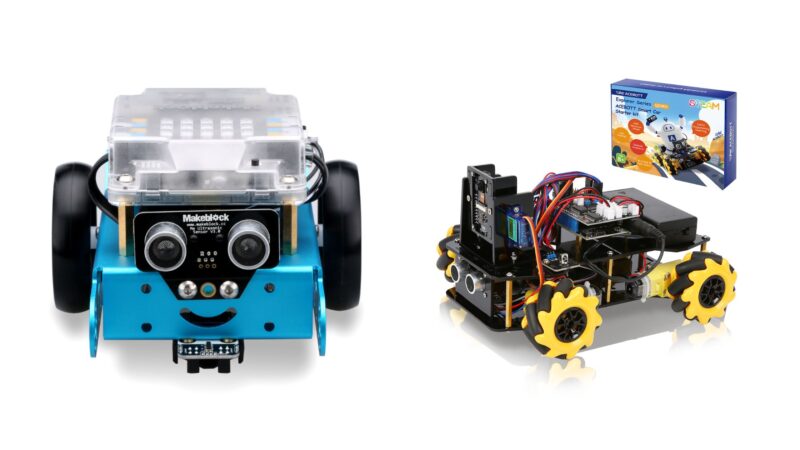
High-quality coding robots usually have dual-material casings made of ABS and polycarbonate (PC), providing drop resistance, impact protection, and long-lasting durability. Since these are educational products for children, safety is essential. Using these materials improves durability and user satisfaction and enhances brand reputation.
For wholesalers, coding robots are ideal not only for e-commerce but also for schools, STEM centers, and gift markets. Many educational institutions use them with curricula, teaching materials, and lesson plans, ensuring steady demand and creating opportunities for OEM/ODM customization and long-term partnerships.
2. AI robot
Unlike traditional robots that follow a “fixed logic” model, AI robots act more like intelligent companions, offering interaction and engagement. With humanoid AI robots and ChatGPT-powered robots now on the market, competition is not just about features—it’s about creating a memorable robot brand. More companies are giving their robots names, personalities, and unique ways to interact, making it easier to differentiate their brands.
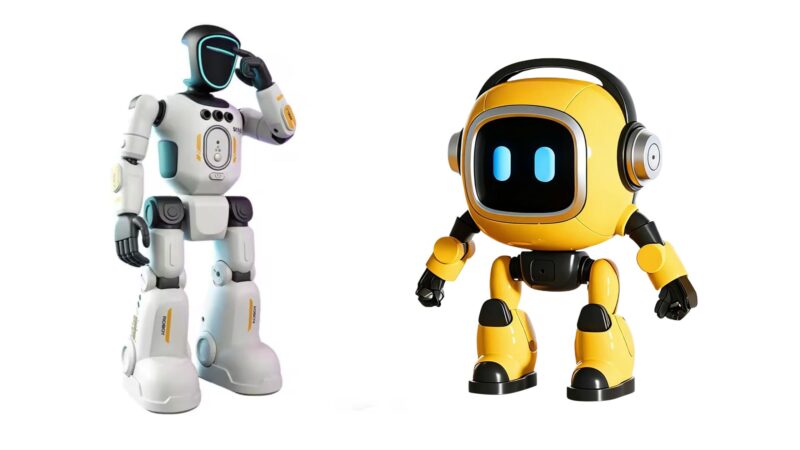
In today’s world of frequent AI data concerns, parents care less about “how smart the robot is” and more about safety. This AI robot puts privacy and child protection first. It locks conversation topics, filters sensitive content, and lets parents control usage time and features. The most competitive children’s AI robots will be those that earn parents’ trust, not just show intelligence.
For wholesalers, this robot combines AI vision, voice interaction, and 15 programmable commands and works with Arduino, Scratch, and Python curriculum systems. It supports both beginner programming and advanced STEM learning. Compared to single-function toys, products with AI interaction, curriculum compatibility, and adaptability to educational settings are better positioned for schools, training centers, and households.
#3. Montessori Toys
1. Lacing toys
Lacing toys can be a long-term bestseller. They are excellent tools for introducing young children to early reading and math. They need no batteries, screens, or popular IPs, appealing to children aged 12 months up to 8 years, with most buyers aged 3–6. Covering toddler grasping, preschool motor skills, and school-age crafts, the product lifecycle of these SKUs far exceeds that of other toys.
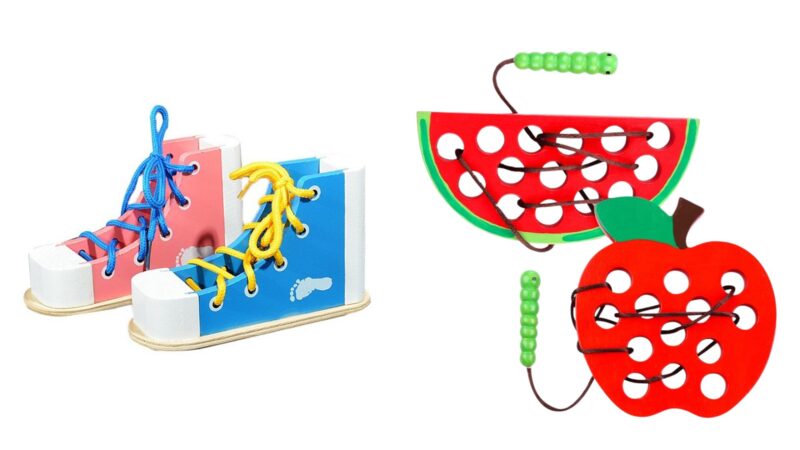
For materials, we use hand-painted, eco-friendly wooden beads with odorless water-based paint, addressing parents’ safety concerns. The colors are bright but gentle, matching children’s visual preferences in Europe and the U.S. and improving customer satisfaction. This also allows for a higher retail price compared to standard plastic lacing toys.
Demand for laced toys remains steady. They support children’s school readiness by developing hand-eye coordination, fine motor skills, and bilateral coordination. Suitable for Montessori classrooms, preschools, and family activities, these toys reach more sales channels than single-function toys, making them an excellent choice for long-term, sustainable sales.
2. Busy Board
Busy Board is an early learning toy designed for young children. By flipping switches, threading strings, and pressing buttons, children develop hand-eye coordination, fine motor skills, and problem-solving abilities. It focuses on “hands-on learning,” as repeated practice and active exploration are key to brain development, making it an essential toy for early growth.
Safety is a top priority for children’s toys, especially for toddlers. We use non-toxic wooden materials that meet ASTM standards. All edges are smoothly sanded, and the board is coated with non-toxic water-based paint, making it safe for touching and chewing. We also offer name customization, adding value and creating a memorable experience that helps build a distinctive brand.
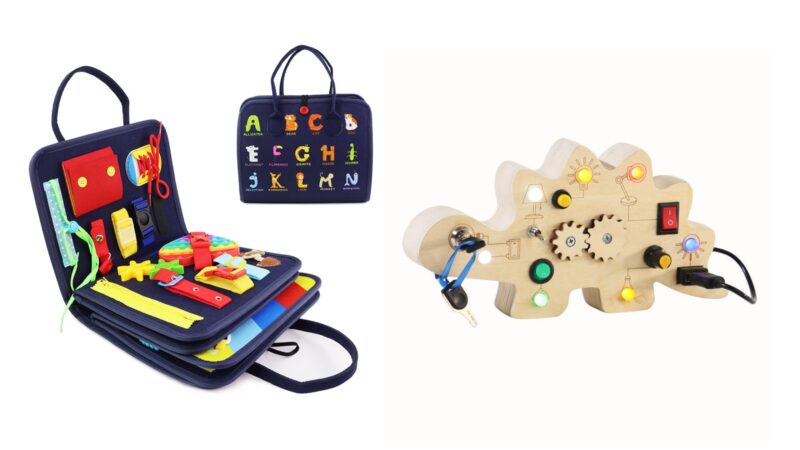
Tonysourcing focuses on the long-term companionship value of toys products. This toy is very lightweight, making it perfect for home, travel, or quiet play. Its strong, durable construction and over 30 themed designs extend its lifespan, while the wide range of accessories encourages repeat purchases.
#4. Wooden Educational Toys
1.wooden block
We believe the key to long-lasting learning with wooden blocks is giving parents peace of mind. Our blocks for 5-year-olds are made from kiln-dried solid wood and precision-cut with smooth, polished edges, so they stack securely and resist warping. This reduces complaints and returns from splinters or cracks, helping maintain steady repurchase rates and a strong store reputation.
Our fun and educational wooden blocks are compatible with mainstream block systems, allowing children to expand play without discarding old sets. They are ideal as the best wooden block sets for young kids in supermarkets, e-commerce, and gift shops. The open, screen-free design also makes them popular as Montessori materials and school teaching tools, offering access to educational channels while avoiding price wars.
We offer good pricing with factory-direct wholesale rates, low MOQ requirements, and support for small-batch trial orders. With minimal risk involved, we welcome you to contact us at any time.
2. wooden puzzle
Wooden puzzles are made mainly from wood, making them more durable and higher-quality than regular puzzles. They are long-lasting toys that children can enjoy for many years.
We offer chunky puzzles for toddlers and chunky wooden puzzles with innovative 3D designs, enhancing interaction and expanding the target age range. Made from non-toxic wood that meets European and U.S. green standards, including wooden toys made in the USA, these puzzles can be customized with glossy, matte, gold/silver foil, UV coating, or glitter finishes, allowing you to create a unique product line from a single baseboard.
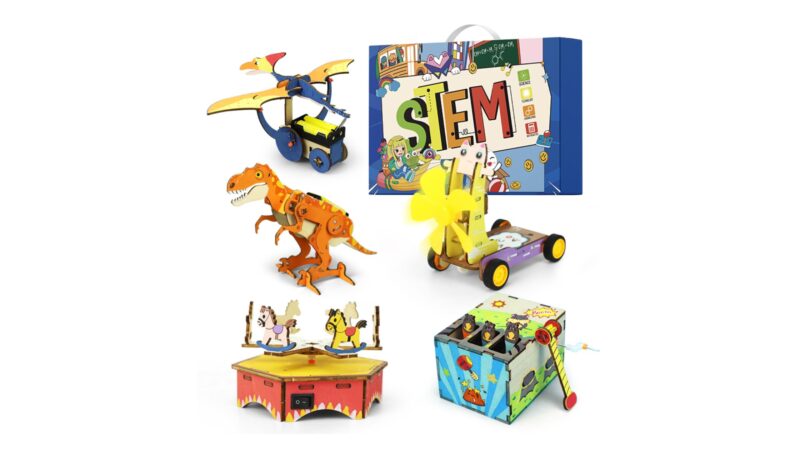
In terms of educational value, wooden puzzles help develop spatial awareness, logical thinking, and problem-solving skills. They are also great as children’s games and puzzles for teaching. Suitable for entertainment, gifts, promotions, schools, and corporate use, our products meet a wide range of market needs. For wholesale inquiries, share your sales model, and we will provide detailed product recommendations custom to your business.
#5. Magnetic Tiles
1. Magnetic track toys
Magnetic track toys are STEM educational products that combine “magnetic shapes toy” concepts with “track play.” Children can use play magnets, ramps, and race cars to create their own racetracks
In recent years, magnetic track toys have grown from a niche educational product to a mainstream category. More brands now include magnetic tiles, toy construction magnets, tracks, cars, and lights to balance building and moving play. This not only increases expandability but also gives more chances for repeat purchases and series-based sales.
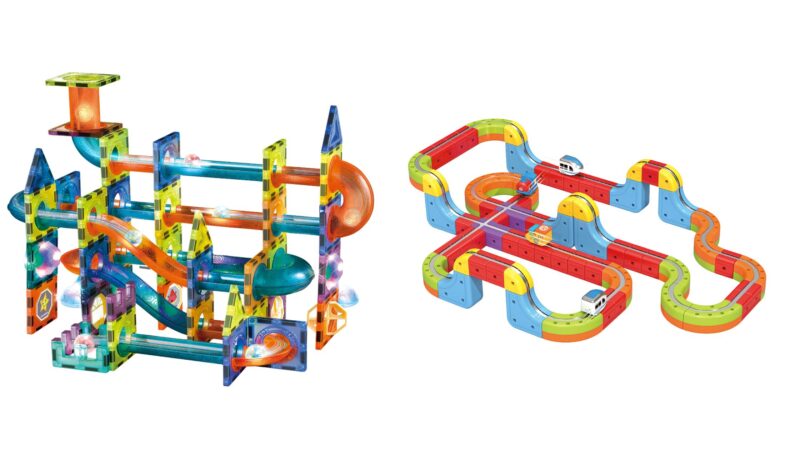
As children build and adjust the tracks again and again, they develop spatial reasoning, problem-solving skills, and basic engineering logic. The moving cars are visually appealing, making the toys attractive for e-commerce, offline displays, and short-video content. In the future, competition in the magnetic track toy market will focus more on gameplay and content experience than price.
2. Magnetic Tiles
Magnetic tiles are educational children’s magnetic toys that combine learning with open-ended play. Kids can use different geometric shapes to build 3D structures—from tall towers to complex designs—stimulating creativity while developing spatial awareness, logical thinking, patience, and problem-solving skills.
These magnetic tiles feature magnets on the sides and are made from non-toxic, durable ABS plastic. Rounded edges protect children’s hands, and strong, built-in magnets keep structures stable. The sturdy materials ensure long-term use and help reduce return rates.
The set includes 50 magnet toy blocks, suitable for classrooms, kindergartens, daycare centers, and homes. As magnetic building toys for preschoolers, magnetic tiles support exploration-based learning, enhance curriculum value, and increase parent satisfaction. The variety of themes and modular design also make them ideal for bundle sales and bulk purchases.
Final Thought
Choosing the right educational toys is not just about expanding your product line—it’s about preparing for long-term market demand. TonySourcing provides reliable sourcing solutions for popular and new educational toys, helping suppliers and buyers grow together. If you are looking for a trustworthy and promising educational toy supplier, please contact us to explore collaboration opportunities.
FAQ:
Q1: Which toy categories will be most profitable in 2026?
A: STEM kits (science & gear toys), Montessori wooden toys, and AI-powered coding robots are the top performers. These categories offer high repeat-purchase potential due to their educational value and expandable nature.
Q2: Why source these 11 types of toys through TonySourcing?
A: We provide factory-direct pricing and a transparent 5% service fee. Our Showroom-linked model in Shantou and Yiwu lets you access the newest 11-inch dolls, magnetic tiles, and STEM kits before they hit the general market.
Q3: Can these educational toys be customized with my brand?
A: Yes. We specialize in OEM/ODM services. Whether it’s a custom-themed Busy Board or branded Science Kits, we manage the entire process—from logo printing to custom packaging—at the factory level.
Q4: How do you ensure these toys meet international safety standards?
A: We only source from factories capable of providing CPC, ASTM F963, or EN71 certifications. TonySourcing conducts on-site inspections to verify that materials like non-toxic wood and BPA-free plastics are used.
Q5: What is the best way to start a trial order for new toy lines?
A: We support low MOQ trial orders and small-batch customization for wooden blocks and puzzles. This allows you to test market demand for new educational categories with minimal financial risk.